Spicy chicken lettuce wraps

Did I mention we have air conditioning now? I guess I didn’t need to; I’m sure everyone heard our sighs of relief from many miles away. Our new air conditioner is not lowering the temperature to arctic levels, thank goodness. It simply makes our house livable — and it makes it possible to cook again. The local restaurants will notice our absence, but I sure did miss my kitchen.

When I mentioned that I wanted to venture into unknown territory, culinarily speaking, Tom tamped down his initial reservations and suggested lettuce wraps.

We’d tried making them before with ground turkey. They were … okay. Kinda bland, we thought. Then we had the Asian chicken wraps at Father Fat’s Public House, and learned just what great lettuce wraps should be. Our goal was not so much to recreate Father Fat’s version as to learn from it and create our own.

Tom suggested cooking the chicken in slices, then shredding it. I was afraid the chicken would be dry, but it wasn’t at all, and there was an added advantage: the thin slices meant the marinade flavored every bit of the chicken.

Tom also said to add a bit of cooked brown rice. We do this when we make potstickers. The rice helps to bind the filling together.

His last suggestion, which I saw coming, was to serve extra sauce on the side. My Tom is a sauce fanatic; his motto is “there’s no such thing as too much sauce.”

I added chopped water chestnuts for crunch, and sliced green beans for color (and because I had some in the crisper). Grated ginger may or may not have snuck in when I wasn’t looking. (Tom hates ginger, especially when he actually witnesses it going into a dish.) Sriracha heated things up; lime juice contributed an acidic topnote.

The green beans are negotiable. They were both tasty and crunchy, but you could use minced bell pepper or shredded carrot instead with equal success.

We were hoping for the tender cup-shaped leaves of butter (Boston) lettuce, but leaf lettuce was our only choice. I’d go with butter lettuce when the opportunity arises for ease of use, but the leaf lettuce was just fine. The cool lettuce is a perfect foil for the spicy, fragrant chicken. A sprinkle of peanuts adds the final touch.

Tom says we should try the chicken over rice, or stuffed into spring roll wraps. Luke would like it over soba noodles. In any case, we’ll be making these again soon.

Spicy Chicken Lettuce Wraps
serves 4

Marinade:
1/4 cup teriyaki sauce
2 tbs. soy sauce
juice of 2 limes
1 tbs. sriracha
1 clove garlic, minced
2 tbs. chopped fresh mint, optional
4 skinless, boneless chicken breasts

6 scallions, sliced
2 cloves garlic, minced
2 tbs. oil, divided (I used olive, but canola would also work)
1/2 cup finely chopped water chestnuts
1 chile, minced, or 1/2 cup minced red bell pepper
1/2 cup thinly sliced green beans
1/2 cup cooked brown rice

Sauce:
1/2 cup teriyaki sauce
1 tbs. fermented black bean sauce
2 tsp. sriracha, or to taste
juice of 1 lime
1 tbs. sesame seeds, optional

lettuce leaves
roasted peanuts, for garnish
lime wedges, for garnish

In a small bowl or 1-cup measuring cup, whisk together marinade ingredients. Slice the chicken breasts thinly across the grain. Put the sliced chicken in a ziplock bag and pour in the marinade. Seal the bag, pressing out the air, and massage gently to distribute the marinade. Refrigerate for at least 1 hour and up to 8 hours.

In a large skillet over medium-high heat, sauté scallions and garlic in 1 tbs. of the oil for a minute. Add the water chestnuts, chile, and green beans along with 1/2 cup water. Cook, stirring now and then, until the water is evaporated and the green beans are crisp-tender. (If you’re using peppers or carrots instead of green beans, skip the water.) Cook for 3-5 minutes longer, until the veggies are lightly browned. Scrape into a bowl and add the cooked brown rice.

Return the pan to the heat (no need to wash it) and add the remaining tbs. oil. Add the chicken in one layer (in batches if necessary) and cook for about 3 minutes per side until cooked through and lightly browned. Discard remaining marinade.

While chicken cooks, whisk together the sauce ingredients in a small bowl.

Roughly shred the cooked chicken into the veggie/rice mixture. Add about a tablespoon of the sauce and a squeeze of lime juice. Serve alongside the lettuce leaves with the peanuts and extra sauce. To eat, scoop some of the warm chicken mixture into a lettuce leaf, add a few peanuts, a dollop of sauce (if you wish), and a squeeze of lime. Wrap and eat.

Posted in appetizers, main courses, meat, poultry,and fish | Tagged , , , , , , , , , | 1 Comment

Turkey meatballs with parmesan

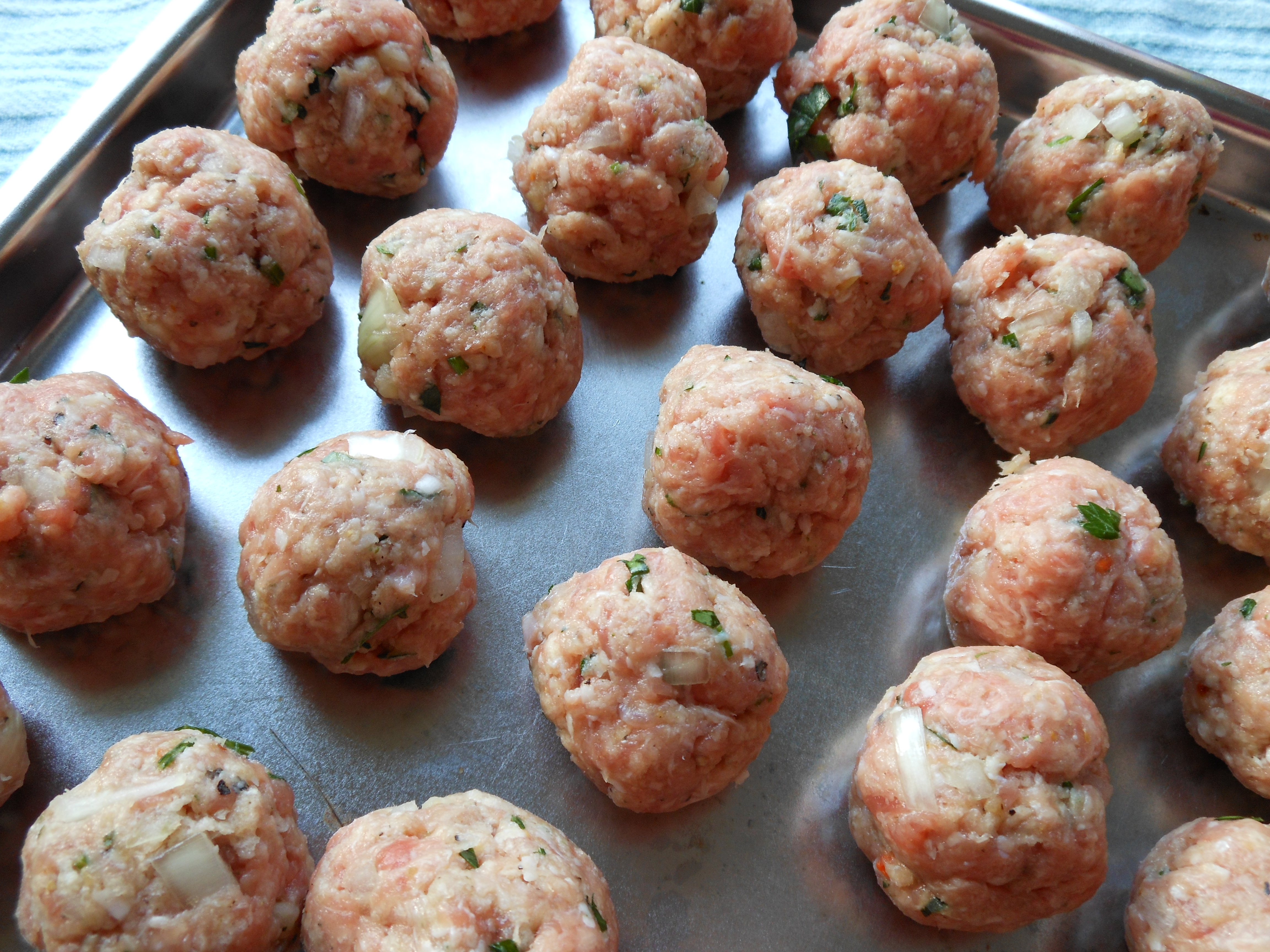
Tom loves meatballs. I’m not a fan of ground beef. But when we work together, beautiful things happen. Beautiful things like these orbs of deliciousness you see above.

You might expect meatballs made with turkey to be bland and dry, but these are neither. Panko breadcrumbs keep them light, minced onion keeps them moist, and parmesan adds flavor.

I’ve served these here with tiny potatoes and roasted broccoli. They’re great over egg noodles, or with biscuits or popovers to soak up the sauce.

And that sauce! It’s deceptively simple, just chicken stock with a little sautéed onion and garlic, thickened with a flour-and-butter roux. But when you add the browned meatballs and simmer, the sauce becomes silky, golden and deeply flavored.

These are easy to freeze and reheat. I usually make a double batch and freeze half. They made a recent appearance as appetizers, stashed in a slow cooker with an egg cup full of toothpicks nestled alongside.

Turkey Meatballs
serves 6-8 as a main course

1 lb. ground turkey
1/2 cup panko breadcrumbs
1/2 cup minced onion, divided
1 small clove garlic, minced
1/2 cup grated parmesan
2 tbs. oil (olive or canola)
2 tbs. butter
1 tbs. minced fresh herbs of choice, or 1 tsp. dried
2 tbs. flour
1 1/2 cups chicken stock
salt and pepper to taste

In a bowl, mix together the turkey, panko, 1/4 cup of the minced onions, garlic, herbs, parmesan, salt, and pepper. I use my hands; it’s easier. Roll the mixture into whatever size meatballs you prefer. Set the meatballs aside for a moment.

In a medium saucepan, melt the butter, and sauté the remaining 1/4 cup of the onions with the garlic until the onions are lightly browned, about 5 minutes. Add the herbs if you’re using dried. Stir in the flour and cook for 2 minutes. Whisk in 1 cup of the stock and boil for 2 minutes until thickened. Reduce to medium-low and simmer. Add fresh herbs at this point.

Heat the oil in a large skillet over high heat. Add the meatballs in one layer with a little space between them; this may mean you work in batches.  Brown the meatballs very well, rolling them as they brown to get some good color on all sides. Don’t worry about cooking them all the way through.

Once the meatballs are well browned, gently drop them into the simmering sauce. Pour the remaining 1/2 cup stock in the skillet and stir to deglaze all those lovely brown bits left over from the meatballs. Pour the stock into the saucepan with the meatballs. Simmer for at least 15 minutes. You’ll get the best flavor if you simmer on low for a half-hour.

To freeze: After the meatballs have browned, set them on a tray in one layer to cool, then place the tray in the freezer for an hour or two. As soon as the meatballs are solidly frozen, transfer them to a ziplock bag, and leave in the freezer for up to 6 months. You can make the base sauce ahead of time and freeze that separately. I just deglaze the meatball skillet with a cup of stock and freeze that, then use that as the base for creating the sauce when I’m ready to use the meatballs. Remember that the frozen meatballs are not completely cooked through, so you will need to finish cooking them before serving.

Posted in appetizers, main courses, meat, poultry,and fish | Tagged , , , , , , | Leave a comment

Pasta with spicy peanut sauce

Our house does not have air conditioning. (Yes, Wisconsin does get hot —sometimes downright steamy — in the summer.) Most of the time this is manageable, since we are shaded by the many trees on our property, but keeping the house cool requires strategic planning. We open all the windows at night and set up half a dozen fans, then early in the morning we shut everything down.

We also cook as much as possible outside on the grill. Any inside cooking is done late at night or early in the morning. I made the pasta pictured above on one of these steamy days. The only cooking necessary was the ditalini. I usually prefer soba noodles but we were out, and the ditalini, tiny pasta tubes, held onto the sauce quite well.

It’s nice to have a few versatile sauces in your repertoire. I’ve been making this peanut sauce in one version or another since my son’s birth 17 years ago. Peanut butter, soy sauce, teriyaki, ginger, garlic, sriracha, and the subtle surprise of freshly squeezed orange juice combine for a burst of sweet-hot-salty flavor. It is delicious hot or cold, as a pasta sauce or an accompaniment to pork or chicken.

Transparently thin ribbons of raw carrot add a lovely crunch. The sweet carrots and red peppers bring out the molasses flavor of the teriyaki. I’ve also made this with slivered raw snow peas, or briefly steamed broccoli or asparagus. Feathery lavender chive blossoms are a pretty garnish and contribute an oniony punch; minced chives or plain ole parsley

The Sauce:
(makes about 1 cup)
2/3 cup Kikkoman Teriyaki Baste and Glaze*
1/4 cup smooth peanut butter
2 tbs. soy sauce
the juice of 1/2 orange
1 tbs. sriracha sauce (or to taste)
1 clove garlic, grated or finely minced
1 tsp. grated fresh ginger
1 scallion, sliced
1-2 tbs. water, as needed

The pasta:
1 large carrot, peeled
3 cups cooked pasta
2 scallions, thinly sliced (white and green parts)
1/2 bell pepper, minced
1 cup cooked, shredded chicken (pork works well too)
1/4 cup roasted peanuts

For the sauce: put the teriyaki, peanut butter, soy sauce, and orange juice in a microwave-safe bowl and microwave for 30 seconds until everything’s very warm. This will make it easier to blend the ingredients. Whisk the sauce until it’s smooth. Whisk in garlic, ginger, scallions, and 1 tbs. water. If the sauce is too thick, add more water. Set aside to cool. You can make the sauce a few days ahead and stash it in the fridge; it also freezes well.

*Kikkoman Teriyaki Baste & Glaze is thick and somewhat sweet, but not overly salty. If you use another teriyaki sauce, you may need to use less soy sauce and add a teaspoon or two of honey. [Kikkoman does not know that I exist, as far as I know; it’s just my favorite teriyaki sauce.]

For the pasta: Use the vegetable peeler to peel long, thin ribbons from the carrot until it’s all used up and you have a lovely pile of ribbons. Toss the carrot ribbons with the cooked pasta, scallions, bell pepper, chicken, and peanuts. Add the sauce and toss to mix well. Serve cold, at room temperature, or hot.

Posted in main courses, pasta, rice, and grains, salads, sauces, sides | Tagged , , , , , | 5 Comments

Fresh pea and spinach salad

Our brief, glorious growing season is underway here in Wisconsin. Spring onions, lettuces, ruby-red strawberries, and peas are all available at farmers’ markets.

Frozen peas are a kitchen staple for most of us, and for good reason. They hold up better than many veggies after months in icy storage. But fresh peas are something else altogether: sweet, almost floral, and tender yet with a snap when you bite into them. They need to be cooked and eaten as soon after picking as possible; the sugars will turn to starch fairly quickly, and they’ll lose their sweetness. They’ll still be edible and tasty, just not … special.

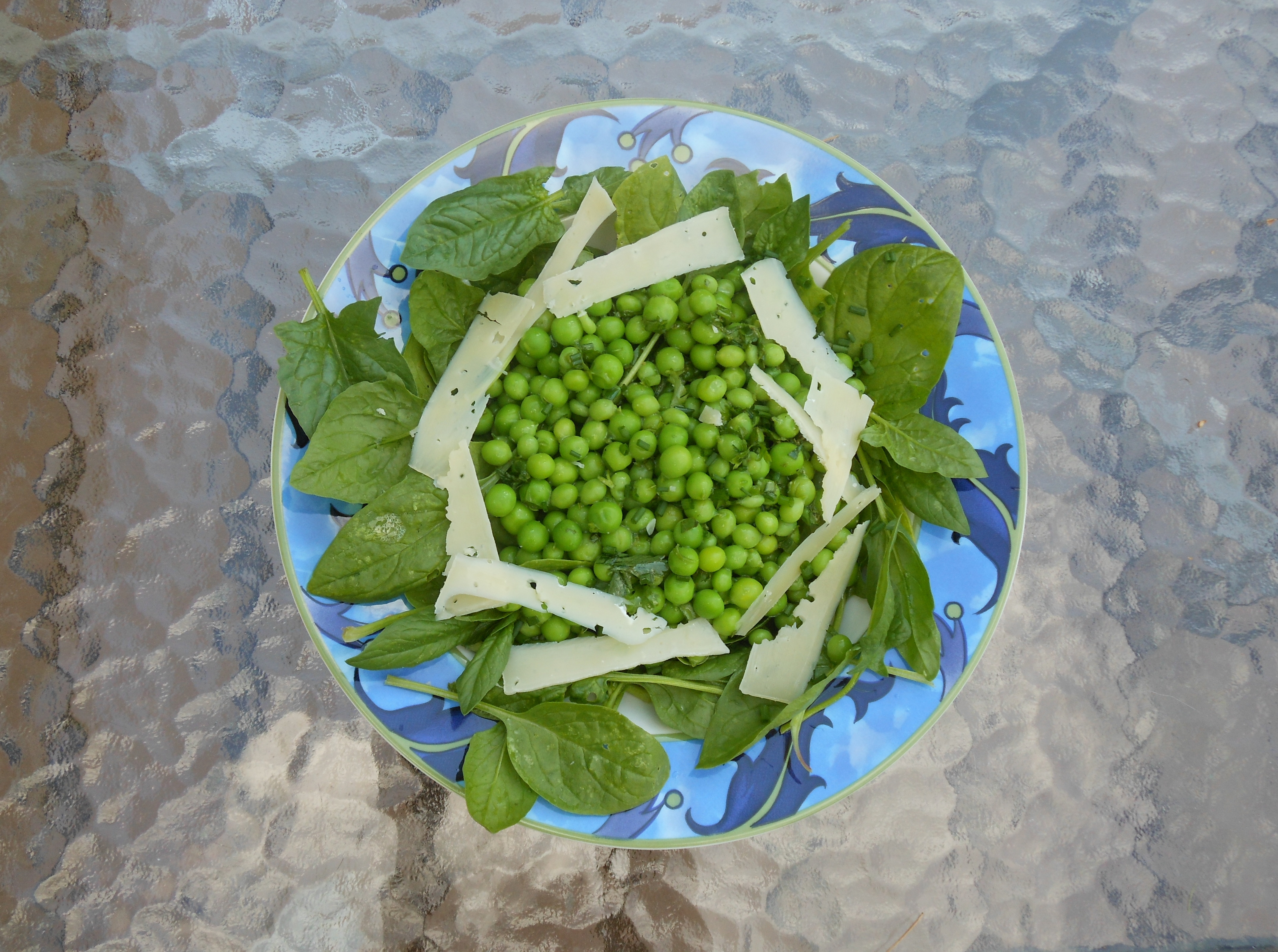
When you can get these little gems, let other flavors take a back seat. I combined them with delicate baby spinach and a light drizzle of lemon dressing. Fresh mint is the perfect foil for the sweet peas. A few shavings of parmesan are a salty finish.

I also made the salad with a few sliced radishes. I managed to grow foot-tall plants with radishes not much bigger than peas. I did make a tasty pesto with  the leaves; watch for future posts for that recipe. I really need to amp up my gardening skills.

Fresh Pea and Spinach Salad
serves 4

2 cups shelled fresh peas
salt and pepper
juice of 1 lemon
1 tsp. dijon mustard
1 tsp. honey
3 tbs. olive oil
2 tbs. chopped fresh mint
1 tbs. chopped chives
4 cups fresh baby spinach leaves
1-2 oz. parmesan
1 large radish, thinly sliced, optional

Place the peas in a saucepan with lightly salted water just to cover. Bring to a boil. Reduce the heat, cover, and simmer for about 4 minutes, just until the peas are tender. Drain the peas and plunge into cold water to stop the cooking.

In a small bowl, whisk  together the lemon juice, mustard, and honey. Drizzle in the oil and whisk until the dressing is emulsified (that is, completely combined and slightly thickened). Stir in the mint and chives, taste, and add salt and pepper.

Place the spinach on a platter. Stir half the dressing into the peas, then spoon the peas in a mound on the spinach. Use the vegetable peeler to shave the parmesan into shards on top of the salad. Add the radish slices if using. Serve the extra dressing on the side.

Posted in salads, veggies | Tagged , , , , , , , , , | 10 Comments

Roasted red pepper soup, for Laurie

Our friend Laurie is at home recuperating from a tonsillectomy, OD’ing on popsicles and Jell-O. Solid food is distant on the horizon. Feel better soon, Laurie!

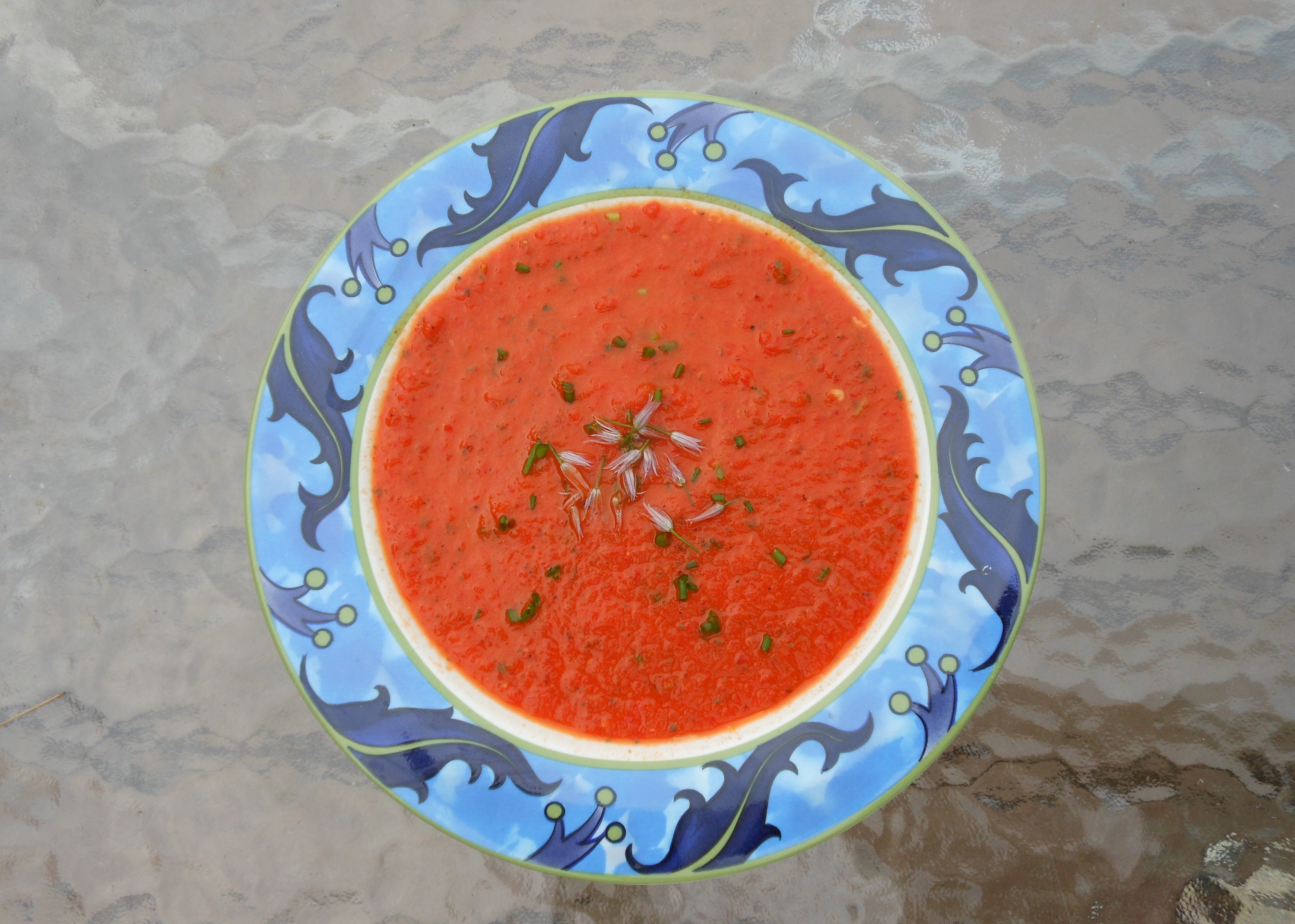
I thought something savory might be a welcome break, but it needed to be puréed. Soup was the logical answer. Gazpacho was a favorite cold lunch back in our steamy Washington, DC days. In chilly Wisconsin, I make a tomato and roasted red pepper pasta sauce. This soup is a combination of the two dishes. It’ll be a while before Laurie is ready for anything more intense than Italian ice, but when she is,  this soup will be in her fridge.

I used roasted red peppers from a jar, mostly because 1) fresh red peppers are still muy expensive here in the Great Lakes (out of season), and 2) roasted peppers are one of those rare foods that are actually really terrific in a jar. Not that Laurie isn’t worth the fresh peppers (you are, Laurie! you are!), but I happened to have a jar of beautiful Italian roasted peppers in my pantry.

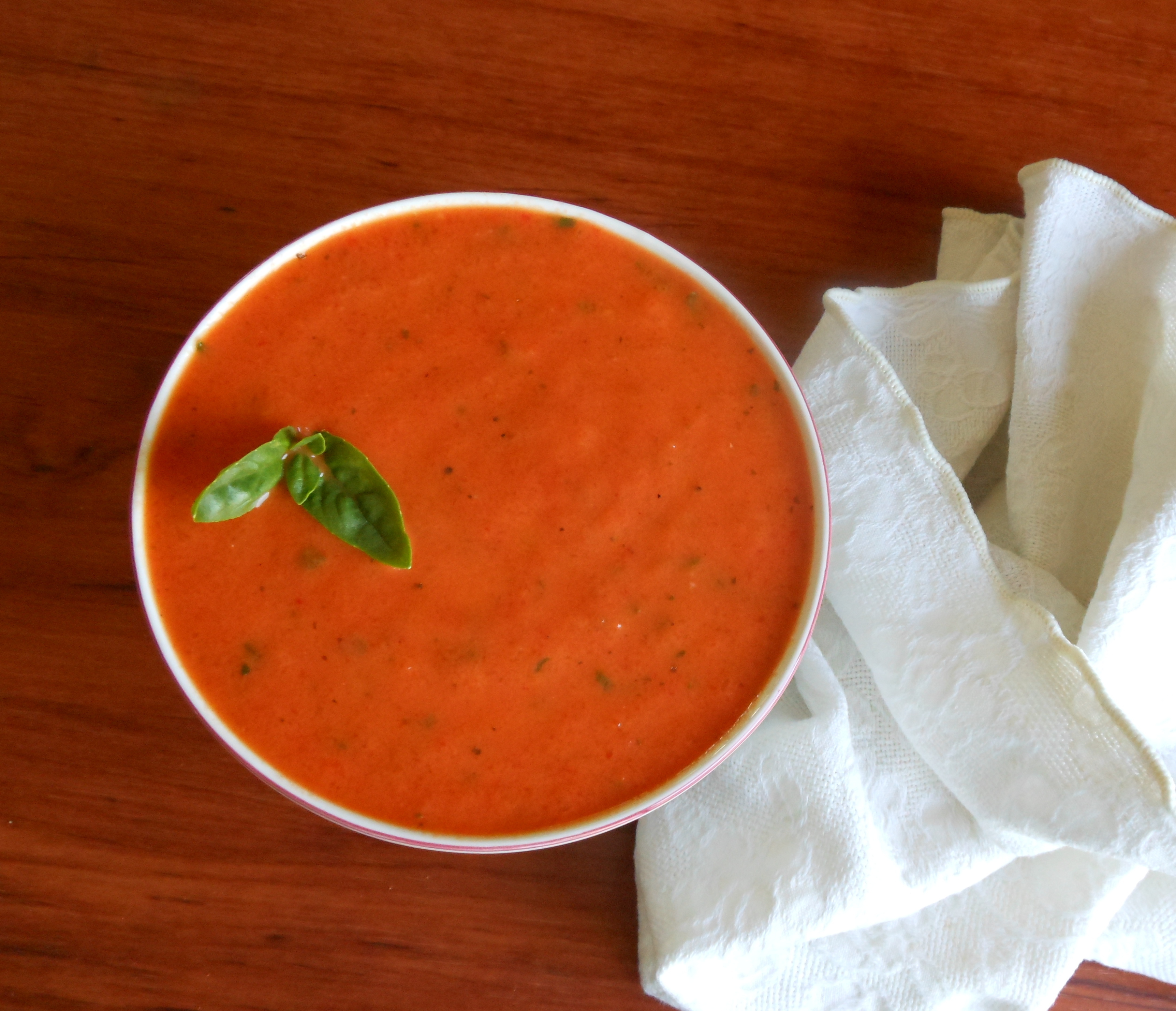
The soup, served hot, is reminiscent of a really good tomato soup, but with a deeper, more complex flavor. Cold, it’s similar to a gazpacho, but smoother both in texture and in taste.

That little splash of cream is a luxurious finishing touch. It’s also an effective way to lessen the heat of a too-spicy dish, if that’s an issue. Fresno chiles aren’t very hot, but I wanted to make sure Laurie had a mellow soup for that sore throat. The cream made sure of that.

Check out this post and other great soups (and salads and sammies) on Souper Sundays at Kahakai Kitchen.

Roasted Red Pepper Soup
4 bowls, or 8-10 appetizer-style shots

1 small onion, chopped
2 cloves garlic, minced
2 tbs. olive oil
1 fresno chile, chopped (or another red chile)
salt and pepper
2 cups coarsely chopped roasted red peppers*
2 cups skinned, chopped tomatoes**
2 cups chicken stock (or vegetable stock)
3 tbs. chopped fresh basil
2 tbs. heavy cream
minced chives, chive flowers, or basil sprigs for garnish

In a large saucepan, sauté the onion and garlic in the oil until translucent. Add the fresno, season with salt and pepper, and sauté until the chile is tender and the onions are lightly browned. Add the roasted red peppers, tomatoes, and stock. Bring to a boil, reduce the heat, and simmer, covered, for about 20 minutes. You’re looking for the veggies to be breaking down a bit, and for the flavors to meld.

Purée the soup in a blender or food processor until smooth. Taste and add more salt and pepper if necessary.  Stir in the basil, and give it another whirl so that the basil is reduced to green flecks. Stir in the cream.

Serve this soup hot, or refrigerate it and serve cold.

Posted in appetizers, main courses, soups, veggies | Tagged , , , , , , | 5 Comments

Lemon-dijon chicken with scallion cream

Saturday night, Tom and I met friends at the Indian Crossing Casino to hear Otis and the Alligators, a great blues band. As far as I know, the Casino has never lived up to its name in the gambling sense. It’s been a concert arena since the days of Glenn Miller and before. Set on (and I do mean ON) the Chain O’Lakes, it’s an unpretentious barn of a building with a bar, a large deck over the water, and a casual, beachy vibe.

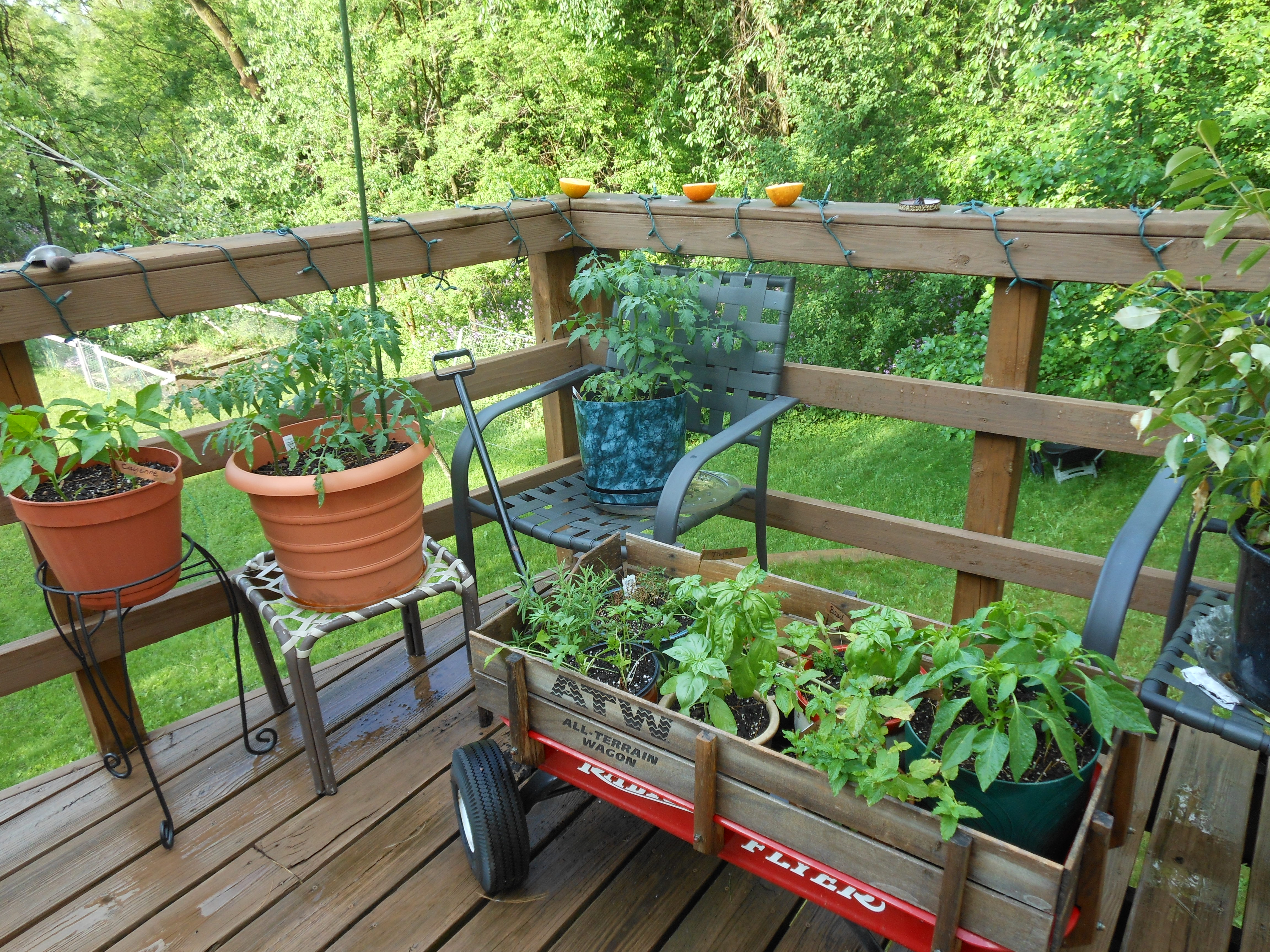
Sunday night, we grilled out and ate dinner on the deck. This sums up a perfect summer weekend: friends, great music, and outdoor dining. The herbs take up residence on the deck (along with the tomatoes and peppers) so I can grab a few sprigs quickly as I cook.

Herbs, tomatoes, and peppers on the deck. The oranges on the railing are to feed the orioles.

The joy of these meals is that they’re simple, relaxed, and usually pretty darned healthy. The chicken marinade is simple but full of big flavors: dijon mustard, fresh lemon juice, fresh herbs, and a glug of fruity olive oil to smooth things over. My basil was getting leggy (already!), so that was the featured herb, but thyme and rosemary also work well, solo or in combination. It’s not a vast quantity of marinade, but it doesn’t need to be.

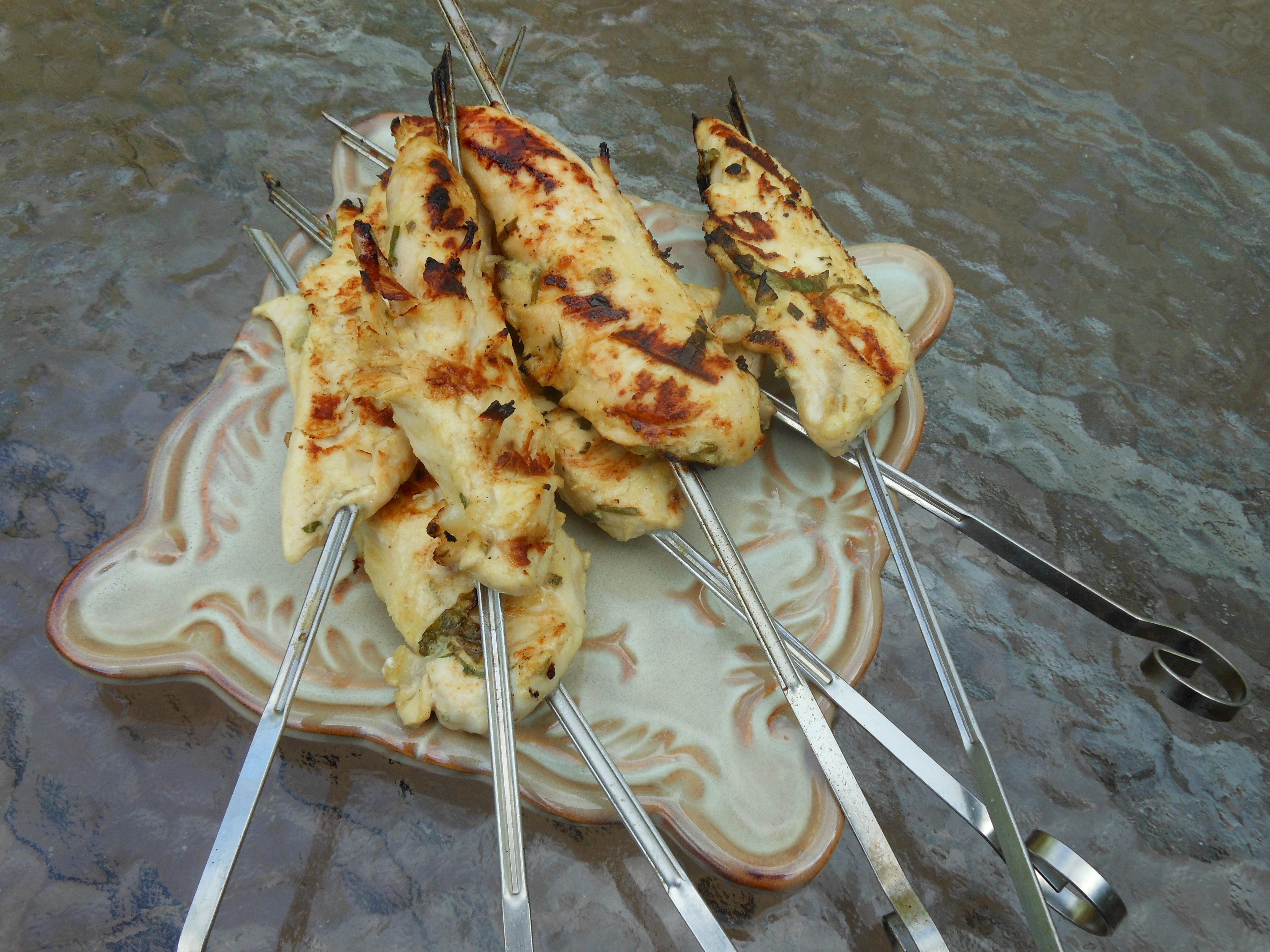
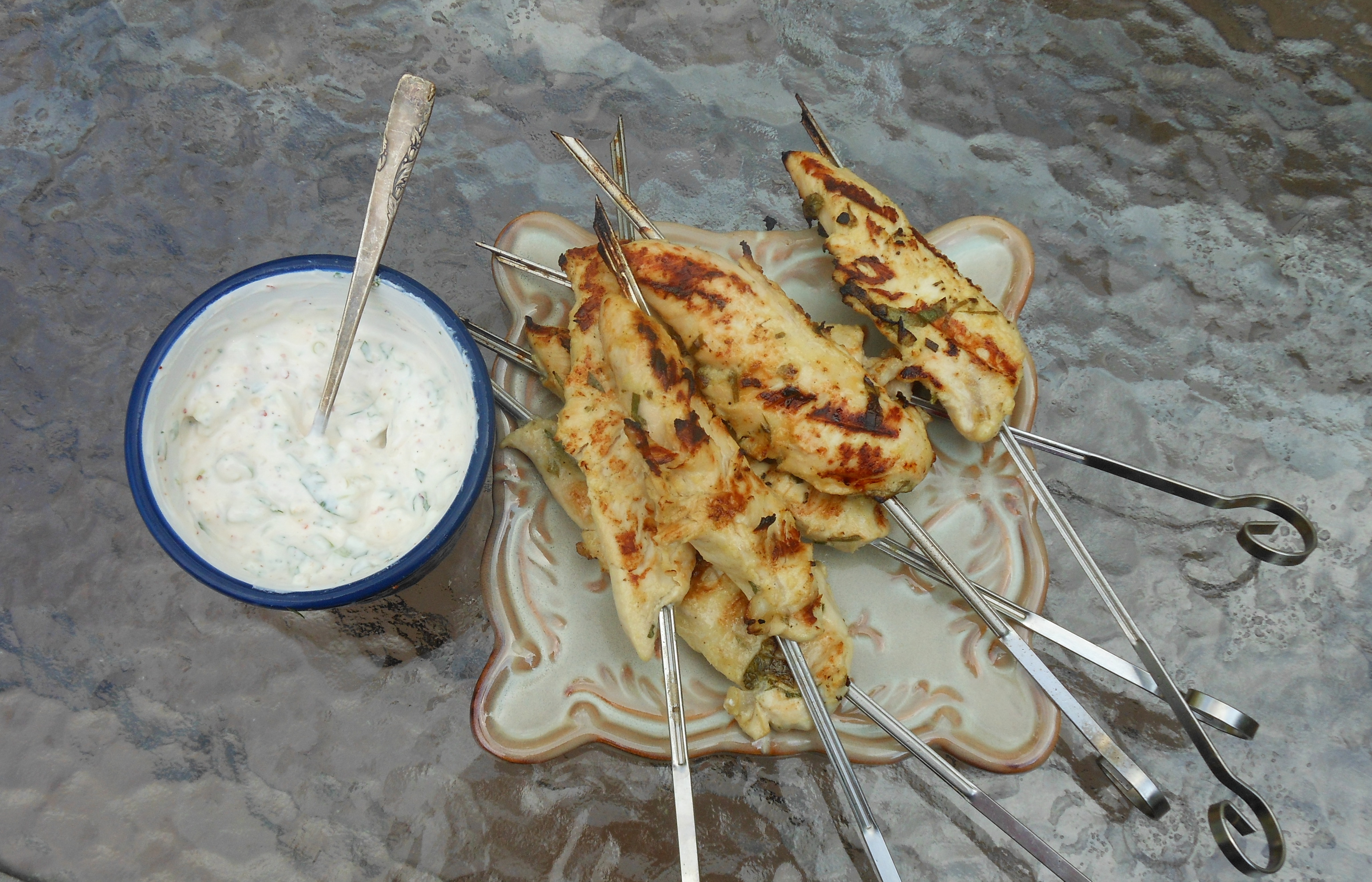
I used chicken tenders on skewers this time, but I usually just pound boneless breasts thin and grill them. Try cutting the chicken into thin strips and skewering them satay-style for appetizers. The grilled chicken is tender and juicy, with much more flavor than you usually associate with white meat.

The sauce also features lemon and herbs, with a focus on scallions. Lemon juice brings some bright acidity to the sour cream. If you prefer to use Greek yogurt, try using lemon zest instead of juice since the yogurt is already tangy. The honey mellows out the tanginess without adding the slightest bit of sweetness, by the way.

We often grill vegetables or fruit as well as a protein, but this time I set some red bell peppers and onions in a covered skillet with olive oil, white wine, and a drop or two of honey for a slow braise.

Grilled Lemon-Dijon Chicken with Scallion Cream
Serves 3 to 4 

1/4 cup dijon mustard
juice of 1 large lemon
3 tbs. olive oil
2 tbs. chopped fresh basil
2 tbs. chopped parsley
1 tsp. salt
1 tsp. black pepper
2 scallions, sliced
1 lb. chicken

Scallion Cream:
1/2 cup sour cream (I used low-fat)
juice of 1/2 lemon
2 scallions, minced
1/2 tsp. honey
salt and pepper to taste

At least 2 hours before you fire up the grill, whisk the mustard, lemon juice, oil, herbs, salt and pepper in a small bowl. (I use a measuring cup with a spout to make pouring easier.) Put the onions and chicken an in a sealable plastic bag and pour the marinade over. Seal the bag and give it a good rubdown to distribute the marinade over the chicken. Refrigerate for at least 2 hours or up to overnight.

Meanwhile, make the scallion cream: Stir together the sour cream, lemon juice, scallions, honey, salt and pepper. Refrigerate until ready to serve. The sauce is best if it can also sit in the fridge for a few hours.

Fire up the grill. Pull the chicken pieces out of the marinade (no need to wipe off) and grill until golden and cooked through. I used boneless, skinless chicken breast tenders which I skewered; they took about 4 minutes on each side on a hot grill. We’ve also done this with boneless, skinless breasts pounded thin, which take about the same amount of time. Serve with the scallion cream.

Posted in main courses, meat, poultry,and fish, sauces | Tagged , , , , , , , , , | 3 Comments

Asparagus, bacon, and ricotta tart

So often, our dinners are inspired simply by what’s in the house. At the moment, that’s asparagus, bacon, and a batch of homemade ricotta. Normally that would result in 1) pasta, or 2) risotto, or maybe 3) quiche, but I was hankering for something new.

Melissa at Shoots & Roots has a photo of a beautiful asparagus tart on her home page; I used her recipe as a jumping-off point. I met Melissa when I participated in the Great Food Blogger Cookie Swap (I highly recommend it for all food bloggers out there). I met some great women, and have followed their blogs ever since.

We used our organic, thick-cut bacon for this tart (only one pound left!), which is not nearly as salty as commercial bacon; go easy on the salt if you use grocery-store bacon. I blanched the asparagus first, but if you use very thin stalks, you could skip this step. Next time I’d cut my stalks all the same length for maximum beauty, but we were hungry.

We ate far more of this tart than was strictly advisable, considering that bacon + puff pastry does not make for a low-calorie dinner. But it was such a perfect combination of flavors and textures it was hard to resist. I’d serve it with a citrus salad next time. Because there will definitely be a next time. Oh yeah.

Asparagus, Bacon, and Ricotta Tart
inspired by Shoots and Roots’ Asparagus and Gruyere Tart
Serves 4 as a main course, or 8-10 as an appetizer 

1 lb. (2 sheets) frozen puff pastry
1/2 lb. asparagus
6 slices thick-cut bacon
1 cup ricotta (preferably homemade)
3 tbs. chopped chives
3 tbs. chopped parsley
1 tsp. grated lemon zest
salt and pepper
1 cup grated parmesan, divided

Heat the oven to 400 degrees F. Set the sheets of puff pastry out to thaw for an hour, or — better yet — thaw them several hours ahead of time in the fridge.

Trim tough ends off  the asparagus. If you like a perfectly symmetrical tart, you can line them up and cut them all the same length, but you don’t have to be that picky if you don’t want to. Steam the asparagus for about 4 minutes until crisp-tender. Place on a kitchen towel to drain.

Cook the bacon until crisp. Set on paper towels to drain.

In a small bowl, mix the ricotta with the chives, parsley, and lemon zest. Taste and add salt and pepper; remember you’ll be using both bacon and parmesan, so undersalt just a bit.

Roll the puff pastry out just a little with a rolling pin, mostly to smooth out the seams. Place the sheets on parchment on one large cookie sheet or two small ones. Score a line about 1 inch inside the edge on both sheets (don’t cut all the way through; just mark a line). Using a fork, prick inside the edges of both sheets about every 1/2 inch. Bake for 15 minutes. The pastry will still be pale and will puff up, but it’ll settle down as you add the toppings, and you’ll have a pretty, flaky border.

For each tart, spread about 1/2 cup of the ricotta mixture over the center of the area you pricked with a fork. Sprinkle about 1/4 cup parmesan over the ricotta. Crumble three slices of bacon over the cheese. Arrange half the asparagus on top; sprinkle 1/4 cup parmesan over the top. Bake for 20 minutes until golden. Serve hot, warm, or at room temperature.

Posted in appetizers, baked goods, main courses | Tagged , , , , , , | 12 Comments

blueberry banana muffins

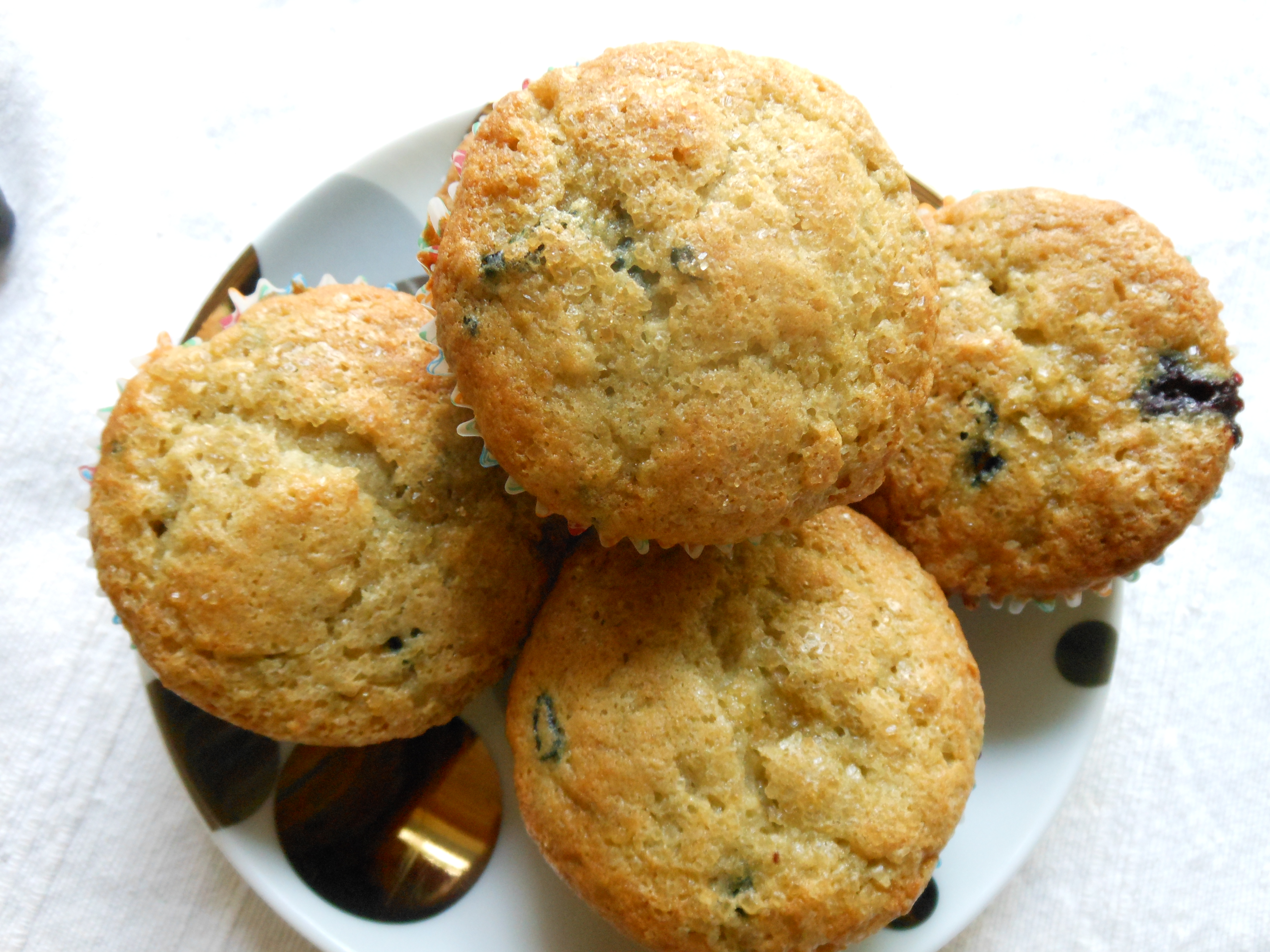
Rules were broken while making these muffins.

I’m all about experimenting with savory dishes, but I’m strictly law-abiding when it comes to the sweet stuff. Baking is a science. When you upset the balance of wet vs. dry, of gluten and leavening and fat, you’d better know what you’re doing. I’m no baking expert, so I limit my changes to, say, using pears instead of apples, or playing with spices.

My mom is a much better baker than I am. Her banana bread (actually, her mother’s recipe) is perfection. It’s counterintuitive: no spices, no butter, no brown sugar; yet the absence of those ingredients intensifies the banana flavor.

I know this because, in my misguided youth, I altered that recipe in every way possible. Not one version was as good as the original, and some were just terrible. So Grandma’s banana bread recipe remains unmolested.

Until now. I don’t know what made me try combining a blueberry muffin recipe with the sacred banana bread, but boy, did it work, even though it meant adjusting the levels of flour and milk.

A few quick tips:
–The riper the bananas, the better the muffins. The skins should have some blackening, and the fruit should be tender and soft (n0t liquid).
–I’ve only made this recipe with fresh blueberries; if you use frozen ones you may need to reduce the amount of liquid.
–I sprinkle extra sugar on the tops before the muffins bake, because we love that subtle crunch. Feel free to skip this step if you want to use less sugar.
–I believe you can use buttermilk in place of the soured milk, but I haven’t tried it.

So for once, I’m asking you not to deviate from this recipe — unless, unlike me, you actually know what you’re doing in the realm of pastry. In that case, have at it, and let me know what you come up with.

Blueberry Banana Muffins
makes 16 muffins, or two 8×4-inch loaves, or 8 muffins and 1 loaf

2 cups flour
1 tsp. baking powder
1 tsp. baking soda
1 tsp. salt
1/4 cup shortening
1/4 cup butter, softened
3/4 cup sugar, plus more for sprinkling
1 cup mashed very ripe bananas (3 small)
2 eggs
1 tsp. vanilla
1 tsp. vinegar (rice wine or cider) to sour the milk
1/4 cup whole milk
1 cup fresh blueberries

Heat the oven to 350 degrees F.  Grease and flour the muffin tins, or pop in paper liners. (If you’re making loaves, grease and flour two 8×4-inch loaf pans.)

In a small bowl, stir together the flour, baking powder, baking soda, and salt. Set aside. Pour vinegar into milk (it’s supposed to curdle). In a large bowl, beat shortening and sugar until fluffy. Beat in eggs and vanilla until the batter is thick and the mixer leaves ribbony patterns, about 3 minutes.

Stir half the flour mixture into the batter just until barely blended. Stir in the bananas and soured milk, then the rest of the dry ingredients with just a few strokes. Stir in the blueberries just until blended. Spoon into the prepared pans and sprinkle the tops with extra sugar if you want it.

Bake muffins for about 20 minutes, loaves for 35-40 minutes, until a toothpick inserted in the center comes out with a few moist crumbs, but no gooey batter.

Posted in baked goods | Tagged , , , | Leave a comment

Zucchini with pepitas: Too much is just enough

When is a vegetable cooked properly? Should it retain some crunch, or  be cooked to melting tenderness? Tom and I are often at odds on this subject.

We both prefer our carrots to be steamed (or roasted, or braised) nearly to oblivion. “No such thing as an overcooked carrot!” we happily exclaim. (You are well within your rights to disagree; just remind us not to serve carrots when you’re over for dinner.)

Venture beyond root vegetables and harmony flies out the window. Tom generally prefers all his veg mushy soft. I like my asparagus, broccoli and green beans crisp-tender — and still bright green; no olive drab for me, thank you very much.

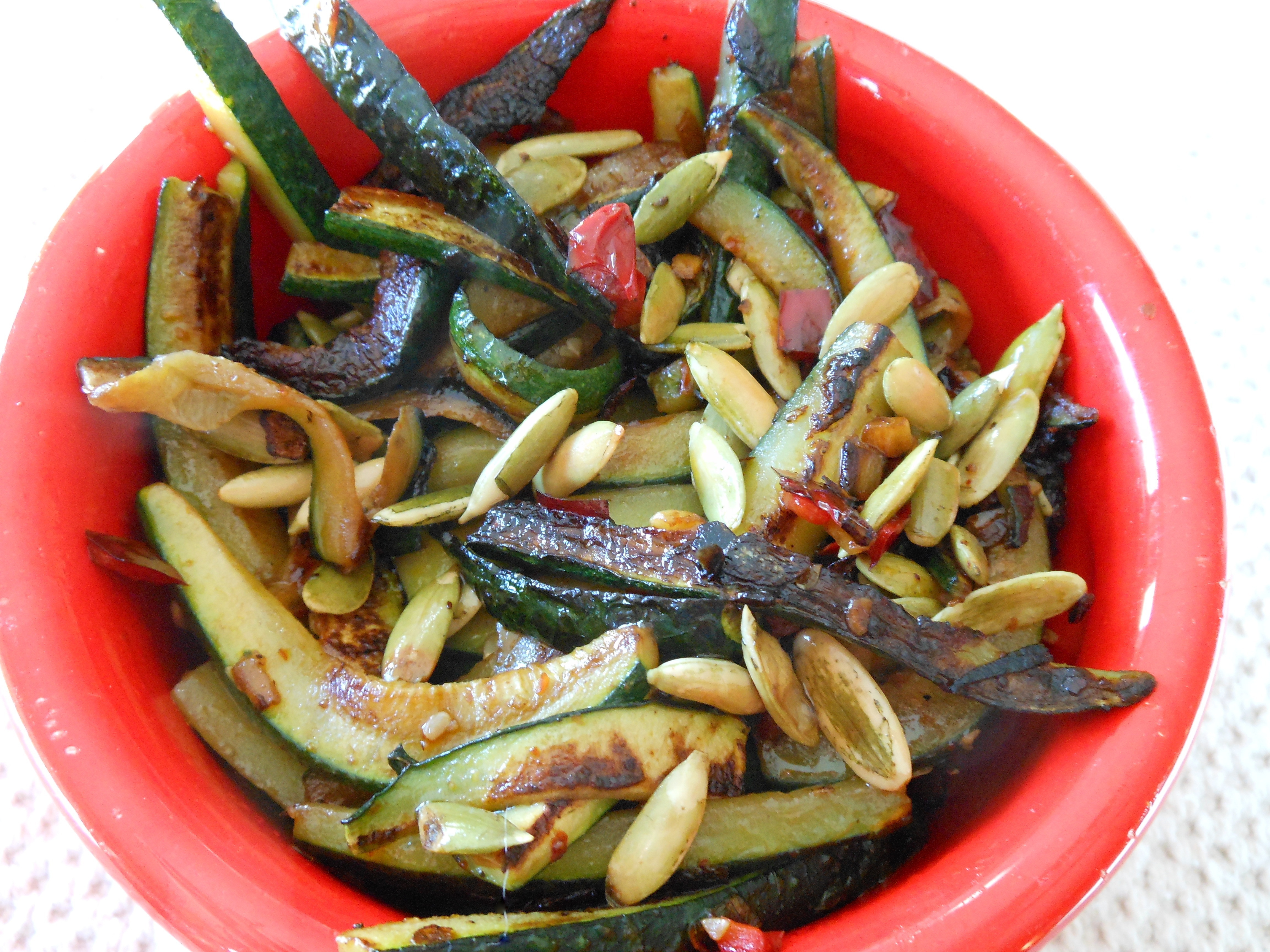
We come together once again on the matter of zucchini. We like our summer squashes, green or yellow, cooked over high heat until they acquire a deep brown finish. This can be achieved in a hot skillet or over a grill. Some may consider that the zucchini is burned, but they would be wrong. (If they’re reduced to crumbly bits of charcoal, you have gone too far, but you knew that.)

Y’all know about caramelization. That’s what happens here. Those chocolatey bits are sweet and slightly smoky, and the zucchini takes on a creamy texture.

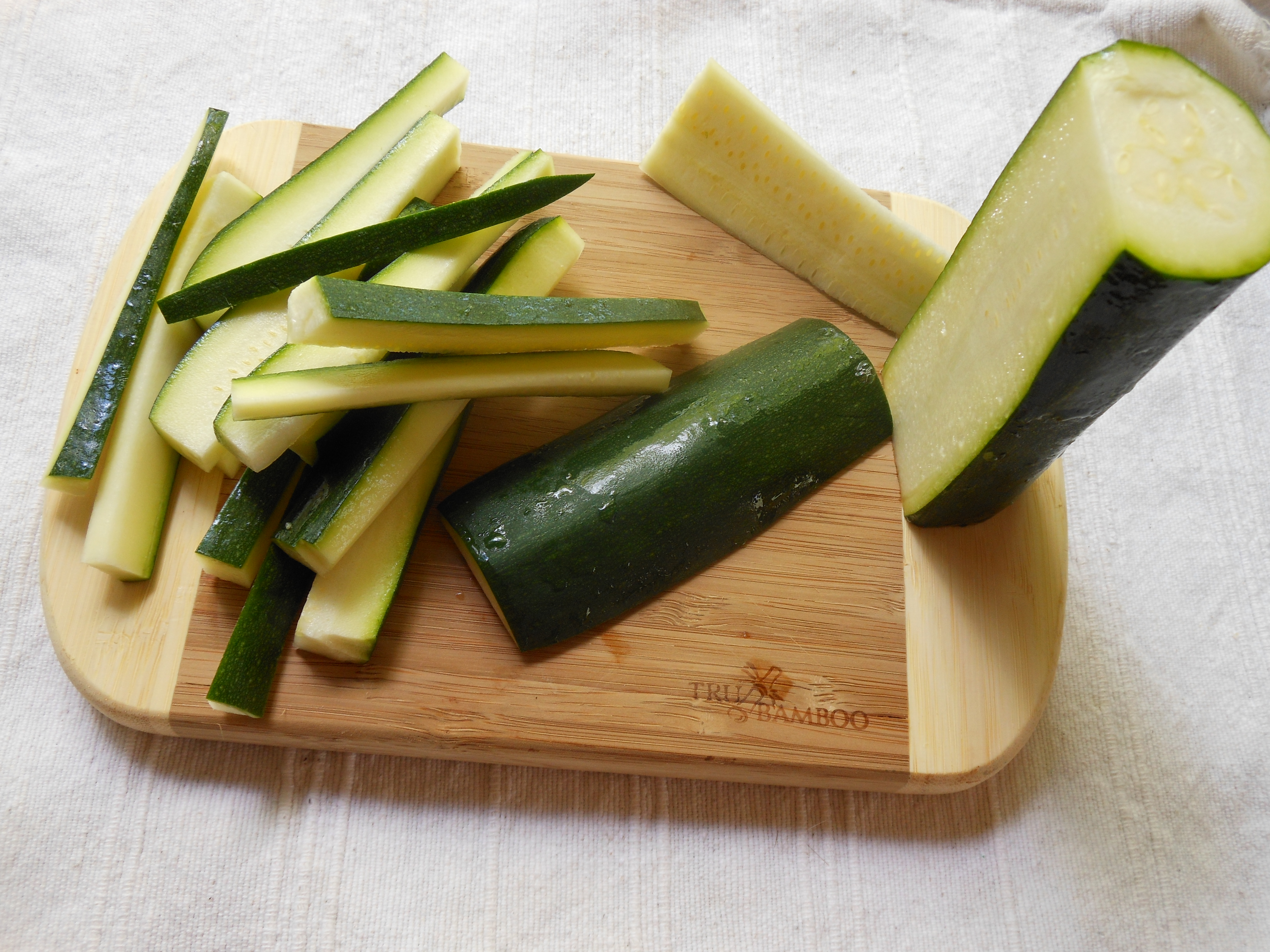
You could slice or rough-chop the zucchini (and I do sometimes), but I like how the stiff squash batons soften and curl around each other. The lovely green pepitas* provide a crunchy contrast. As usual, I couldn’t resist adding a minced Fresno chile; the red flecks are so pretty against the green.

*Pepitas are sunflower seeds. Buy them without their shells; I find mine in the Mexican section of my local grocery store.

Pan-Roasted Zucchini with Pepitas
serves 4

3-4 zucchini to make about 4 cups once sliced
1 tsp. plus 1 tbs. olive oil, divided
1/2 cup pepitas
1 clove garlic, minced
1 shallot, minced
1 Fresno chile, minced, optional
salt and pepper

Trim the ends off the zucchini. Stand one zucchini on an end and slice vertically. You’re aiming for a long piece with all the skin and roughly an inch or less of flesh. Continue slicing around the zucchini until you have long, thin strips and there’s a seedy core left over. Discard the core and slice the rest into 1/2-inch thick sticks 3 to 4 inches long. (This is a great way to use those baseball-bat-sized zucchini.) Or you can just slice them into rounds, if the sticks are too fussy for you.

Warm 1 tsp. of the oil in a large skillet over medium heat. Add the pepitas and toast for a few minutes, until they are lightly toasted. Tip them into a bowl and set them aside for now.

Add the remaining tbs. oil to the pan along with the garlic, shallots, and chile (if using). Cook over medium heat for a few minutes to soften the shallots and mellow the garlic. Add the zucchini sticks, raise the heat to high (or medium-high, if you have a super-hot burner) and season with salt and pepper. Sauté, stirring now and then, for about 10 minutes, until the zukes are tender and show some serious browning. Add the toasted pepitas, cook 1 minute longer, and serve hot.

Posted in sides, veggies | Tagged , , , , , , , | 1 Comment

Spinach, prosciutto and olive pizza

We’re fairly openminded diners, the three of us, but each of us has a small list of foods we’re not overjoyed to eat. I’m not a big fan of ground beef or sweet-and-sour anything; Luke avoids onions, mayonnaise, and all seafood except for calamari; Tom has an aversion to mushrooms and olives.

When one of us is gone, the others use that opportunity to eat the foods the absent family member dislikes. So, with Tom spending the evening in Madison, Luke and I went for pizza with olives and spinach. Tom loves both pizza and spinach — but separately.

Confession time: I used pizza dough from a can. My right hand’s still out of commission, so kneading is out of the question for several more weeks. It turns out I tore the ligaments that attach the thumb to the base of the hand, so we’re looking at six to eight weeks of recovery. I am keenly aware of the lack of a stand mixer.

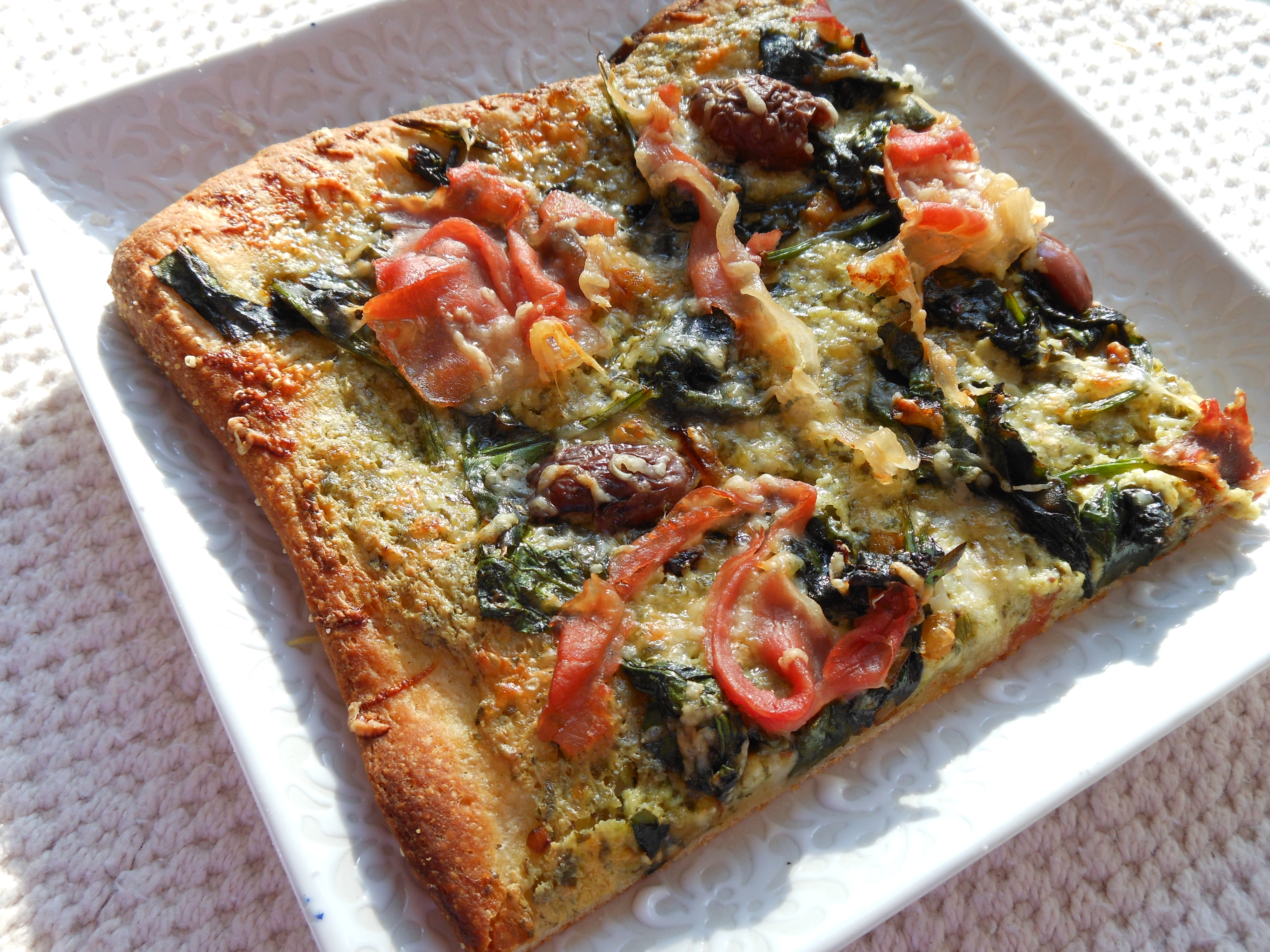
Ricotta swirled with pesto (I used chive-pistachio) is a creamy, herbalicious stand-in for tomato sauce. Calamata olives bring briny saltiness; spinach, a mellow earthiness and a boatload of nutrition. The strips of prosciutto on the top layer crisp up in the hot oven, and crackle when you take a bite.

The whole thing goes together quickly. You can certainly use frozen spinach in place of the fresh; thaw it and squeeze it dry. No prosciutto on-hand? Use a good-quality salty ham instead.

The cornmeal serves two purposes: it keeps the dough from sticking to the pan (or the parchment), and it makes the crust extra-crunchy. It’s not necessary, but do give it a try.

Spinach, Prosciutto, and Olive Pizza
serves 3-4

3 tbs. cornmeal, optional
1 lb. (about) pizza dough
1 shallot, minced (or 1 tbs. minced onion)
1 clove garlic, minced
1/2 tsp. aleppo pepper flakes, or 1/4 tsp. hot red pepper flakes
1 tbs. olive oil
10 oz. fresh spinach
salt and pepper to taste
1 cup ricotta (storebought or homemade)
1/4 cup pesto (basil or chive)
3/4 cup black olives, pitted and halved
3 oz. prosciutto
1 cup grated parmesan

Heat the oven to 475 degrees F. Line a cookie sheet with parchment and sprinkle with cornmeal. Spread the pizza dough on the pan.

Sauté the shallot, garlic, and aleppo pepper in olive oil until the shallot is tender and lightly browned. Rinse the spinach and add to the pan with the water still clinging to the leaves. Sauté for a few minutes, just until the spinach is wilted and any liquid has evaporated. Set aside to cool.

Mix the ricotta and pesto in a small bowl. Spread the ricotta mixture evenly over the dough. Distribute the spinach over the ricotta, then top with the olives. Sprinkle with parmesan. Pull the prosciutto into shreds and drape on the top. Bake for about 15 minutes, until the edges of the crust are golden and the prosciutto is crisp.

Posted in baked goods, main courses | Tagged , , , , , , | 7 Comments