Zucchini, bell pepper and wheat berry pilaf

veg-wheatberry1

I need to apologize for my absence. Our one and only child graduated from high school last week. We’ve spent the last few weeks attending awards ceremonies and graduation parties, and planning our own celebration. Here is our wonderful Luke with his exhausted but proud parents:

NanLukeTom

We had a joint party with three other families. I highly recommend this. There’s a surprisingly vast amount of work involved in preparing for a gathering of family and friends (about 300, in our case). Tom and I spent two days thawing, splitting, pounding, marinating and grilling roughly 50 pounds of chicken. We also prepared a giant fruit platter and an equally huge vegetable platter, made two dozen cupcakes (future post), lugged gallons of water and other drinks to the party, decorated and cleaned up.

This amounted to a fourth of the work involved. Our friend Ann, whose son Collin was one of the graduates, made this unbelievable cake from scratch (fondant included):

Cake1The photo doesn’t begin to do it justice. Note the pennants for their future colleges at the top, and Luke’s beloved soccer ball on his locker.

Now that the excitement’s behind us, I’m back to regular cooking. This, I confess, is an older post I’m just getting around to publishing, but I should be back to a more regular schedule. Now, on to our previously scheduled program…

This is the second dish I’ve made with wheat berries. Simmer a big batch in lightly salted water to cover for 45 minutes to an hour until they’re tender but still have texture. Freeze extras in freezer bags.

They’re nutty, nicely chewy, and adapt to a variety of dishes. Here, I combined them with some quickly sautéed vegetables, a little stock, and a shot of lemon juice to brighten the hearty flavors. Use vegetable stock and it’s vegetarian; skip the cheese and it’s vegan. It makes a great side dish, but is hearty and satisfying enough to be an entree. It will also make a great filling for peppers or hollowed-out zucchini or eggplant. In fact, you could substitute eggplant for the zucchini.

The concept will work with other grains such as quinoa, barley and brown rice; I’m making it  tonight with farro, to accompany a grilled pork tenderloin. I’ll add kalamata or green olives, leaving them whole so Tom can pick them out. More for us.

Zucchini, Pepper, and Wheat Berry Pilaf
serves 6 as a side dish, 4 as an entree

2 tbs. olive oil
1 small onion, chopped
1 stalk celery including leaves, chopped
2 cloves garlic, minced
1 bell pepper (any color), chopped
2 small or 1 medium zucchini, halved lengthwise then sliced
1 1/2 cups chicken or vegetable stock
1 1/2 cups COOKED wheat berries
juice of 1/2 lemon
salt and pepper to taste
2 oz. Monterey Jack or pepper Jack cheese, cut in 1/2-inch cubes, optional

Preheat the oven to 350 degrees F. In a large skillet over medium-high heat, warm olive oil. Add the onion, celery, and garlic; sauté for a few minutes until the onion is translucent. Add the pepper and zucchini and sauté for another 10 minutes or so, until the veggies are tender and have a few browned spots.

Pour the cooked wheat berries into a large bowl. Scrape the vegetables over the wheat berries. Pour the stock into the skillet you cooked the veg in and stir to get all the lovely browned bits. Pour the stock over the wheat berries and veg and add the lemon juice. Stir well and taste; add salt and pepper. Stir in cubed cheese.

Bake for about 30 minutes until heated through and bubbly, and some of the liquid has been absorbed.


Posted in main courses, pasta, rice, and grains, veggies | Tagged , , , , , | Leave a comment

Chicken and wheat berry soup

wheatberry-tomatosoup1

Tom bought me a year’s membership to our local co-op for my birthday in December. (Reminder to self: check to see if they still have ramps before the season ends.) I’ve loaded up on all sorts of goodies, especially whole grains (the oatmeal was created shortly after a co-op visit).

Wheat berries are now residing in my pantry. I had a vague idea of a wheat berry pilaf when I bought them. But we were out of soup. This spells imminent disaster in our house. Luke and I rely on a permanent, rotating stash of frozen soups for last-minute meals. We had just polished off the last of the tomato-tortellini soup. I’d made chicken stock the day before, and had some lovely roast chicken in the fridge.

Here’s the reasoning: wheat berries are a lot like barley. Barley is delicious in soup. Ergo, wheat berries should also be delicious in soup.

Luckily, the premise turned out to be true. Even Tom, who is not fond of unusual grains, really liked it. The nutty, chewy berries were a great contrast to the slightly acidic tomatoes and tender chicken. We ate it with the last of the whole wheat bread I’d made the day before (see future posts).

Wheat Berry and Chicken Soup with Fire-Roasted Tomatoes
makes 4-6 servings

1/2 cup wheat berries
2 tbs. olive oil
1 medium onion, chopped
2 cloves garlic, minced
2 carrots, peeled and chopped
2 stalks celery with leaves, chopped
1 tbs. chopped fresh thyme (or 1 tsp. dried)
salt and pepper
1 tsp. Aleppo pepper (optional)
1 can (14 oz.) fire-roasted tomatoes
4-6 cups chicken stock
2 cups chopped cooked chicken
1/4 cup chopped parsley
Parmesan, for garnish

Cover the wheat berries with water and soak for an hour. Drain, rinse, and place in a saucepan with water to cover by an inch or so. Cover the pan and place on high heat. When the water boils, reduce the heat to medium and cook for about an hour until the wheat berries are chewy but tender.

While the wheat berries cook, pour the oil into a large stockpot over medium heat. Add the onions and garlic; season with salt and pepper. Cook for 5 minutes to soften, then add the carrots, celery, thyme, and Aleppo (if using). Cook for 5 minutes longer. Add the tomatoes and 4 cups of the stock. Bring to a boil, then reduce the heat to low and simmer for about 20 minutes. At this stage, you’re just melding the flavors; timing’s not crucial. Taste and adjust the seasoning.

At this point, you can purée part of the soup. I did; I like the texture after a few blitzes of the stick blender. It’s not necessary, though. Stir in the chicken. Check the wheat berries; if they’re done, drain and add them to the soup. Simmer for another 10 minutes, so the wheat berries can absorb the flavors of the soup. Add more stock if the soup is too thick.

Just before serving, stir in the parsley. Use a vegetable peeler to top the soup with curls of parmesan, if desired.

Posted in main courses, soups | 1 Comment

Biscoff with chocolate drizzle

 biscoff3

We’ve been reading about biscoff — also called speculoos — for a while now. It took me forever to figure out what they were. I was shocked to find out that they were those little cookies you get on flights, and secretly relieved — I’d been embarrassed that I have a great fondness for those packaged airline snacks. I’ve been known to insist that Tom and Luke request them so that I could stash the extras in my carry-on bag.

Luke texted yesterday to ask if I could make cookies for a student council event. This was the perfect opportunity to make my own biscoff. I found a recipe on one of my favorite blogs. You’ll notice there’s no link or mention of the site — and there won’t be.  Perhaps I made a mistake while following the recipe, but as my husband is fond of saying, we were not impressed. They weren’t bad, just dry and cakey.

A second search revealed the probable culprit: an egg. None of the other recipes had them; they were more along the lines of shortbread. I went with that version (on multiple blogs), but made two changes: I flipped the sugars, using twice as much brown sugar as white; and I used whole wheat as about a third of the flour.

The first cookies I made were bland side, so using some wheat flour contributes a subtle nutty flavor. (Skip the wheat flour and use nothing but all-purpose flour if you prefer.) Brown sugar adds a caramel note and a little extra moisture. We like heat (see my molasses cookies), so I used quite a lot of spice, including black pepper.

The result is delicately crisp, buttery, and packs a wallop in the spice department. They’re delicious on their own, but a drizzle of dark chocolate plays really well with the cinnamon and pepper. A few crystals of salt provide a surprising crunch. I used some gorgeous Himalayan sea salt that Tom had given me for Christmas (you can see the salmon-pink crystals in the photo), but any coarse sea salt will do. Use a light hand — these are cookies, after all, not pretzels.

Biscoff with Dark Chocolate and Sea Salt
makes about 60 cookies

1 1/3 cups flour
2/3 cup whole wheat flour
1/2 tsp. fine sea salt
1/2 tsp. baking soda
2 tsp. cinnamon
1/2 tsp. ground ginger
1/2 tsp. ground cloves
1/4 tsp. grated nutmeg
1/2 tsp. black pepper
8 oz. (2 sticks) butter, softened
1/4 cup granulated sugar
1/2 cup lightly packed brown sugar
1 tsp. vanilla extract
1 1/2 cups chopped semisweet chocolate or chocolate chips
1 tsp. butter
1 tbs. coarse salt

In a small bowl, stir together the flours, salt, baking soda, and spices. Set aside.

Place the butter and both sugars in a large mixing bowl. Beat on medium speed for 3 to 5 minutes until the mixture is light and fluffy. Beat in the vanilla. Gradually beat in the flour mixture until just combined. Scrape the dough onto a sheet of waxed paper or plastic wrap. Flatten the dough into a disk, wrap well, and refrigerate for 10 minutes (longer and the dough will be too stiff to roll out). Heat the oven to 375 degrees F.

Line a large cookie sheet (or 2 smaller sheets) with parchment paper. Lightly sprinkle the countertop with flour; rub a little flour on a rolling pin as well. Unwrap the dough and roll out to 1/4-inch thick. Cut out shapes with a cookie cutter or a juice glass, or use a pizza cutter to cut squares. Place on the cookie sheet, about an inch apart — they will spread a bit.

Bake for 10  to 11 minutes until very lightly browned at the edges, and just slightly undercooked. Cool the cookies for 10 minutes on the cookie sheet (they will finish cooking then and firm up), then transfer to a rack to cool completely.

Place the chocolate in a small glass or ceramic bowl along with the butter. Microwave on high for 30 seconds. Give the mixture a stir, then microwave on high for an additional 30 seconds. Stir again; if the chocolate is not yet melted, smooth and runny, microwave on 15-second intervals, stirring after each round, until the chocolate is of the proper consistency. Scrape the chocolate into a piping bag with a very small tip. If you don’t have a piping bag, scrape the chocolate into a small locking plastic bag, then snip off the corner. Take off only the tiniest bit, in order to create a thin stream of chocolate. Drizzle the cookies with the melted chocolate, then immediately top each cookie with a few crystals of salt. If you can stand it, keep your hands off for a few hours to let the chocolate set up.

Posted in baked goods, sweet stuff | Tagged , , , , | 1 Comment

Crisp, tender chicken carnitas

carnitas1

I am a relatively new but quite enthusiastic convert to Pinterest. One of my boards, naturally, is recipe ideas. I found an intriguing recipe for pork carnitas there.

Carnitas are all about contrast. They’re traditionally made with a big ole hunk of pork that’s braised into submission, shredded, then fried over high heat in its own fat. The result is meltingly tender, spicy meat with crunchy bits scattered throughout.

The original recipe is from Ali at Gimme Some Oven. She had the brilliant idea to do the bulk of the cooking in the slow cooker, then pop the shredded meat under the broiler. The slow cooker makes the dish easier; the broiler makes it healthier. Adding a little cooking liquid to the meat while it broils is pure genius: the chicken (or pork) becomes crispy without drying out.

I wanted to lighten up the dish even more, so I used chicken thighs in place of the fatty pork. I’m always trying to add vegetables to any dish, so I tossed in a sweet red bell pepper.

You could easily double the amount of chicken. I’d leave the beer the same, but boost the salt and chili powder a bit if so. Lessen (or omit) the Aleppo if you want a milder dish, or use what the original recipe suggests: chipotles in adobo. I’d make these also with a big hunk of pork — the classic protein for carnitas, although I’d probably trim most of the fat first.

I’m thinking avocado slices would round these tacos out nicely next time. And there will be a next time.

(Apologies for the gawdawful photo.)

Chicken Thigh Carnitas with Red Peppers
adapted from gimmesomeoven.com
serves 4

1 small onion, coarsely chopped
1 red bell pepper, coarsely chopped
2 cloves garlic, minced
1 tsp. salt
1 tsp. Aleppo pepper
1 tsp. mild chili powder
1/2 tsp. cumin
1/2 tsp. brown sugar
12 oz. beer
1 1/2 lbs. boneless, skinless chicken thighs
for serving:
4 small tortillas
1 cup shredded cheddar
1/4 cup chopped fresh cilantro or parsley
1/4 cup thinly sliced scallions
1/4 cup sour cream or plain Greek yogurt

Combine onion, bell pepper, garlic, salt, Aleppo, chili powder, cumin, brown sugar and beer in a slow cooker. Trim any visible fat from the chicken and stir the thighs into  the slow cooker. Cover and cook on low for 6-8 hours or on high for 3-4 hours. (If all the ingredients are cold when they go into the pot, start it on high for the first 30-60 minutes, then reduce heat to low.)

Heat the broiler and move a rack to highest setting. Remove chicken and some of the onion pieces to a large pie plate or small cookie sheet (I use the baking sheet from my toaster oven). Shred the chicken with two forks. Stir in some of the onion, and add a few spoonfuls of the sauce.

Pour the remaining sauce and veggies into a saucepan and place over high heat. Bring to a boil and boil furiously to reduce to two-thirds or one-half of original volume. Use a stick blender to puree the veggies into the sauce. Shut off the heat and keep warm.

Slide the baking sheet under the broiler. Broil for about 5 minutes until crispy bits appear. Pull out the pan and stir in about 1/4 cup of the sauce. Stick the pan back under the broiler for a few minutes until the chicken is both moist and crisp on top. Serve on tortillas with cheese, cilantro, scallions, sour cream and a drizzle of extra sauce.

Posted in main courses, meat, poultry,and fish | Tagged , , , , , , , | 2 Comments

Cherry-vanilla oatmeal

cherryoatmeal

A number of my friends have changed their eating habits lately. Some want to lose weight; others, with an eye on their family trees, are warding off potential genetic threats such as diabetes and heart disease. They’re all doing really well: they’re feeling and looking pretty darned terrific. They’re my inspiration.

I’m not ready to strip down my diet to veganism or to give up all carbs. That is the right and proper path for some, and I support that. My approach, at this stage, is simply to cook and eat more mindfully. I try to think about the food I prepare and eat: Can I use a little less oil to sauté those onions? Add a few more veggies and a little less cheese? Substitute sorbet and frozen yogurt for full-fat ice cream?

I don’t want to give up delicious food; I want to make healthy food delicious. Portion control is a major factor here as well, of course. I have installed a temporary ban on brownies in the house, since I find it curiously difficult to eat one small brownie and leave the rest in the pan.

Breakfast has never been my downfall. I don’t overeat at breakfast; in fact, I often have to talk myself into eating at all that early in the morning. Still, there’s room for improvement. I’m currently switching out boxed cereals for oatmeal.

Confession time: I’m an oatmeal snob. None of that prepackaged, chemical-laced mush for me. That powdery stuff in individual packets — Just Add Water! — tastes more like sugary glue than oats to me.

I like my oatmeal to be just barely sweet, with the nutty flavor and pleasantly chewy texture that only real whole grains can provide. Cooking the grains in milk makes them creamy; using half water keeps them light. Oats, like pasta, benefit from a little salt, and like pasta, the salt needs to be added at the beginning so it will be absorbed.

Adding dried cherries early in the cooking does three things: it allows the cherries time and liquid to plump, it flavors the oatmeal as it cooks, and it turns the cereal a delicate pink. I supported our local produce by using Door County cherries, which grow on the “thumb” peninsula of Wisconsin. They’re plump and tangy, almost (but not quite) sour. Honey adds sweetness, and vanilla adds a richness.

Food 52’s website has a section called Genius Recipes, featuring head-slappingly brilliant ways to cook all sorts of dishes. There I found April Bloomfield’s English Porridge. The genius is in the combination of steel-cut oats for chew and whole rolled oats for creaminess. I changed the sweetener from brown sugar to honey and added the cherries and vanilla. I also added the steel-cut oats to the cold liquids in the saucepan before it’s heated, then stirred in the rolled oats a few minutes later. This allows the rolled oats to hold their shape but the steel-cut oats to be tender.

You can use any dried fruit, or add fresh fruit to the cooked oatmeal at the table. Substitute brown sugar, agave, or maple syrup for the honey. Stir in a tablespoon or two of wheat germ before or after cooking. Skip the vanilla and add a pinch or two of cinnamon or nutmeg or (my favorite) coriander (the ground seeds, not the fresh herb that we call cilantro in the US).

I make a full recipe and store the leftovers in the fridge. The next morning (and a few mornings afterward), I scoop out a little oatmeal, stir in a tablespoon or two of milk, and heat for about a minute in the microwave. Or I stare at the empty spot in the refrigerator where the oatmeal used to be, before my husband and son found it and devoured the lot.

Cherry-Vanilla Oatmeal
adapted from April Bloomfield, via Food52
makes 4 small or 2 large servings

1 1/2 cups milk (I used skim)
1 1/2 cups water
3/4 tsp. sea salt
1 tsp. vanilla
1 tbs. honey
1/2 cup steel-cut oats
1/2 cup old fashioned rolled oats
1/3 cup dried cherries
To serve:
more milk and/or honey to taste
chopped walnuts or pecans

Pour milk and water into a medium saucepan. Place over medium heat. Stir in salt, vanilla, honey and steel-cut oats. Bring to a boil. Stir in the rolled oats and cherries. (You can add all the ingredients at once, but the steel-cut oats benefit from a bit more time.)

Reduce heat to medium-low and cook, stirring often, for about 20-25 minutes until the oats are tender but still a little chewy and the liquid that isn’t absorbed is creamy.

Serve topped with whatever makes you happy: honey, brown sugar, a splash of milk, a handful of nuts. Leftovers will keep in the fridge for a few days. Reheat in the microwave with a little milk.

Posted in breakfast, pasta, rice, and grains | Tagged , , , , , , | 1 Comment

Broccolini-Bacon Pizza

broccolinipizzapiece2

Broccolini is my favorite vegetable. I am a big fan of vegetables in general, so this is saying a lot.

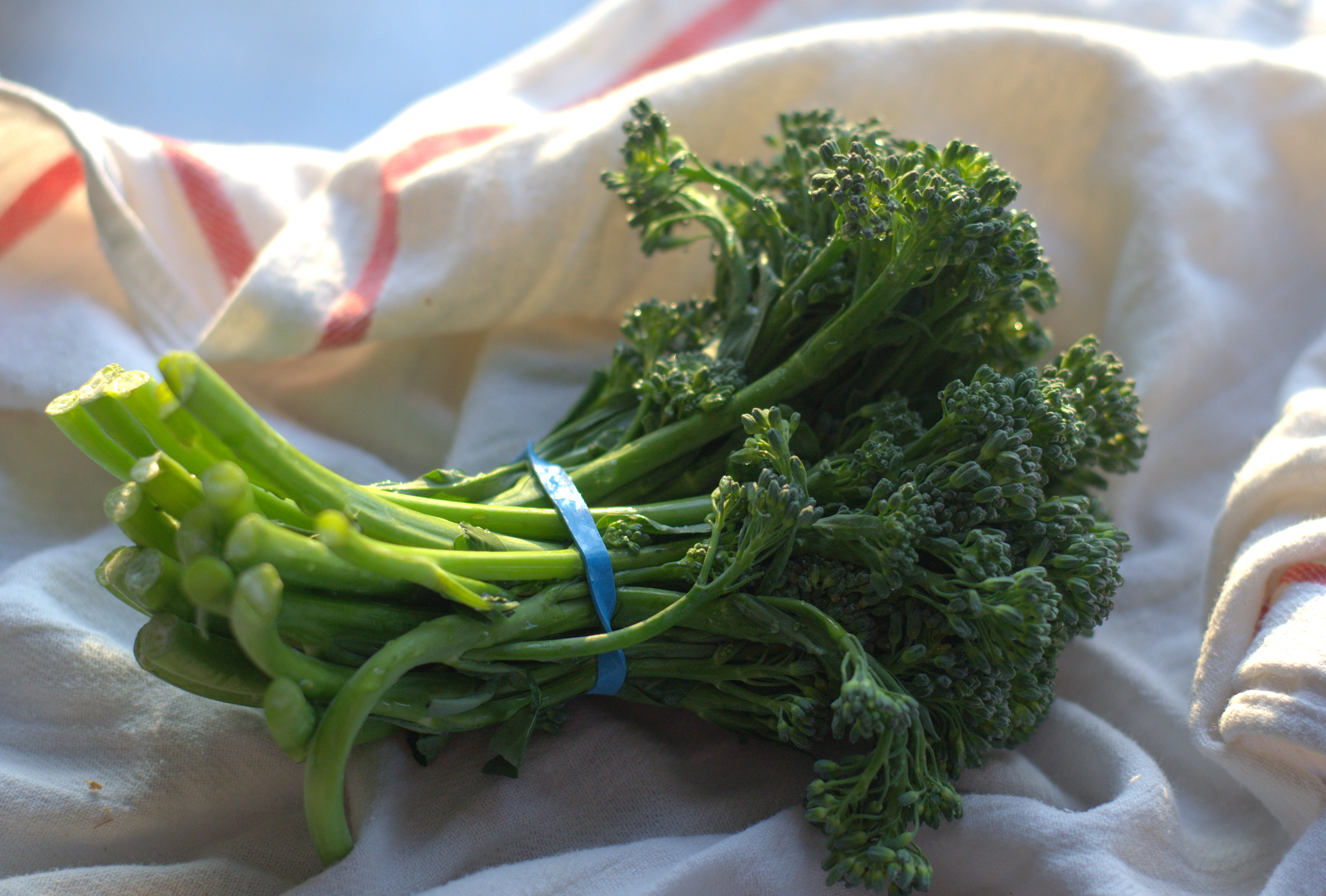
Broccolini is not, in fact, another name for broccoli rabe, nor is it simply baby broccoli. It’s a fairly recent cultivated hybrid of regular broccoli and Chinese broccoli. The vegetable has long, tender stems topped with small buds and a few dark green leaves. The entire thing is edible; just trim off the last 1/2 inch or so to make a fresh cut.

The flavor is reminiscent of regular broccoli, but milder and sweeter, less cruciferous, and slightly reminiscent of asparagus.. Just a few minutes in a steamer is all that’s needed for a deliciously tender veg.

broccolini

That hint of asparagus flavor made me think of our asparagus, bacon, and ricotta tart. I used pizza dough instead of puff pastry and halved the bacon to ease up on the calorie count a bit. Instead of herbs, I flavored the ricotta with caramelized onion and garlic, to play off the broccolini’s sweetness.

I haven’t used store-bought ricotta since I learned how to make it at home. If you don’t have homemade (or the time to make it), you may need to boost the flavor with a little lemon juice or zest.

Try shreds of prosciutto instead of the bacon, but don’t skip the ricotta; that thin layer is a creamy contrast between between the crisp crust and the crackly bacon. The relatively small amount of parm and mozzarella form a cheesy web that protects the broccolini from drying out. If your bacon is very salty, you could skip the parm and use all mozzarella. We used a local organic bacon with a modest salt content, so the parmesan added just the right amount of salinity.

The cornmeal serves two purposes: it acts like minuscule ball bearings to keep the dough from sticking to the parchment, and it adds a pleasantly gritty crunch to the crust.

Broccolini-Bacon Pizza
serves 4

1/2 lb. broccolini
3 slices thick-cut bacon
1 small onion, minced
2 cloves garlic, minced
1 1/4 cups ricotta (preferably homemade)
salt and pepper
1 tsp/ Aleppo pepper flakes, optional
2-3 tbs. cornmeal
1 lb. pizza dough
1 cup shredded mozzarella
1 cup grated parmesan

Heat oven to 475 degrees F. Trim the last 1/2 inch off broccolini stems, and remove any leaves that are really wilted or damaged. Cut the broccolini stems in 1-inch lengths, and cut the tops in small bite-sized pieces. Pile broccolini into a steamer basket, putting stems on the bottom of the basket. Steam over boiling water for about 8 minutes until tender. Set aside to drain well.

Cook bacon in a skillet over medium heat until well-browned and crisp. Remove bacon to paper towels to drain; discard most of the bacon grease. Add onion and garlic to the pan. Sauté for 5 minutes until tender and browned. Stir into the ricotta along with a pinch of salt and pepper, and the Aleppo if using.

Line a large cookie sheet with parchment and sprinkle evenly with cornmeal. Spread or roll the pizza dough out to a thin rectangle and lay on the cornmeal-covered parchment. Spread the ricotta mixture evenly over the dough, close to the edges. Pat the broccolini dry with a clean kitchen towel or with paper towels, then scatter evenly over the ricotta. Crumble the bacon over the broccolini. Top with mozzarella and parmesan.

Bake for about 15 minutes, until the crust is well-browned on the bottom and the cheeses are lightly browned on the top. In my own gas oven, that means I bake the pizza on the lowest rack for 10 minutes, then move it to the highest rack for another 5-8 minutes to brown the top.

Posted in baked goods, main courses | Tagged , , , , , | 4 Comments

A twist on potstickers

potstickersbean

We make potstickers frequently. I usually fill them with a mixture of finely minced veggies sautéed until quite tender, tossed with a little brown rice and maybe a bit of leftover chicken or pork. I season them with soy sauce, garlic, scallions, and — furtively — with grated ginger. (Tom professes to hate ginger, but he loves most things made with ginger as long as he doesn’t see the actual ginger going into the dish.)

The other day, I realized I had a package of won ton wrappers in the fridge that would expire soon. Maybe it was the subtle hint of a change of seasons, maybe I was just living on the wild side, but I decided to make potstickers that had nothing whatsoever to do with Asian flavors.

After all, potstickers are essentially ravioli. Some cooks even use won ton wrappers in place of pasta to make their own ravioli. So I abandoned the teriyaki and ginger and headed toward the Mediterranean.

Instead of tomato sauce, I set a red pepper sauce on to simmer. The base was a vaguely Italian version of a mirepoix: onions, garlic, and Fresno chiles. Here’s the key: added to that base of Italian mirepoix was a smidgen of tomato paste and anchovy paste. Do not leave these out. I forgot both of these essential ingredients the second time I made the sauce, and it was abundantly clear that something crucial was missing.

I have anchovy paste and tomato paste in tubes that live in my fridge. They last forever (which translates as “several months”), and add that umami depth to the sauce. If you add them at the beginning, they are unidentifiable. Without them, the sauce is one-dimensional.

I used cannellini (white kidney) beans for the filling because they are my favorite beans. They’re unbelievably creamy in texture. The filling will also be tasty with kidney beans or Great Northern beans, or even garbanzos, which will have a grainier texture but a terrific nutty flavor.

Chicken andouille is spicy and richly flavored, but by all means use the original pork version if you prefer. For a vegetarian potsticker, leave the sausage out and double up on the onion, garlic, and peppers.

2 tbs. olive oil, divided
1 large shallot (or medium onion), finely minced
2 cloves garlic, finely minced
2 fresno chiles (or 1/2 red bell pepper), minced
salt and peppper
1 tsp. anchovy paste
1 tbs. tomato paste
16 oz. roasted red peppers (drain if jarred), chopped
2 cups (about) chicken broth, divided
1 tsp. balsamic vinegar
1/2 lb. chicken andouille sausage (2 large links), minced
2 cups cooked or canned white beans, rinsed
24 won ton wrappers
2 tbs. minced parsley, optional

Pour about 2 tsp. oil in a nonstick skillet and place over medium heat. Add the onion, garlic and chiles (or bell pepper). Sprinkle lightly with salt and pepper and sauté for 5 to 7 minutes until tender and lightly browned.

Scrape roughly half the onion mixture into a small saucepan over medium-low heat. Add the anchovy paste and tomato paste and cook for a few minutes. Add the roasted red peppers, 1/2 cup of the stock, and the vinegar. Give a stir and leave alone to simmer.

Meanwhile, add the sausage to the skillet with the remaining onion mixture. Sauté over medium heat until lightly browned. (I used cooked chicken andouille; if you use raw pork andouille, crumble it into the pan and sauté until cooked through.) Add the drained beans and 1/2 cup of the stock. Simmer and mash most of the beans with a potato masher or the back of a fork. Season to taste with salt and pepper. Add a few tablespoons more stock if the mixture seems dry. You want a thick, moist paste.

Purée the red pepper sauce with a stick blender, food processor, or regular blender. (I used the stick blender and left my sauce chunky.) Taste and adjust seasoning. Return to the heat and keep on low.

Fill a small bowl with water. Dip your finger in the water and moisten all the edges of one won ton wrapper. Place a rounded tablespoon of filling in the center of the wrapper. Bring opposite corners together and pinch firmly. Proceed down one side, pinching and pleating toward the center as you go. Pleat and pinch the second side until the whole potsticker is tightly sealed. Place on a tray or cutting board and proceed with the remaining wrappers and filling.

Set two large nonstick pans over medium-high heat. You’ll need to cover the pans, so use ones that have lids, or cook the potstickers in batches. Divide the remaining oil between the pans. When the pans are hot but not smoking, place the potstickers in each pan flat side down, leaving a little space between each one. Cook for about 5 minutes until the bottoms are nicely browned. Pour about 1/2 cup stock in each pan, enough to just cover the bottoms of the pans, and slap those lids on fast. Cook for 5 minutes until the wrappers are tender and the liquid is evaporated.

Remove the lids and cook for a few more minutes  until the bottoms crisp up. Serve right away. If you like more crispness, flip the potstickers on their sides and brown for a few minutes longer. Serve with the warm red pepper sauce.

Posted in appetizers, main courses | Tagged , , , , | 1 Comment

Turkey tamale pie for Pi Day

tamalepie1

In honor of Pi Day (3/14), I decided to join the masses (including my son’s advanced physics class) and make pie. Since I have not yet succeeded at my goal to achieve perfect piecrust, I went with one of Luke’s favorite dinners. Turkey tamale pie has a spicy base of turkey, salsa and beans, topped with a cheesy polenta crust.

Nearly all the ingredients are pantry staples. If you have a helper or are extremely dextrous, you can make the whole thing in less than half an hour. (This involves stirring two pans at once. I’ve done it, and you can too, if time’s an issue.)

This pie is hearty and satisfying, yet healthy. To cut the calories even more, you can make the polenta with skim milk, stock instead of milk, or just with water. You can also use half the cheese, and make it vegetarian by skipping the turkey.

I used shredded roast chicken (added at the end) instead of ground turkey this time, but you could also use ground beef. Use any beans you like, canned or home-cooked. Monterey Jack is a creamy alternative to cheddar. Use your favorite salsa, at whatever heat level your family prefers.

Turkey (or Chicken) Tamale Pie
serves 4

2 tsp. olive oil
1/2 lb. ground turkey (or 2 cups chopped cooked chicken or turkey)
1 cup prepared salsa
1 small can diced green chilies
1 can (14 oz.) beans, rinsed and drained
1 cup water
1 1/2 cups milk
1/2 tsp. salt
1/2 cup polenta or yellow cornmeal
1 1/2 cups grated cheddar

Heat the oil in a large skillet over medium-high heat. Crumble the turkey into the pan and cook, stirring to break up clumps, until the meat is cooked through and no longer pink. (If using cooked chicken or turkey, skip this step.) Stir in salsa, chilies, and beans. Reduce heat to medium-low and let it simmer, stirring occasionally. Mash some of the beans with a fork to thicken the sauce. If you’re using cooked chicken instead of ground turkey, add it now.

Heat broiler. Position a rack about 6 inches below the heat.

In a small saucepan over high heat, bring water and milk to a brisk simmer. Stir in salt. Stir briskly in one direction. Sprinkle the polenta into the liquid. Keep stirring and whisking in the same direction until all the polenta is incorporated. Once big, thick bubbles appear, reduce heat to medium-low. Cook for 15 to 20 minutes, stirring every minute or so, until the polenta loses its grainy texture. Stir in a small handful of the cheese.

Spoon the turkey mixture into a 10-inch pie pan. Quickly spread the hot polenta over the top, right to the edges. Sprinkle the remaining cheese evenly over the top. Broil for 5 to 8 minutes until bubbly and golden.

Posted in baked goods, main courses, meat, poultry,and fish | Tagged , , , , , , | Leave a comment

Rice pilaf with toasted soba noodles

rice+sobapilaf1

There’s a pasta cooking technique that involves breaking thin noodles (usually spaghetti or linguine) in small pieces, frying them until golden in copious amounts of oil, then boiling them as usual. The result is tender pasta with lots of flavor — and lots of fat and calories.

If you’ve read this blog before, you know that while I don’t stick to a rigorous diet, I do have an aversion to deep frying. My goal here was to get that deep umami flavor from toasting while minimizing the fat. The answer: combine the browned pasta  with rice pilaf.

A pilaf starts with a mirepoix: diced aromatic vegetables. Start with onions (or shallots) and garlic, then add celery, carrots, or even a little minced bell pepper. Once they’re softened, the rice is given a quick sauté before the liquid (often broth or stock along with water) is added.

All those steps add flavor. Soba noodles have a deep nuttiness that’s enhanced by sautéing. I do recommend using a white rice such as basmati, jasmine or even your basic grocery store plain white grains. Arborio rice makes a creamier, almost sticky pilaf; the other rices result in a lighter, fluffier dish. Brown rice takes much longer to cook than the noodles do; the soba’s reduced to mush by the time the brown rice is tender.

This is my favorite type of dish — more of a technique than a meticulous recipe. Play around with the proportion of pasta to rice, use vegetable stock or even mushroom broth instead of chicken stock. Add white wine, or leave it out. Lessen the liquid by 1/4 cup or so for a drier, fluffier pilaf; increase it for a creamy, moist dish. Use broken pieces of spaghetti or linguine instead of the soba. Play around with the herbs and spices. Add paprika, saffron, or curry powder (not necessarily at the same time) if that’s your thing.

It’s minimal work for great flavor. Spend a few minutes chopping and sautéing, add the liquid, slap on the lid and walk away for 20 minutes. Serve it with grilled fish, roast chicken, steaks, or just a lovely pile of vegetables.

Rice and Soba Noodle Pilaf
serves 4

1 tbs. olive oil
1 tbs. butter
1/3 cup minced onion
1 large clove garlic, minced
1/2 carrot, minced
1/2 cup soba noodle pieces*
3/4 cup white rice
salt and pepper
1/4 cup white wine
1 1/2 cups chicken stock
1 1/2 cups water
juice of 1/2 lemon, optional
1-2 tbs. fresh herbs (parsley, chives, thyme, and/or basil)
1/2 cup grated parmesan, optional

Melt the butter with the oil in a medium saucepan with a lid. Add the onion, garlic, and carrot and cook for a few minutes to soften the vegetables. Break the soba noodles into roughly 1/2-inch pieces over the pot. Stir well, and toast the noodles, stirring occasionally, until they and the veggies are lightly browned, about 8 minutes. The soba can go from toasty to burned quickly, so don’t walk away.

Stir in the rice and toast for a few minutes longer. Season well with salt and pepper. Add the wine, then then the stock and water. Bring to a boil, then cover, reduce the heat to low and simmer for about 20 minutes. Give the pilaf a stir and a taste. Add more liquid if the rice needs more cooking time, and more salt and pepper if it needs seasoning.

When the rice is tender, stir in the lemon juice, fresh herbs, and parmesan if using. Serve immediately.

Posted in pasta, rice, and grains, sides | Tagged , , , , , , | 1 Comment

Crunchy carrot salad for the 21st century

carrotsalad

As I’ve said before, we adore carrots in all their myriad forms here at Rivertree Kitchen. I’ve cooked them with honey and chiles, tossed them in with a roasting chicken, shredded them into Thai peanut noodles, even baked them in a cake.

Post-holiday binges, I was hankering for a healthy, tasty side dish. What I was aiming for was an update of the old-fashioned carrot salad, that old classic dotted with raisins, sweetened with sugar, and bound with mayonnaise. I have nothing against raisins, but am not a huge mayo fan. (I’ll pause for the gasps of horror. I hope I haven’t completely lost the mayo-lovers here.)

The thick, creamy texture of Greek is a perfect– and healthy — sub for mayo. I liked the tang it brought, but balanced it with a touch of honey (instead of white sugar) and a pinch of salt. A little herbal greenery in the form of flat-leaf parsley, and an optional tickle of heat via Aleppo pepper, and we’re done. The result is crunchy, slightly sweet with a subtle kick.

Feel free to play with proportions. I’m a minimalist when it comes to dressing, so the amounts listed here are just enough to moisten the carrots. Double the amounts if you want a creamier salad, or even stir in a spoonful of mayo; I won’t hold it against you. Add a handful of raisins, dried cranberries, or dried cherries.

Crunchy Carrot Salad
makes 4 small servings

3 tbs. Greek yogurt
1 tsp. honey (or to taste)
1/4 tsp. sea salt (or to taste)
1 pinch Aleppo pepper flakes, optional
2 cups grated carrots (from 3-4 peeled carrots)
1 tbs. minced fresh parsley

In a medium bowl, whisk together the yogurt, honey, salt, and Aleppo (if using). Stir in the carrots and parsley. Best eaten within a few hours.

Posted in salads, sides, veggies | Tagged , , , , , | Leave a comment