Return to The Pig: roast pork

Return to The Pig: roast pork

I was against The Pig at first. This was partly because my otherwise sane and wonderful husband purchased the half-pig from his friend and told me only after the fact. Before The Pig, we really only ate pork tenderloins, with a rare foray into bacon.

But then we sampled The Pig. (Note it has now acquired capital letter status.) The meat was tender and flavorful without the slightest gaminess. Everything we’ve made so far has been delicious, and as for the bacon, there are no words.

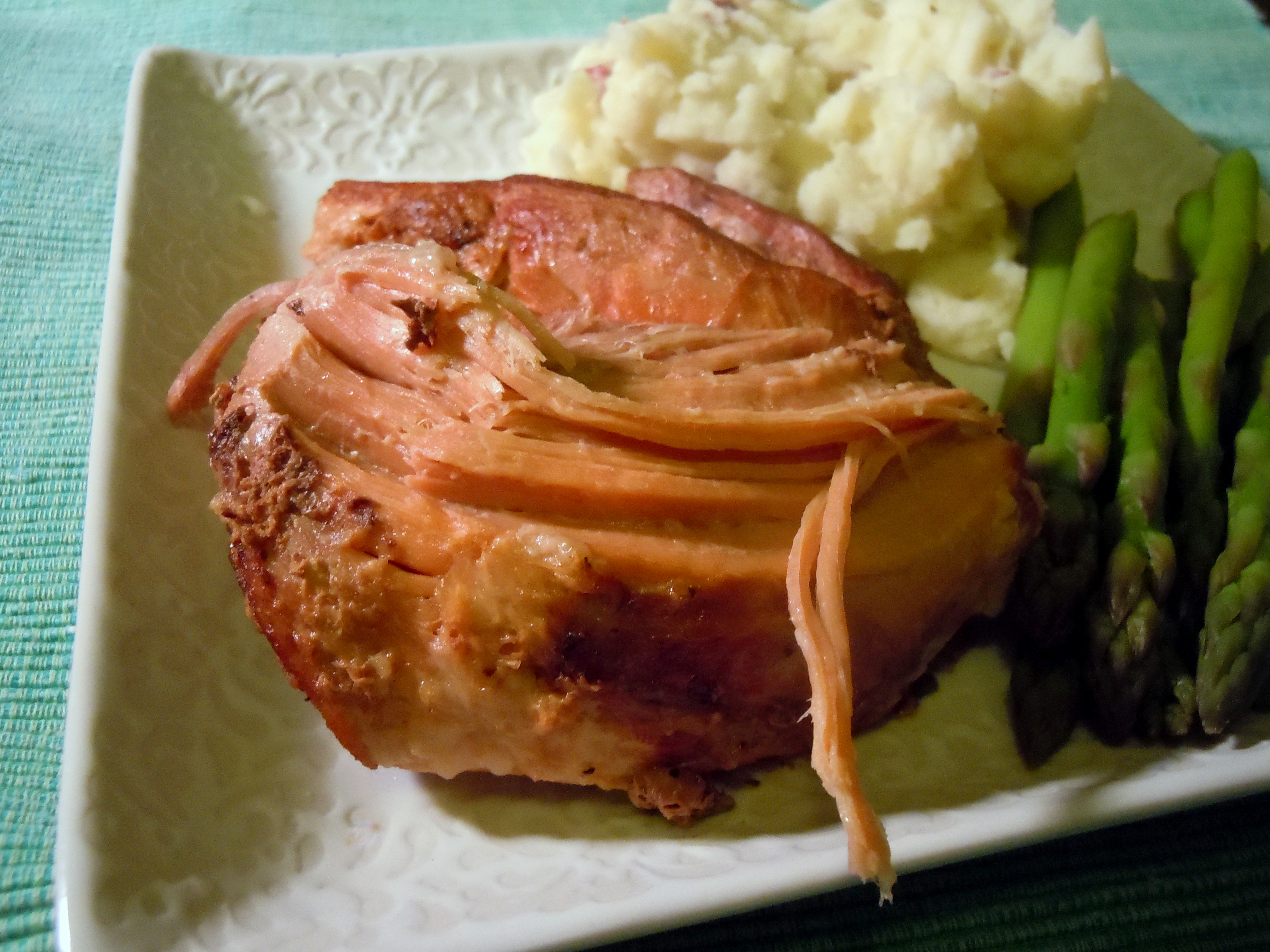
The latest entry in the pork sweepstakes was a roast. This lived up to our expectations: it was a fairly lean hunk of meat, bone in, with a layer of fat. And it was huge. I opted for a neutral flavor profile, since we clearly would be eating leftovers for quite some time.

I was busy all day, so the slow cooker was the best option, but there’s no reason you couldn’t do this in a stockpot over low heat (or in the oven) for 2 to 3 hours.

I loaded up the bottom of the slow cooker with aromatics — wedges of onion, chunks of celery, minced garlic, fresh parsley. I seasoned the roast with a serious dose of salt and pepper, then browned the heck out of it. I wedged the roast (did I mention it was huge?) on top of the veg in the slow cooker, then deglazed the browning pan with wine and stock. That golden liquid went over the pork, on went the lid, then I went on my merry way.

Which means, in this case, that I watched football with my family (go Packers!), then went to the movies with my friend Paula. Which was just as well, because the aroma from that braising pork was so enticing, it was all I could do not to yank off the cover and dive right in.

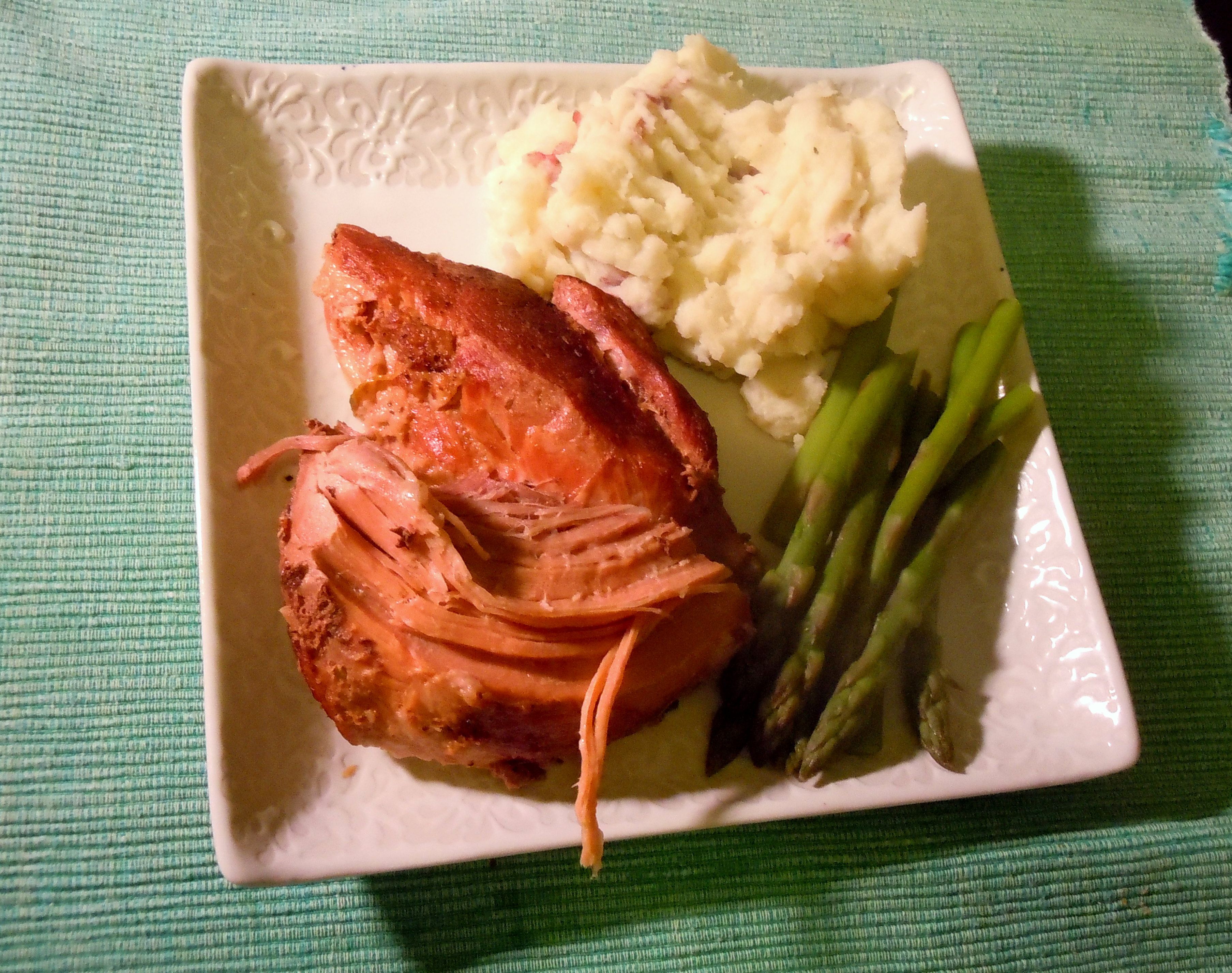
When I got home, Tom had started some baby red potatoes on the stove. I tossed some pencil-thin asparagus (totally out of season, but irresistibly lovely) in the steamer, and pulled the roast out of the cooker. It was a challenge to get it out in one piece; it was so tender it wanted to fall into shreds.

I strained the cooking liquid into my trusty fat separator. While that tool did its magic, I melted a bit of butter in a small saucepan and whisked in some flour. I stirred in the defatted liquid, then mashed in some of the strained veg. A quick whir of the stick blender made for a smooth, velvety sauce.

While I was preparing the side dishes, we kept stealing shreds of the pork to nibble on.
Slow-Roasted Pork
Serves 8 

2 stalks celery with leaves
1 onion, peeled and quartered
2 cloves garlic, peeled and smashed
3-4 stalks fresh parsley
2 bay leaves
3-4-lb. pork roast, bone in if possible
salt and pepper
1 tsp. favorite dried herb blend (I used Penzey’s Tuscan Sunset)
1 tbs. olive oil
½ cup dry white wine
1 cup good chicken stock
1 tbs. butter
1 tbs. flour

Cut the celery stalks in half and put them on the bottom of a slow cooker with the onion quarters, smashed garlic, whole stalks of parsley, and the bay leaves.

Pat the pork roast dry. Sprinkle liberally on all sides with salt and pepper, and the herbal seasoning. Heat the olive oil to nearly smoking over high heat in a large skillet. Add the pork and brown well on all sides, about 4-5 minutes per side.

When it’s well browned all over, place the pork on top of the veggies in the slow cooker. Add the wine to the skillet and stir to scrape up all the browned bits. Pour over the pork. Add the stock to the skillet, stir to get up any leftover bits and to heat the stock, and pour that over the pork.

Cover the stockpot and cook for 4-6 hours on high or 8-10 hours on low, until the pork is falling-apart tender. Or you can brown the roast in a Dutch oven, add the veg and liquids, cover, and cook in a 325-degree oven for 2-3 hours until the pork is falling-apart tender.

Transfer the meat to a serving dish and cover with foil. Strain the cooking liquid into a bowl or (if you have one) a fat separator. Let it sit for 10 minutes, then skim off the fat. Save the strained solids.

Heat the butter in a saucepan over medium heat. Stir the flour into the melted butter and cook for a minute. Whisk in the defatted liquid. Add some of the onions, garlic and celery from the strainer; puree them into the sauce with a stick blender. Cook on high for a few minutes until the sauce is flavorful and thickened to your liking. Serve the sauce alongside the pork.
Posted in main courses, meat, poultry,and fish | Tagged , , | Leave a comment

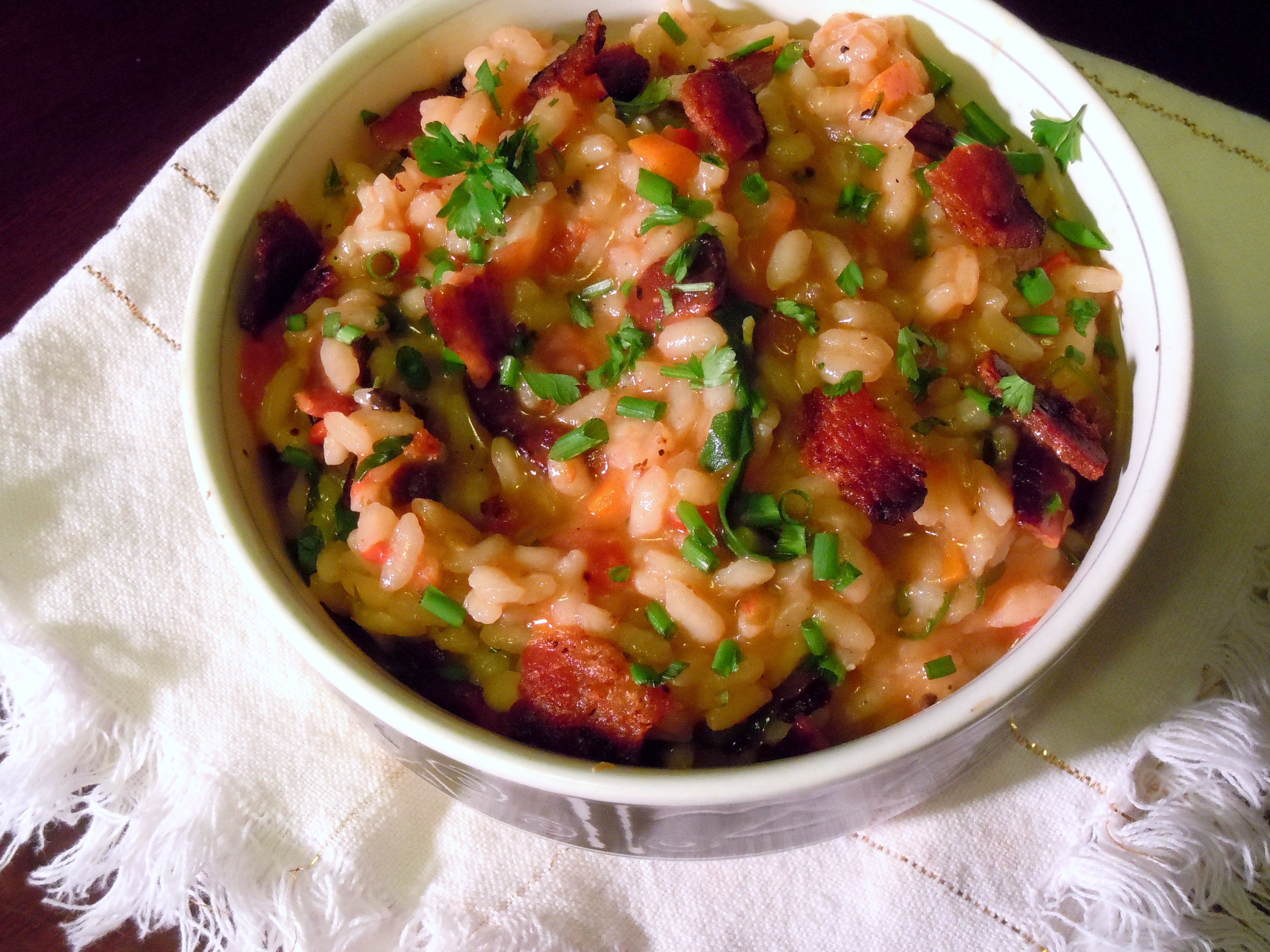
BLT risotto

I confess I was not riding the bacon bandwagon. It wasn’t that I disliked bacon; I just didn’t think it was a necessity of life.

But my experience had been limited to preservative-laden, shrink-wrapped supermarket bacon. I hadn’t had locally smoked bacon from an organic pig. Our Pig, for instance.

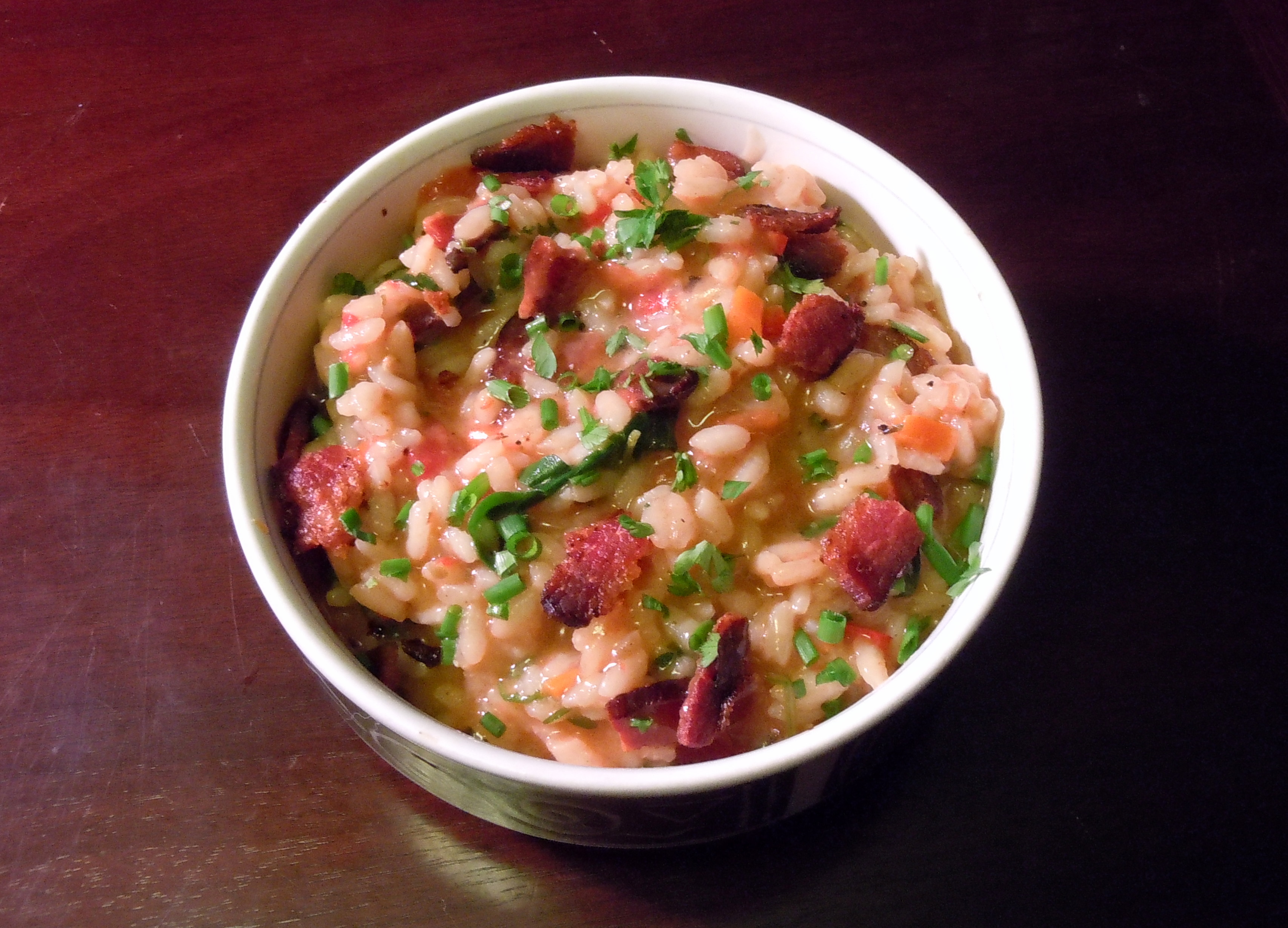
Our Pig’s bacon is thick-cut and not on the lean side, to put it politely. Those heftier slices are less inclined to curl up when they cook. This means perfectly cooked bacon — no burned bits, no raw spots. Much of the fat melts out as they sizzle. That fat now resides in a dish in my fridge.

If you’re a regular reader, you know I try to make healthy food around here. Moderation is key; I can’t claim that all my recipes are low-fat, high-fiber, sugar-free paragons of virtue. I do aim for a rational balance of flavor and nutrition.

What that means is that bacon, even the world’s best bacon, is going to be a Best Supporting Actor and not the lead in any dish I make. But that’s the thing about bacon: it has so much flavor that a small amount will make itself know in the best possible way.

The acid of the tomatoes balances the fatty, porky goodness of the bacon. If you have access to great fresh tomatoes, use them. Otherwise, there’s a wide selection of terrific canned tomatoes out there.

I used arugula for the L in the BLT, for the smoky, herbal hit. Fresh spinach would also be wonderful, especially if you’re not an arugula fan. The tender leaves of both arugula and baby spinach can be cooked directly in the risotto. If you choose to use a heartier green, such as kale, you should blanch it first.

BLT Risotto

½ lb. bacon
1 tbs. butter
4-5 cups chicken stock
½ small onion, minced
½ carrot, minced
1 clove garlic, minced
1 ½ cups Arborio rice
salt and pepper
½ cup dry white wine
1 cup fire-roasted tomatoes  with juice
½ tsp. dried oregano or thyme
2 cups arugula, or baby spinach
½ cup grated sharp white cheddar, optional
¼ cup chopped fresh parsley

In a large skillet over medium heat, cook the bacon until it’s crisp. While the bacon cooks, warm the chicken stock over medium heat in a saucepan. Remove the bacon to paper towels to drain.

Pour out all but 1 tbs. of the bacon fat. Add the butter to the pan along with the onion, carrot, and garlic. Cook for 2-3 minutes until softened. Add the rice and cook for 4 minutes longer until the rice is translucent and the veg are lightly browned. Add the wine and a ladleful of stock (about ½ cup). Stir while the liquid is absorbed. Continue to add ladlefuls of stock to keep the consistency soupy. Taste and adjust the seasoning with salt and pepper.

After about 10 minutes, add the tomatoes. Continue adding stock until the rice has softened and swelled, but still has a slight bite. Stir in the arugula and cook for a few minutes longer, until the arugula has wilted and the rice is tender. Add enough stock so that the risotto is creamy and slightly runny. Stir in the cheese, if using, and the parsley. Serve immediately.


Posted in main courses, pasta, rice, and grains, sides | Tagged , , , , , , | 3 Comments

Classic chicken noodle soup

Our wonderful friend Joe came over recently, bearing goodwill and the largest organic chicken I’d ever seen. He roasted it in our oven with an onion, a pile of tiny red potatoes, and not nearly enough carrots. (Few things on this green earth are as delectable as slowly roasted carrots.)

After this fabulous meal he departed, taking some of the chicken with him but leaving us with most of it, along with the carcass, which we immediately turned into stock.

I make a lot of soup, but hadn’t made a classic chicken noodle version for years. With fantastic ingredients like golden, aromatic stock and tender chicken, I wanted to keep it simple: celery, carrots, onion, egg noodles, and that gorgeous stock and chicken.

Taste your stock first to see if it needs anything; mine needed reducing to intensify the flavor. Adding just a touch of lemon juice heightened the roasted chicken flavor without dominating; the parsley provides a fresh green note.

I’m not one for a bowl of stock with a few noodles and an occasional bit of chicken, as you can tell from the photo. If you like more stock, add more than the recipe calls for.

Long, slow simmering will result in some darned tasty soup, but add the chicken and noodles just in the last 15 minutes, or they will both be reduced to mush. If I plan to make the soup ahead of time, or to freeze it, I leave the noodles out until I’m warming it back up again. (I also added a handful of frozen baby peas at the last minute, just because I could.)

I served big bowls of the soup for dinner, with a warm loaf of No-Knead Cheddar Bread. Just the thing for a chilly evening.

Classic Chicken-Noodle Soup

Makes 4-6 hearty servings

1 tbs. olive oil (or butter or chicken fat)
1 medium onion, chopped
3 large carrots, chopped or sliced
2 stalks celery with leaves, chopped
2 cloves garlic, minced
2 tsp. dried thyme (or 2 tbs. fresh minced thyme)
salt and pepper
6-8 cups chicken stock (preferably homemade)
juice of ½ lemon
2 cups cooked chicken cut into bite-sized pieces
2 cups uncooked egg noodles
1/3 cup chopped parsley

Warm the oil (or butter or fat) in a stockpot over medium heat. Add the onions and cook for a few minutes, until they’re translucent. Add the carrots, celery, garlic, and thyme; season lightly with salt and pepper. Cook, stirring now and then, for around 8 minutes, until the veg are becoming tender and aromatic. Add the stock and the lemon juice. Reduce the heat to medium-low and simmer for 30 to 45 minutes. (Or simmer on very low heat for as long as a few hours.) Taste and adjust the seasoning; if it’s a bit flat, add a few drops more lemon juice as well as some salt and pepper.

When you’re less than half an hour away from eating the soup, add the chicken and noodles. Increase the heat to medium and cook until the noodles are just tender. Add the parsley and you’re good to go.

Posted in meat, poultry,and fish, pasta, rice, and grains, soups | Tagged , , , | 5 Comments

The delights of Christian’s Bistro

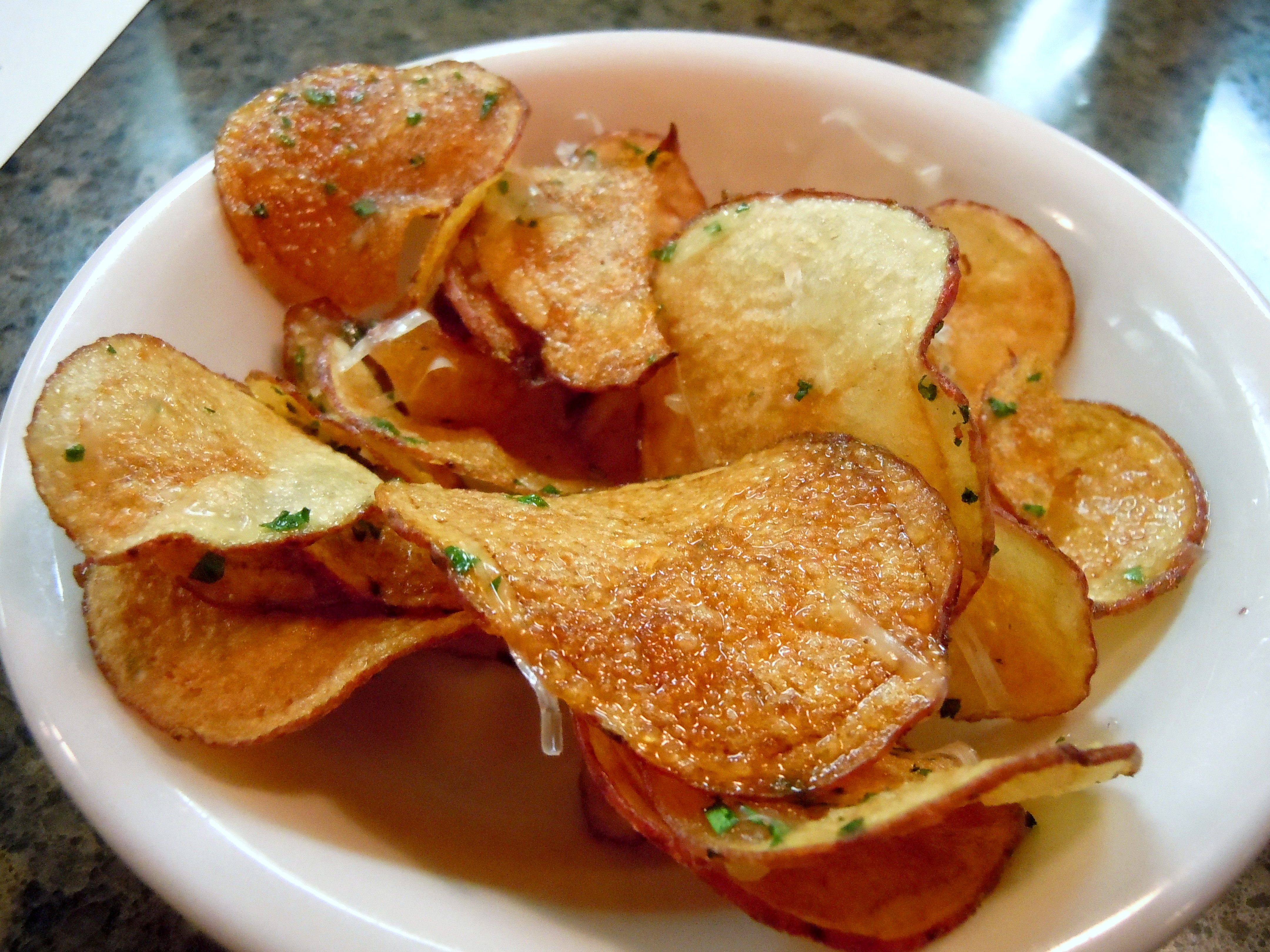
Those look like regular potato chips, don’t they? So misleading. In fact, what you  see above is a bowl of Christian’s Bistro’s Wisconsin Red Potato Truffle Chips with parmesan and fresh herbs. Not the same thing at all.

These chips are crunchy and ethereal at the same time. They crackle when you bite into them, then melt into pure flavor. They’re made to order, drizzled with truffle oil and sprinkled with just enough parmesan to add a sweetly salty touch. You taste the earthy truffles as well, but the potatoes come through. Pure heaven.

If ever there was a reason to visit central Wisconsin (and there are many), Christian’s Bistro is it. CIA-trained chef Christian Czerwonka worked his way through the kitchens of Emeril Lagasse’s restaurants before opening the Bistro. His food hints at his New Orleans influence (the gumbos are to die for), but is not limited to that style. He uses mostly local ingredients, which can be a challenge in this cold climate.

Tom and I went to Christian’s for our anniversary last year. I mentioned to our server as we were ordering how much I’d loved those chips, which weren’t on the menu at the time. A few minutes later, a bowl of the chips appeared on our table, an unexpected and thoughtful gesture.

Tom and I had lunch a the Bistro last week with our friend Mike. At my request, we ate at the bar in front of the kitchen so we could watch the chefs at work. We started with an amuse bouche: a squash ravioli topped with shreds of cheese, toasted until crisp, and served with a balsamic reduction, a tangy counterpart to the sweet filling.

Next came the Southwestern grilled chicken flautas, tender shredded chicken wrapped in a shatteringly flaky crust, served on a dab of cilantro-lime crema. I was tempted to ask Chef to forget the rest of our order and keep these coming, but then out came the potato chips — and my camera, which I’d forgotten about.

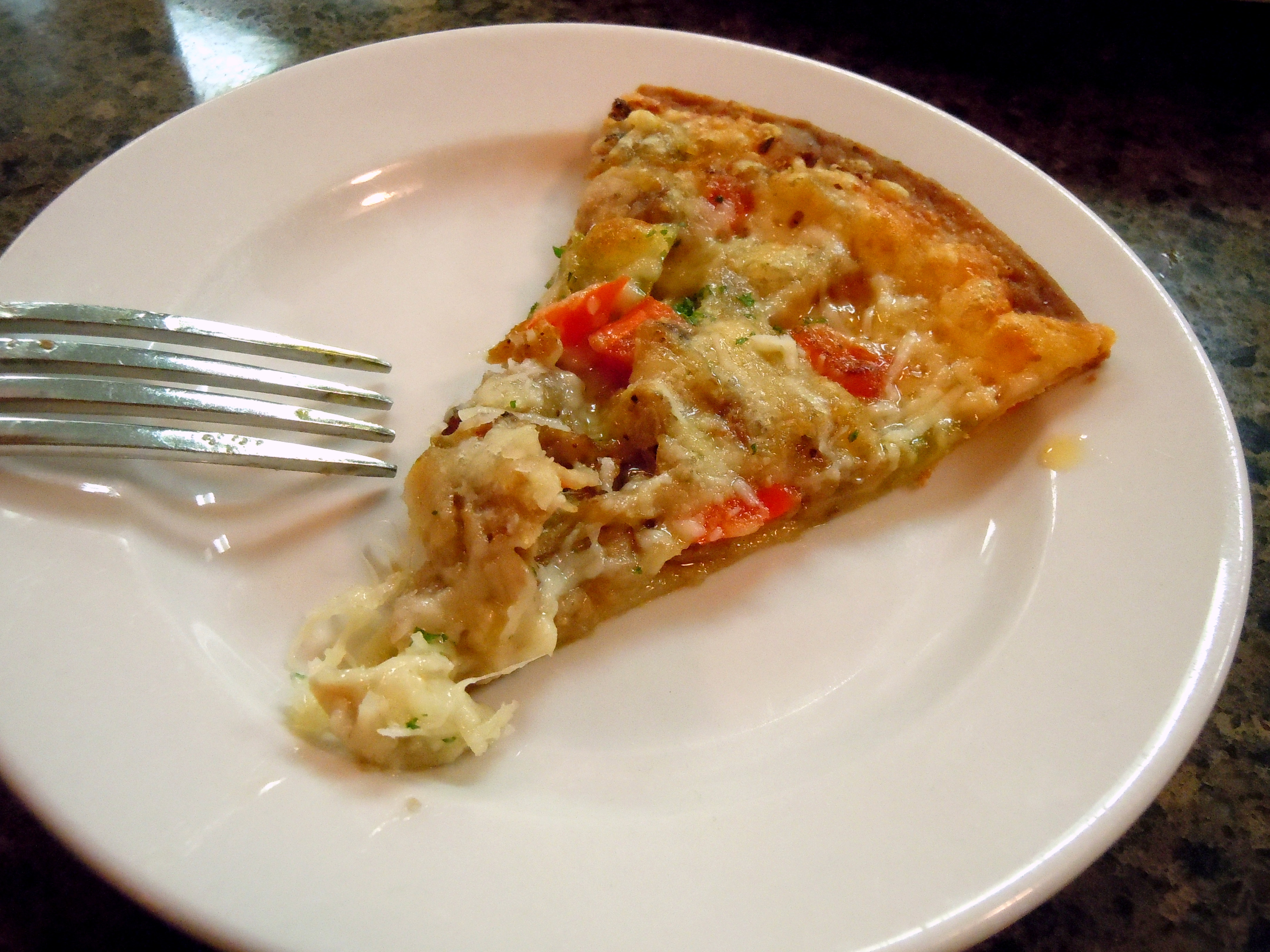
After the chips, we tasted the crisp, chewy flatbread of the day, topped with tender local roast pork, sweet red bell peppers, and local sharp white cheddar.

Following the flatbread were small bowls of a complex, aromatic gumbo made with turkey and wild mushrooms, served in the traditional manner over white rice.

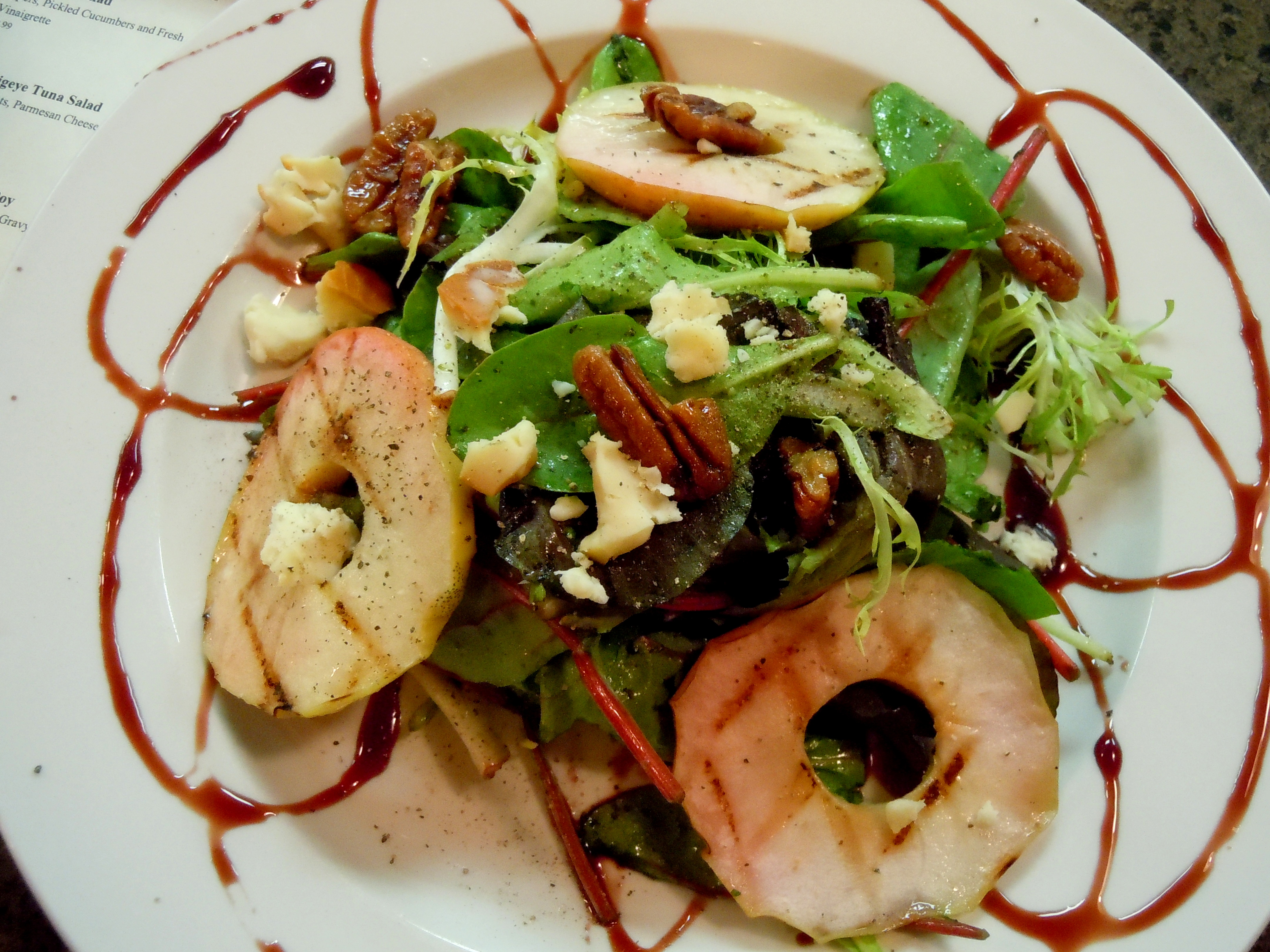
Finally, we were on to our main courses. I had the grilled local apple and mixed green salad with candied pecans and drizzled with port wine syrup. It was finished with a local Wisconsin cheese from Roth Kase Dairy called Moody Blue, rich and creamy, with a light smokiness.

We finished with cream puffs filled with light, rich chocolate mousse and accented with crème Anglaise and raspberry sauce. I took mine to go, fully intending to savor it that evening. I ate it the minute I got home. Such willpower.

Stuffed and satisfied though I was, I drove home brimming with ideas and inspired to get cooking. I can’t hope to cook at Christian’s level, but I can learn from the experience. And what an experience it was.

Posted in restaurant and cookbook reviews | Leave a comment

Macaroon vs. macaron


Macarons are the new cupcakes, it seems. They’re made with beaten egg whites, powdered sugar, and ground almonds or almond flour. They’re a bit finicky to make, what with grinding the almonds, resting and piping the batter, and drying the cookies.

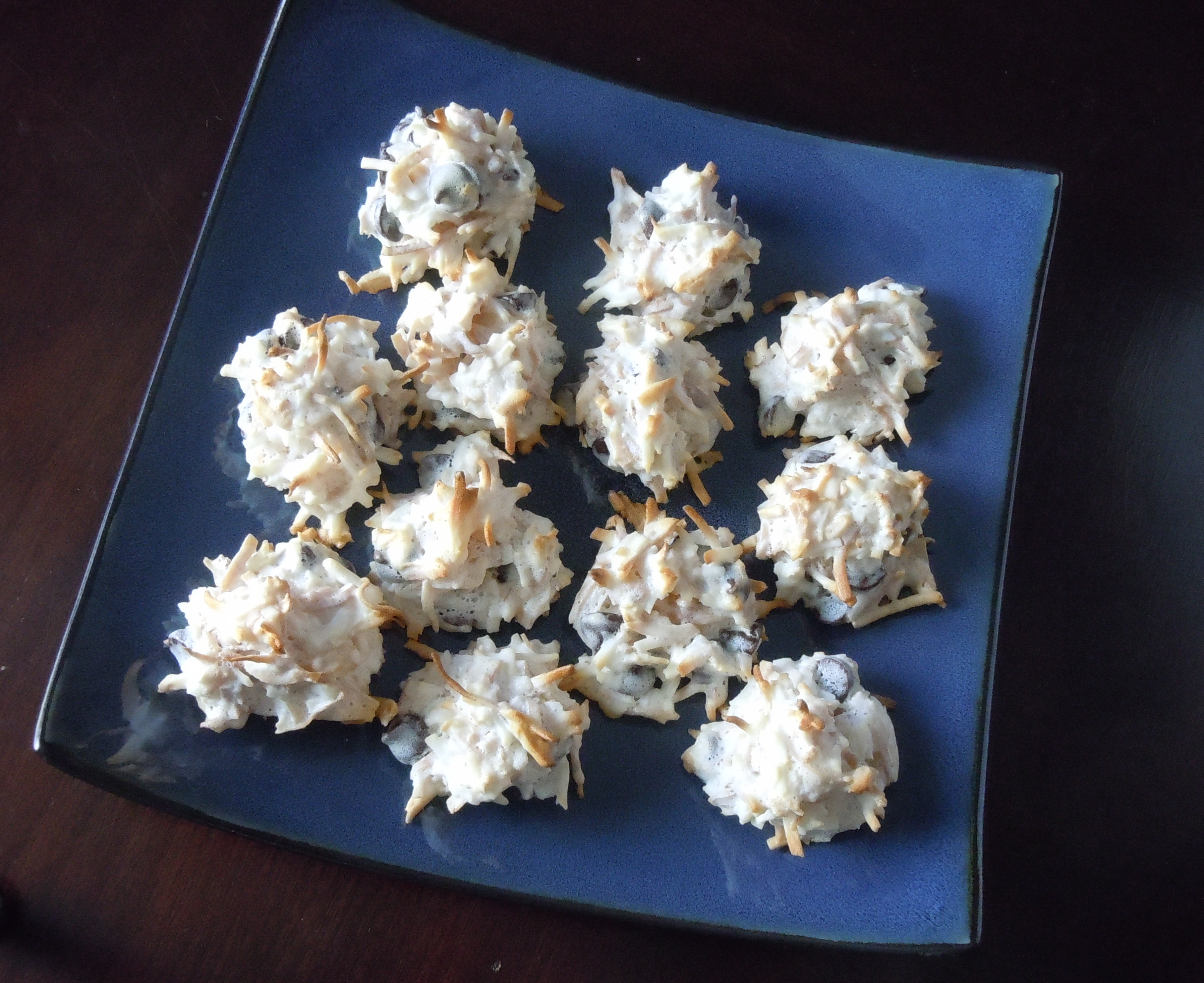
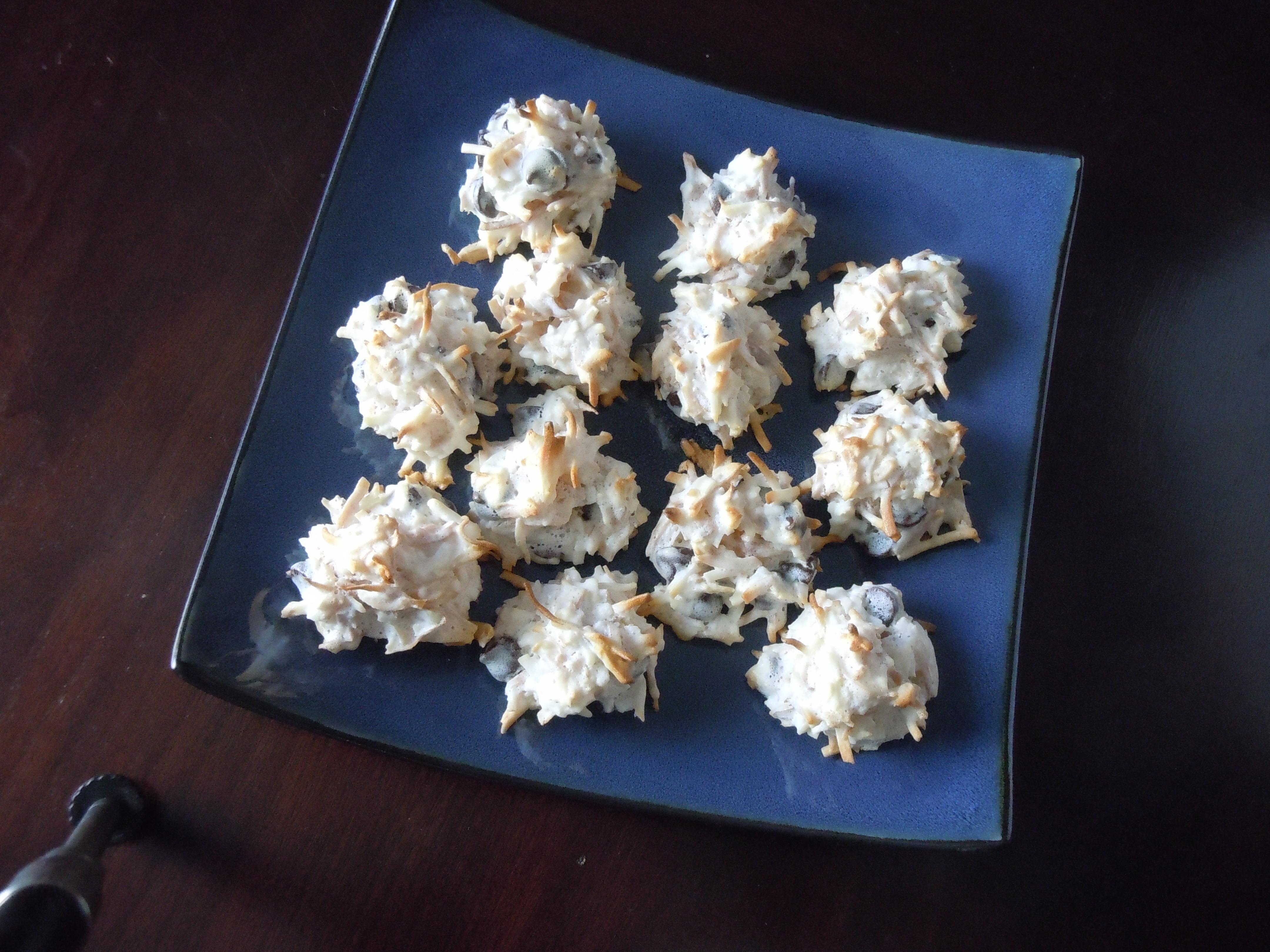
Macaroons (note the two “o”s), on the other hand, are simple.  I’ve been making Alton Brown’s toasted coconut macaroons for years now. They’re about as guilt-free as you can get (egg whites, coconut, and a bit of sugar — that’s it). The cookies are melting and chewy at the same time, and the coconut isn’t overwhelmed with too much sweetness.  They’re even better with a few chocolate chips nestled in the strands of coconut.

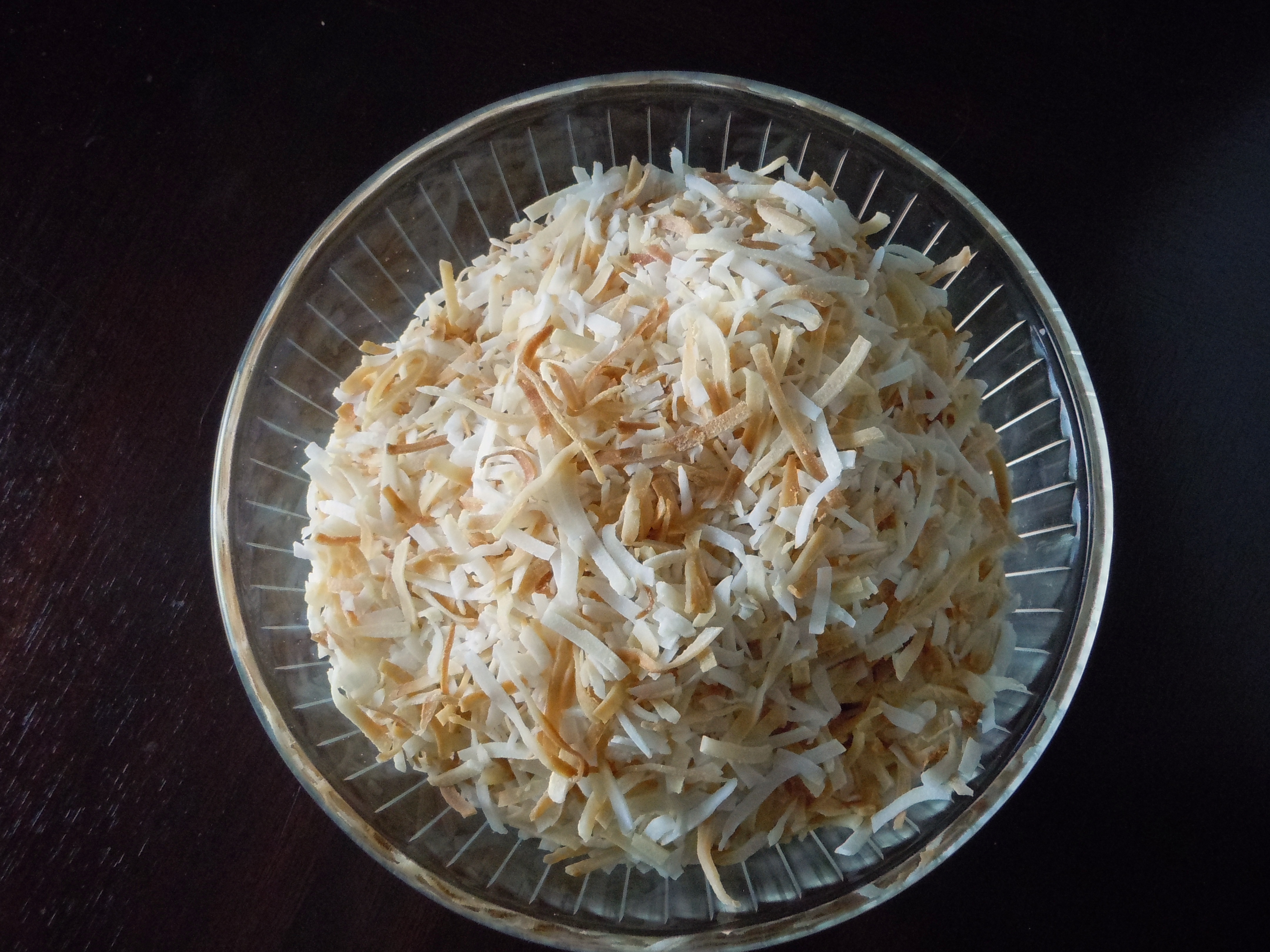
Alton toasts the coconut, which really develops the flavor. I spread mine on a small baking tray and set my toaster oven at 350 degrees F. You can do it in the regular oven or even in a skillet on the stove over medium-low heat. Just as when toasting nuts, you need to keep an eye on things, since the coconut can go from toasty to burned in a surprisingly short amount of time.

A few tips for whipping egg whites: Get the whites into your bowl before you toast the coconut. Room-temperature whites will whip better. Also, if you have any hope of whipping those whites to nice stiff peaks, fat is the enemy. One tiny bit of grease will leave those whites flat, so you must start with a spotlessly clean bowl and beaters.

Speaking of avoiding fat, separate each egg over a small bowl, then pour the white into your mixing bowl. Yes, this means you have another dish to wash, but you avoid the risk of a broken yolk (the fatty part of the egg) getting into the whites and ruining the whole batch.

Fold the cooled, golden coconut into the beaten whites, add a few chocolate chips, and drop by spoonfuls onto a cookie sheet. That’s it. No piping bags, no resting the batter, no rotating of pans.

Toasty Coconut Macaroons
Courtesy of Alton Brown
Makes about 3 dozen cookies

2 cups shredded unsweetened coconut
2 egg whites
¼ tsp. salt
1/3 cup white sugar
½ cup chocolate chips, optional (mini chips are best, but regular ones will also work)

Heat the oven to 350 degrees F. Line a large cookie sheet (or 2 small ones) with parchment. Get the egg whites into your mixing bowl and set them aside to come to room temperature.

Spread the coconut in a thin layer onto an ungreased small baking sheet. You can put the coconut onto a sheet of parchment paper on the cookie sheet you plan to use for the cookies later. (I toast mine in our toaster oven.) Toast for about 10 minutes, stirring once or twice, until the coconut is golden and fragrant. Watch carefully; it does burn easily. Set the coconut aside to cool.

While the coconut cools, whip the egg whites with a stand or hand mixer (or with a whisk if you possess amazing arm strength) for a few minutes until they’re thickened and becoming opaque white. Sprinkle in the salt and roughly 1 tablespoon of the sugar and keep beating. Keep beating and adding sugar until the sugar has been beaten in and the whites have formed stiff peaks.

[Stiff peak tip: You’ve reached the proper texture when you can hold up a beater and only the very tip of the peaks tip over. You can also hold the bowl over your head and the egg whites will stay put. The problem with this test is that if you haven’t quite gotten to stiff peaks, you end up with an egg white facial. Your kids will be entertained, though.]

[Note: if you’re using sweetened coconut instead of unsweetened, add only 1/4 cup sugar.]

Gently fold the coconut and the chocolate chips if you’re using them, into the stiff whites.

Mound the batter by heaping teaspoonfuls onto the parchment-covered cookie sheet. The cookies don’t really spread, so you can place them fairly close together. Don’t flatten the batter; the cookies will have a nice, chewy interior if you keep the mounds high.

Bake the cookies for 12 to 15 minutes until the cookies are lightly browned on top. Cool on a cooling rack. Store at room temperature in a tightly covered container.

Posted in baked goods, sweet stuff | Tagged , , , , | 2 Comments

Easy, cheesy no-knead bread

Big news (at least to me): My Peach-Prosciutto Crostini post is the Post of the Day on Food 4um! Many thanks to JoAnn for her support. Now, back to our regularly scheduled program….

My suitcase is finally stashed away, after residing on our bedroom floor for two weeks now.

There are no travel plans in my future or in the recent past. I store my off-season clothes in my suitcase, you see. A few weeks ago, I resigned myself to the end of summer, and dragged out the suitcase for the big switch.

The next day, Indian summer arrived with a vengeance. We had a week of balmy weather. I was delighted with this unexpected gift, but it I could neither pack up the shorts and tanks nor pull out the sweaters and cords.

Reality intervened, of course. The cool weather has taken up permanent residence. The tanks and shorts are tucked away. We’re into soup-stew-comfort food season. It’s also cool enough that heating up the oven is a good thing.

I’d been hearing a lot about long-rise, no-knead bread. The most famous recipe, by Jim Lahey of Sullivan Street Bakery in New York, is by all accounts sublime, but it must be baked in a cast-iron Dutch oven. I don’t have a cast-iron Dutch oven (yet; Christmas and my birthday are both coming up. Husband of mine, did you catch the hint?).

Jeff Hertzberg’s Simple Crusty Bread skips the special baking vessel, and has another advantage: you can make a large batch of the dough and leave it in the fridge for up to two weeks.

The first time I made this, I didn’t want to have a massive mound of dough taking over my fridge, just in case it didn’t work. I made just a third of the recipe, with 1 1/2 cups bread flour and just over 1/2 cup whole wheat flour. I made the dough just after dinner, put it in the fridge after two hours, and baked the bread the next afternoon.

The bread had good flavor and a lovely, crisp crust, but the loaf was oddly misshapen. In retrospect, I didn’t mix the flour into the liquid quite well enough, resulting in an uneven distribution of yeast.

The second time, I mixed up half the original recipe, still with some wheat flour. I let it rise for just over two hours, then left it in the fridge for a full day before making a loaf. Moist crumb, crunchy crust, and just the right amount of yeasty flavor. Like all good, fresh bread, it was best on the first day, and not bad on the second. One of the big benefits to this recipe is the ability to make a large amount of dough at once, then bake a small loaf whenever you need one.

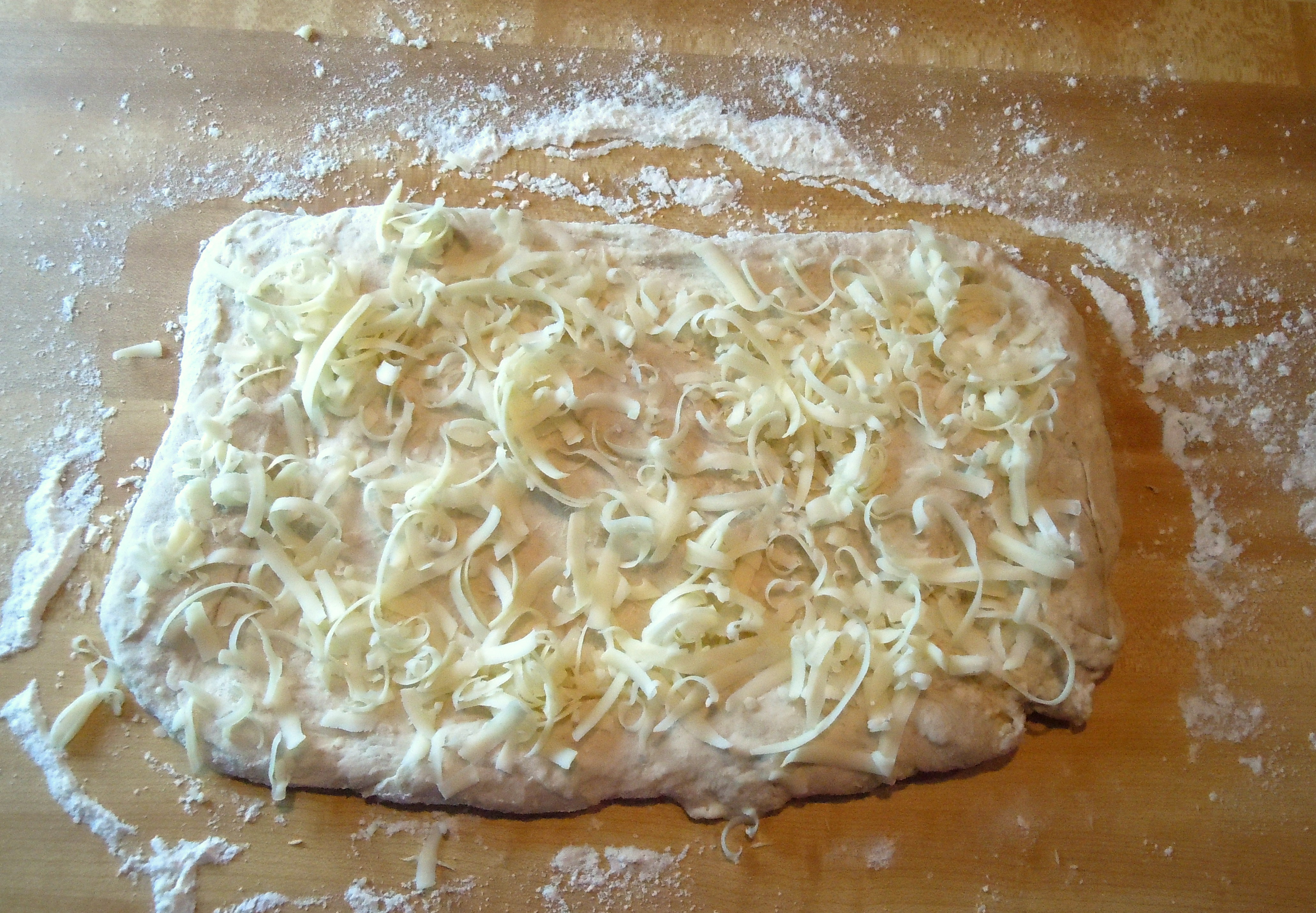
Note the completely even rectangular shape and level perfection of the dough. So important.

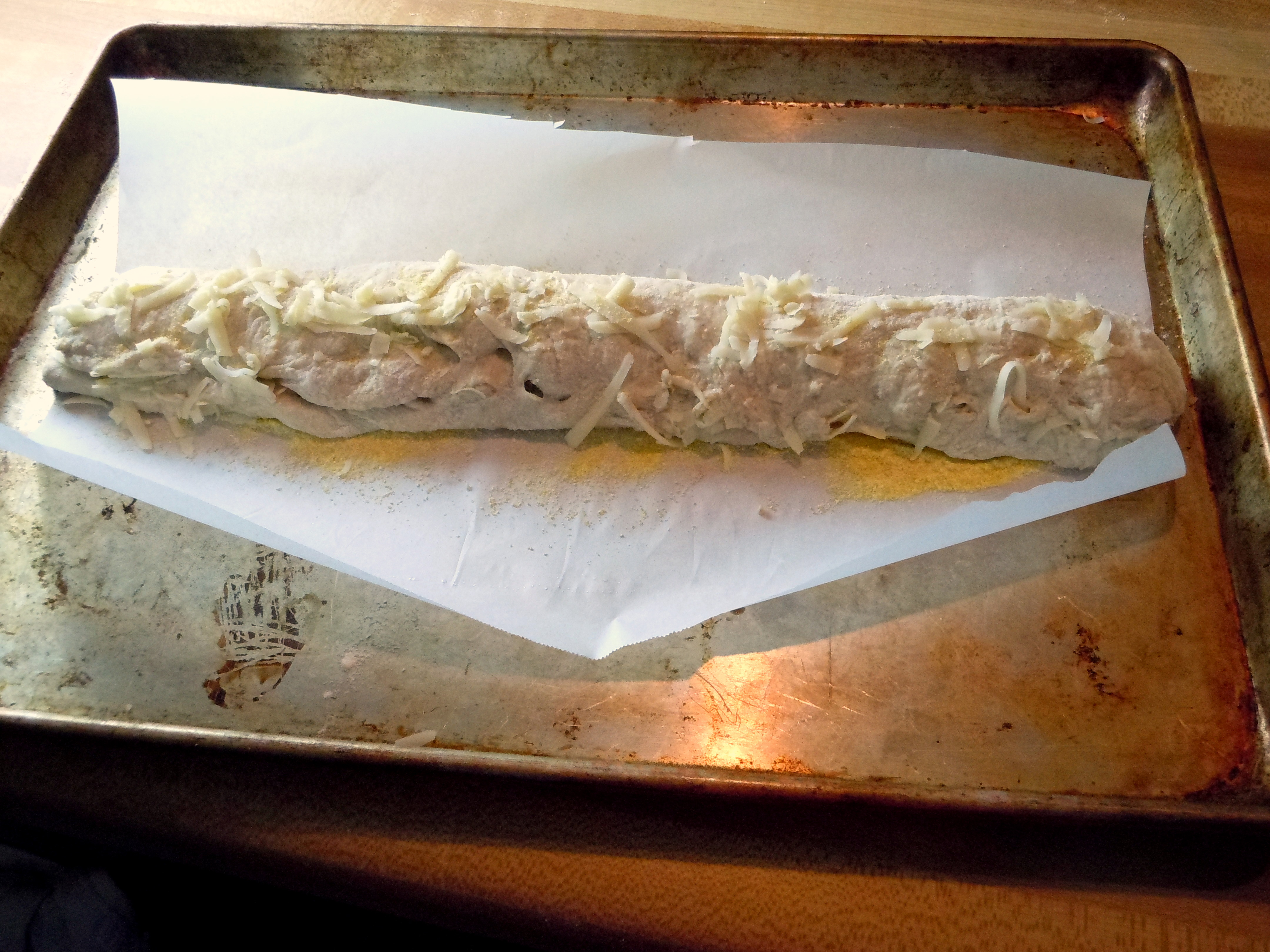
For the next batch, I pulled out a chunk of dough about the size of a very large grapefruit. On a heavily floured countertop, I flattened the dough into a rectangle, sprinkled a little grated cheddar over the bread, then folded the dough into thirds, like a letter.

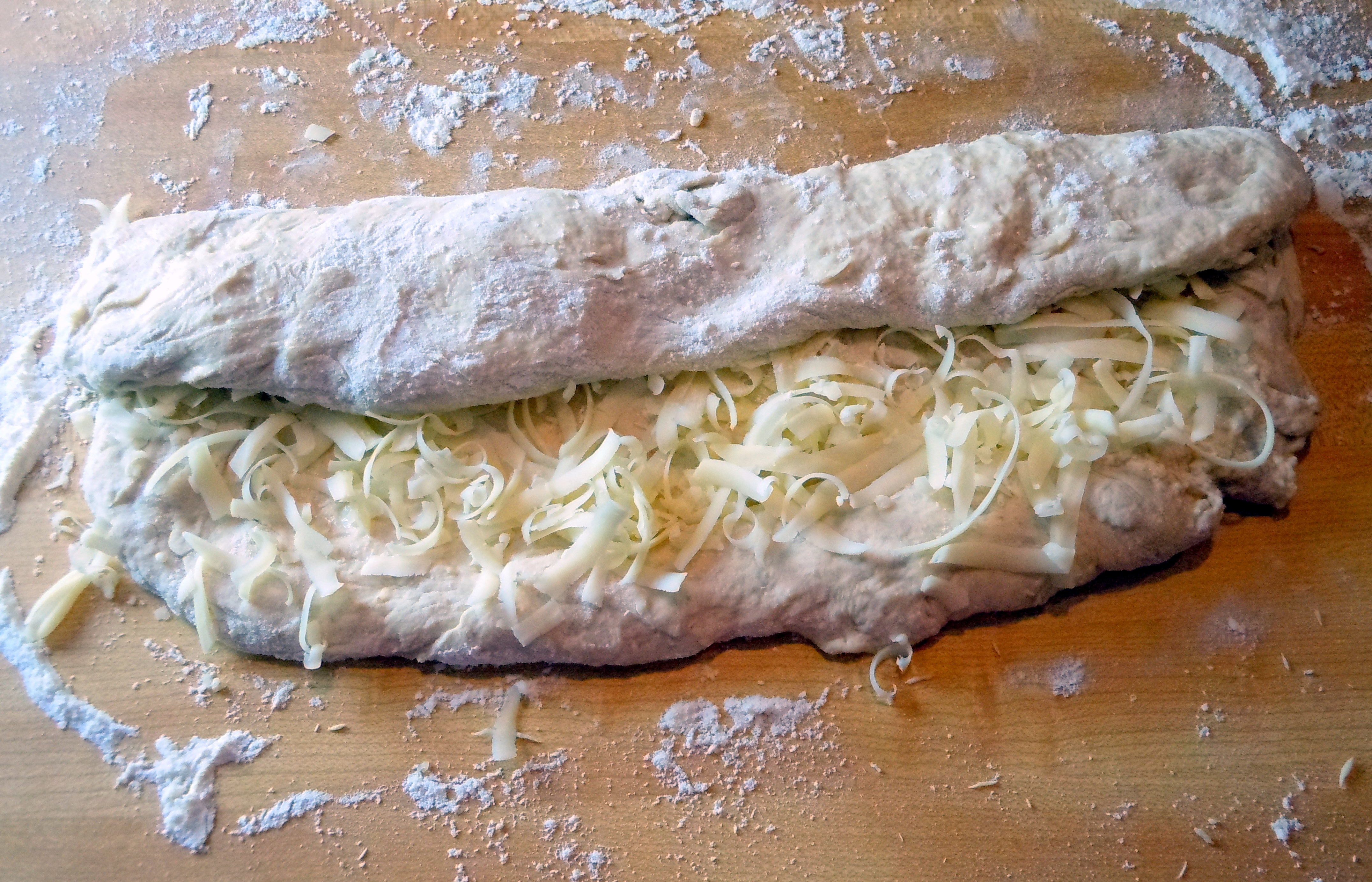
I flattened the dough again, not quite as thinly. I added another quarter-cup of cheese, folded the dough in half, and moved it to a cornmeal-dusted cookie sheet. I sprinkled a bit more cheddar on the top and let it rise for a half hour before baking.

Note the pristine condition of my baking sheet.

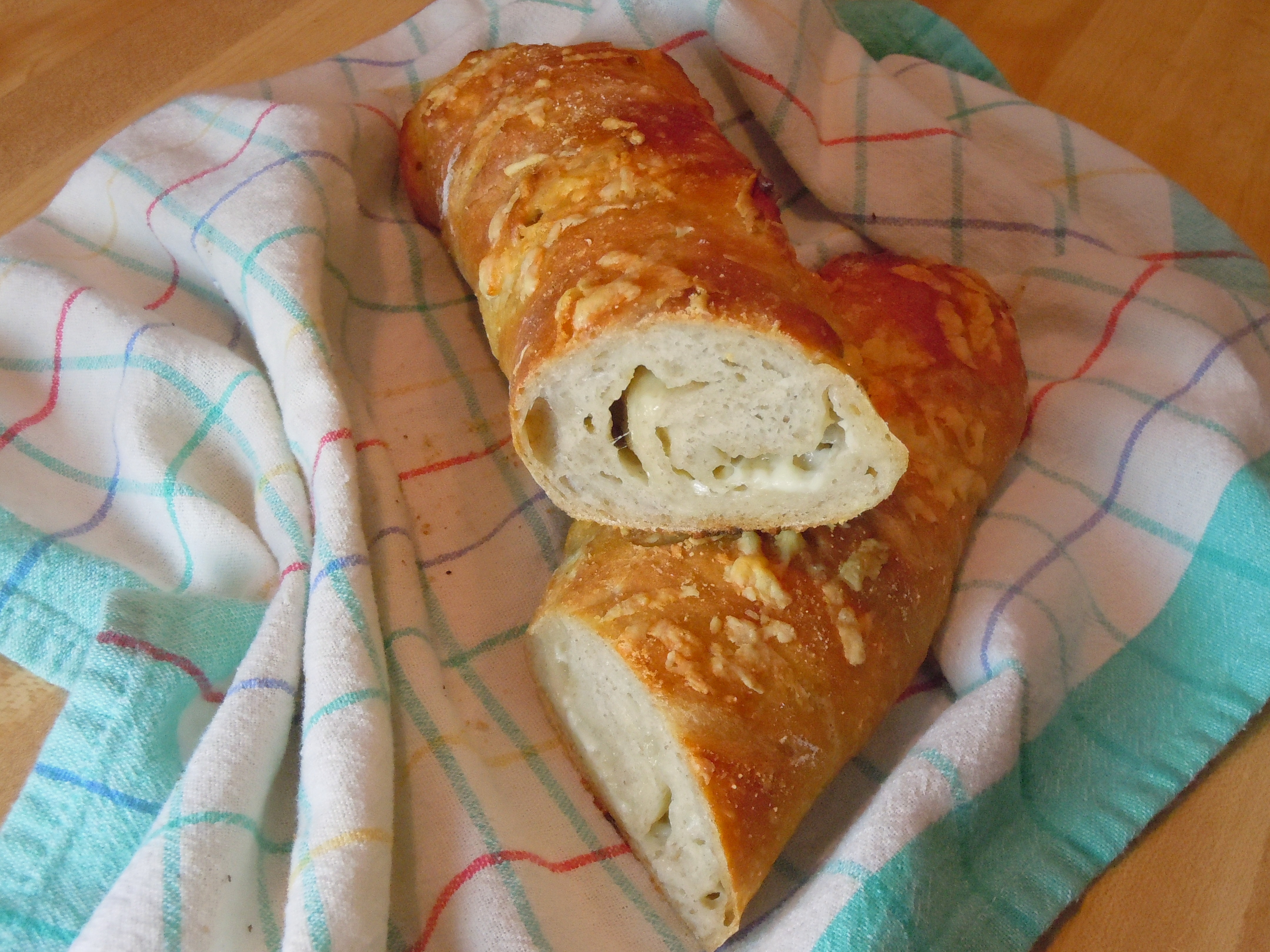
The cheese melds with the bread, creating a spiral of chewy cheddar goodness. Cornmeal adds a pleasantly gritty crunch. This bread was the perfect side to bowls of Tom’s chili. I wanted some for the pulled pork we’re having for dinner, but we ate the entire loaf at lunch.

No-Knead Cheddar Bread
Adapted from Jeff Hertzberg’s recipe
1 small loaf (with extra dough for 2-3 more loaves)

3 cups lukewarm water (a bit warmer than body temperature)
1 1/2 tbs. granulated instant yeast
1 tbs. salt (add another teaspoon if you’re not using cheese)
5 cups bread flour (or unbleached AP flour)
1 1/2 cups whole wheat flour (or just use 6 1/2 cups bread flour)
1 cup grated sharp cheddar (I used white cheddar; any favorite hard cheese will work)

Pour the water into a bowl or lidded container large enough to hold at least twice the quantity of finished dough (about 3 quarts). Sprinkle the yeast over the dough and stir to combine. Stir in the salt, then add the flour. Stir with a wooden spoon until the flour is evenly moistened and you have a shaggy, moist dough. This should only take a minute or two.

Cover the container lightly; I used a large plastic container and set the lid lightly on top. You can also cover the container with plastic wrap and punch a small hole in the center. The idea is to leave a space for gases to escape as the yeast grows and the dough rises.

Set the container aside in a warm place for at least 2 hours. You want the dough to double in size and start to collapse a bit. Put the container in the refrigerator, still lightly covered.

You can bake the dough any time; the dough will last for two weeks in the fridge, and will improve in flavor the longer you leave it.

When you’re ready for some bread, decide how you want to bake it. If you have a baking stone, place it on the center rack of a cold oven. Lay your wooden pizza peel on the counter and sprinkle generously with cornmeal. If you’re using a cookie sheet, line it with parchment paper and sprinkle with cornmeal. You can place a baking pan on the bottom rack of the oven if you wish; you’ll be pouring some water in it to create steam. I just toss a handful of ice cubes into the oven instead. (Not yet, though.)

Take the container out of the fridge and uncover it. Sprinkle the top of the dough lightly with flour. Use a sharp serrated knife to cut a chunk of dough; a piece the size of a large grapefruit will make a small loaf that will feed four hungry people.

To make a plain loaf of bread, flour your hands well and form the dough into a ball, stretching and smoothing the top surface of the dough and tucking the rough ends underneath. Place the ball, rough side down, onto your prepared baking surface. Let the dough rise for about 30 minutes.

To make a cheese loaf, place your hunk of dough on a well-floured countertop and flatten it with your fingers to a rectangle less than an inch thick. Evenly distribute half the cheese over the dough. Fold one long side a third of the way down, then fold again, as if you were folding a letter. Flatten the dough again, but not quite as thinly as before. Sprinkle on half the remaining cheddar. Fold the dough in half, and pinch the edges together to enclose the cheese. Transfer to your baking surface and gently form into a long log. Sprinkle the rest of the cheese on the top, and add a light dusting of cornmeal if you wish. Let the dough rise for 30 minutes.

Heat the oven to 450 degrees F. After the bread has risen for 50-60 minutes total, slash the top of the loaf 3 or 4 times with a sharp knife (this helps the dough in its final rise in the oven). Place the dough in the oven, add a cup of water to the baking pan on the bottom rack (or toss a handful of ice cubes into the bottom of the oven), and quickly shut the oven door. Bake for 30 to 45 minutes (depending on the size and shape of the loaf), until the crust is toasty brown and the bread sounds hollow when you tap the bottom of the loaf. You can also insert an instant-read thermometer; the dough should be about 220 degrees F.

Set the loaf on a rack to cool a bit before you dive in.

Posted in baked goods | Tagged , , , , | 5 Comments

Pulled pork, courtesy of the Pioneer Woman

We are now proud owners of half a pig. Our friend Don decided to raise pigs this year, and we were able to get in on the results. Our local butcher took care of the dismantling, and very kindly wrapped and labeled every cut.

So far, we’ve braised a pork roast and used some sausage in Tom’s chili, both to rave reviews. There’s something to be said for home-grown, organic pork. So far, the meat’s been tender and full-flavored without the slightest bit of gaminess.

We tend to focus on tenderloins when it comes to pork, with an occasional foray into chops and bacon, so some of these cuts are challenging. The “pork steaks,” for example, were thick slabs of meat thickly marbled with fat. Normally, the term “steak” would suggest grilling, but with all that fat, a slow braise seemed more in order.

My search of the blogosphere for a slow-cooked pork dish revealed an easy pulled pork from Ree Drummond, aka Pioneer Woman. She tosses an onion and some garlic into a food processor with some spices, oil, and vinegar, and purees the whole thing into a flavorful paste. That paste gets massaged into the pork, which is then dropped into a Dutch oven with a little water and allowed to simmer away at low heat until it’s falling to bits.

She uses a pork shoulder; I packed together two of those pork steaks because that’s what I’d thawed, and they were marbled enough to survive hours of cooking. I halved the quantities since I was starting with less meat (and it was just the three of us). I also used balsamic vinegar instead of white wine vinegar. I used just a tablespoon of brown sugar; I didn’t want the end result to be too sweet.

Because I used thick pork steaks and not a shoulder, I skipped her final browning step — no skin side to brown. I set the meat aside, chilled the sauce, and skimmed off some of the fat. Then I shredded the pork (removing bigger pieces of fat), added the sauce, and reheated very gently. We served the shredded pork on warmed flour tortillas with sauteed onions and red bell peppers, and a handful of extra-sharp white cheddar.

The pork is richly flavored but not hot. There’s a hint of the Southwest from the chili powder and cumin, but it doesn’t scream Tex-Mex. The final recipe provides just enough sauce to perfectly moisten the shredded pork. I removed most of the fat after the pork was cooked, but you don’t need to. We fed tiny bites of the soft pork fat to Cleo and Libby, who were in canine heaven.

Pulled Pork
Adapted slightly from The Pioneer Woman
Serves 4

1 small onion, peeled and quartered
2 large cloves garlic, peeled and smashed
1 tbs. olive oil
1 tbs. balsamic vinegar
1 tbs. brown sugar
2 tsp. salt
1/2 tsp. dried oregano
1/2 tsp. chili powder
1/2 tsp. cumin
cracked black pepper
1/4 tsp. cayenne
3 lbs. well-marbled pork
1 12/ cups water

Heat the oven to 300 degrees F. In a food processor or blender, pulse together the onion, garlic, oil, vinegar, brown sugar, salt, oregano, chili powder, cumin, pepper, and cayenne until it forms a paste.

Massage the paste into the pork. Put the pork into a dutch oven or stockpot. Add the water around the sides of the pork. Tightly cover the pot and place in the oven. Cook for roughly 4 hours, turning the pork every hour or so, until the meat is extremely tender.

Shred and serve as is, if you can’t wait. For a healthier dish, remove the meat and set aside. Chill the sauce and skim off the fat (or pour the sauce into a fat separator). Remove any fat from the pork, shred the pork, and reheat with the defatted sauce.

If there’s a skin side to your piece of pork, drain the sauce and turn up the heat. Brown the pork well, shred the pork, and pour the sauce over the meat.

For the tacos, I sauteed a thinly sliced small onion in a few teaspoons of olive oil until golden. I moved the onion to the side, then added a touch more oil to the same pan, then tossed in a thinly sliced red bell pepper. Once the pepper has a few brown spots, add a few tablespoons of white wine or water and a pinch of salt. Continue cooking until the peppers are soft and the liquid has evaporated. Top flour tortillas with the pulled pork, onions, peppers, and some grated white cheddar.

Posted in main courses, meat, poultry,and fish | Tagged , , | 1 Comment

Potato pizza — anything but bland.

I’m not sure what drew me to potato pizza initially. Perhaps it was the challenge of making two fairly bland ingredients — dough and potatoes — flavorful and appealing.

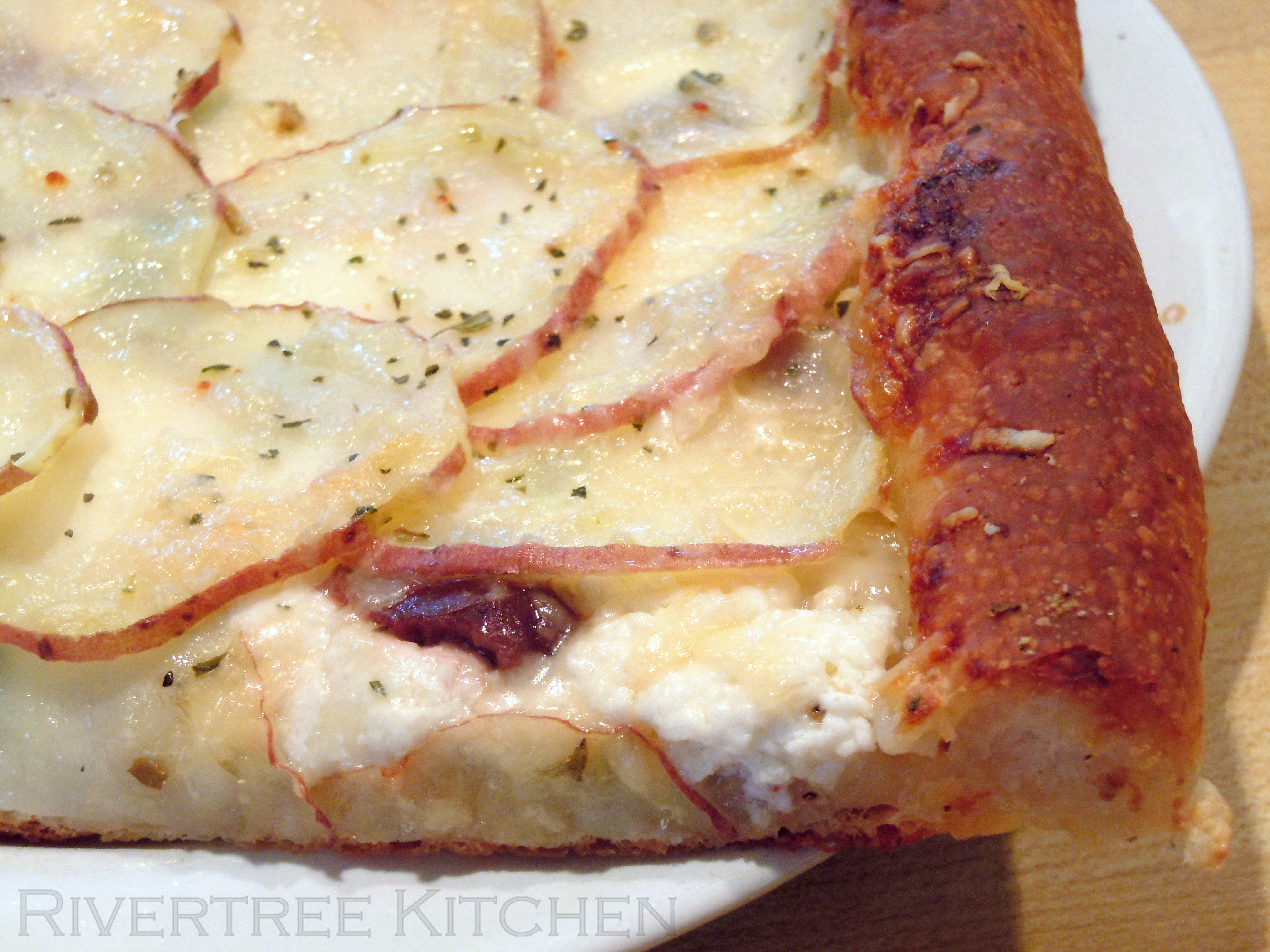
In my first attempt, I spread a thin layer of (store-bought) ricotta over the dough, sprinkled it with some grated parmesan, and topped the cheeses with translucently thin slices of raw potatoes. A light brush with olive oil, a touch of salt and pepper, and in the oven it went. The potatoes were nicely browned in places, but overall the pizza was a bit bland and dry.

For the next attempt, I followed the recommendations of a number of recipes and parboiled 1/8-inch-thick slices of taters. Don’t try this at home. Parboiling made the potatoes more moist but did nothing for the flavor, and with all that moisture, nothing browned.

Waxy potatoes work best; they hold together and have a great texture when cooked. I’ve used both Red Bliss and Yukon gold potatoes with great results.

What we needed here was a burst of flavor. I mixed some pesto in with the ricotta for some herby goodness and added the briny kick of a handful of pitted calamata olives. Now we’re onto something.

Let’s take a brief break to discuss olives. This is not the time for those bland pseudo-olives that come in a can. We’re looking for seriously intense flavor here. Picholine, calamata, niçoise, or even ordinary green olives will have the kick you need. You can also just use tapenade, that fantastic olive-garlic spread.

Luke and I love olives, but Tom hates them, so next time I tried using prosciutto instead for the salty hit. I layered the prosciutto on top before it went into the oven to get some crispy bits, but you could also put it under the taters, or just add it after the pizza comes out of the oven.

Once again, I have to tout the virtues of homemade ricotta. The difference in texture and flavor is simply astounding, and it is neither time-consuming nor difficult to make.

NOTE: This recipe was the runner-up in the Whole Foods Cooking Best Recipe with Potatoes contest in November 2011.

Potato-Prosciutto Pizza
serves 4

2 tbs. cornmeal, optional
1 lb. pizza dough
1 cup ricotta (hopefully homemade)
1/3 cup pesto (store-bought or homemade)
1 1/2 cups grated parmesan
2 large waxy potatoes (red or Yukon gold)
1 tbs. olive oil
salt and pepper
2 oz. thinly sliced prosciutto (or 1/2 cup chopped black olives)

Heat the oven to 475 degrees F. Line a cookie sheet with parchment and sprinkle with the cornmeal. (You don’t have to use the cornmeal, but it keeps the dough from sticking and adds great crunch to the crust.) Spread the dough out. The shape doesn’t matter, but the dough should be thin.

In a small bowl, mix together the ricotta and pesto. Spread it in a thin layer all over the pizza. Sprinkle with half of the parmesan.

Slice the potatoes translucently thin. A mandoline is the perfect tool for this, but you can slice them by hand also. I prefer to leave the skins on, but it’s not necessary. Lay the potato slices in one slightly overlapping layer over the cheese. Immediately drizzle with the olive oil. Season lightly with salt and a bit more heavily with pepper. Tear the prosciutto into pieces and drape over the potatoes (or sprinkle on the olives, if you’re using them instead). Sprinkle with the rest of the parmesan.

Bake for 12 to 18 minutes until the crust is golden and the potatoes and prosciutto have some browned, crispy bits. My oven is not known for its amazing browning abilities, so I start the pizza on the bottom rack, then move it to the top rack halfway through the cooking.

Posted in appetizers, baked goods, main courses | Tagged , , , , , , , | 2 Comments

The best of fall: pear-apple crisp

I’m still having an issue with autumn. Granted, it’s nice to retire the tank tops and bring out the cozy sweaters. But this is Wisconsin; once we reach mid-October, it’s only a matter of time until the snow arrives. And never, ever leaves. At least, that’s what it feels like here in the Frozen Tundra.

But then I stop by my farmer’s market, and there, tucked in around the last of the peppers and zucchini, are gorgeous apples. They must have a dozen varieties, from tiny, two-bite fruit to the baking behemoths I bought, a locally grown variety called Wolf River.

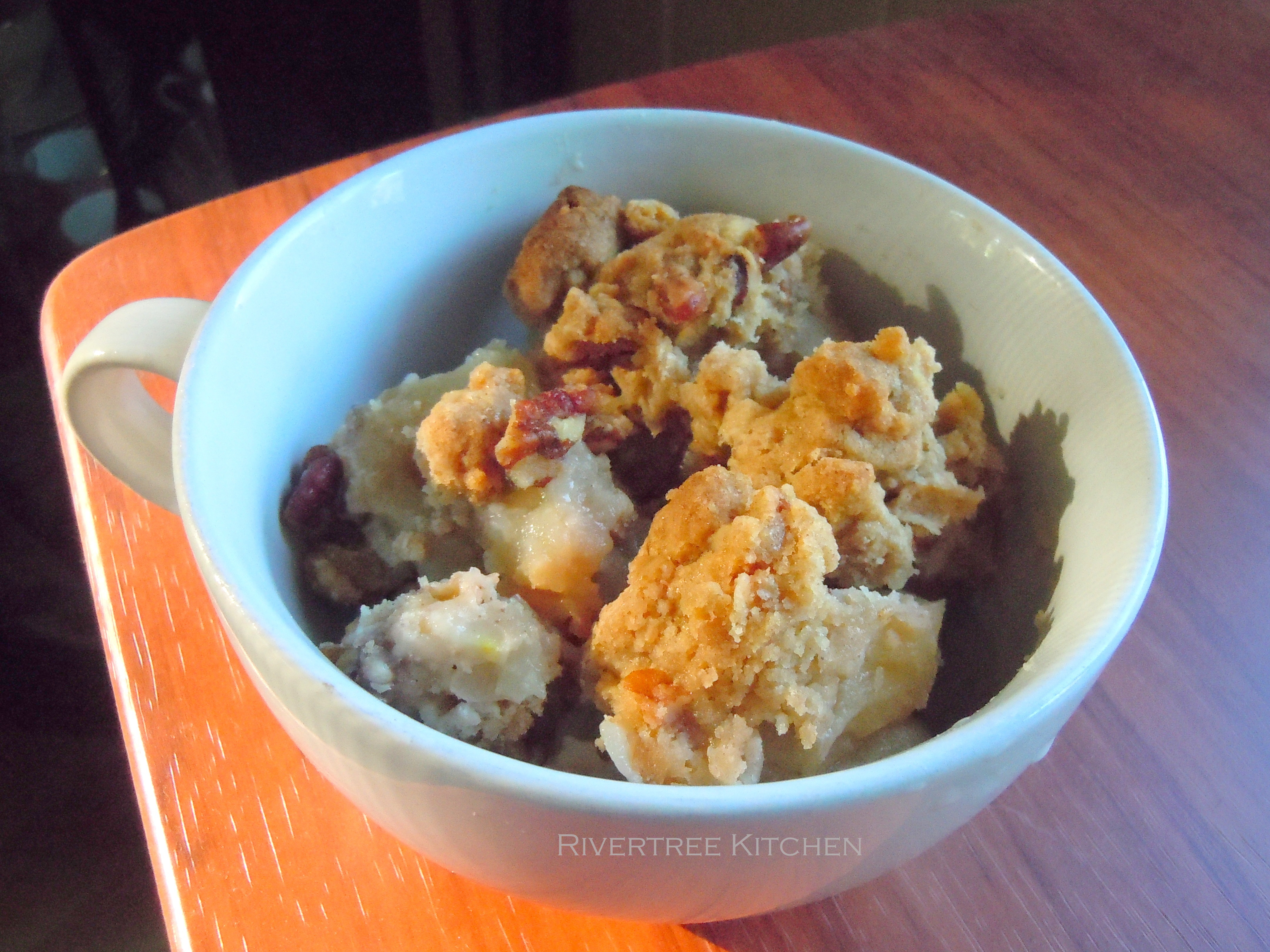
This time of year is just begging for apple crisp. I love the combination of tangy apples and sweet, floral pears. (I also make it with peaches, but that’s for a different season.) There’s something so comforting about a crisp. This is not a dish you dress up for; this is a treat best eaten in your jammies, curled up in front of the fire.

My mom has made a version of this crisp for as long as I can remember. Mom sticks with the classic combination of apples and cinnamon. I like to experiment with spices. Vindaloo, which I use here, is an Indian blend of sweet and hot spices. The version I use, from Penzey’s*, is more sweet than hot. Chinese five-spice powder or pumpkin pie spice blends are also tasty. There’s nothing wrong with sticking with the classics: cinnamon, cloves (go easy with that one), nutmeg, and powdered ginger.

This recipe makes an indecent amount of buttery, crunchy topping. If you want this dish to be healthy, cut down on the butter, flour and sugar. If you want the purist version of the crisp — meaning you want the butter and sugar unadulterated with healthy stuff; let’s be honest — skip the oats and the nuts. I prefer the nuts and oats (really!) for the chew and crunch they bring to the party.

*I do not receive endorsements, free products, or incentives from Penzey’s or any other company; I simply like their products well enough to recommend them.

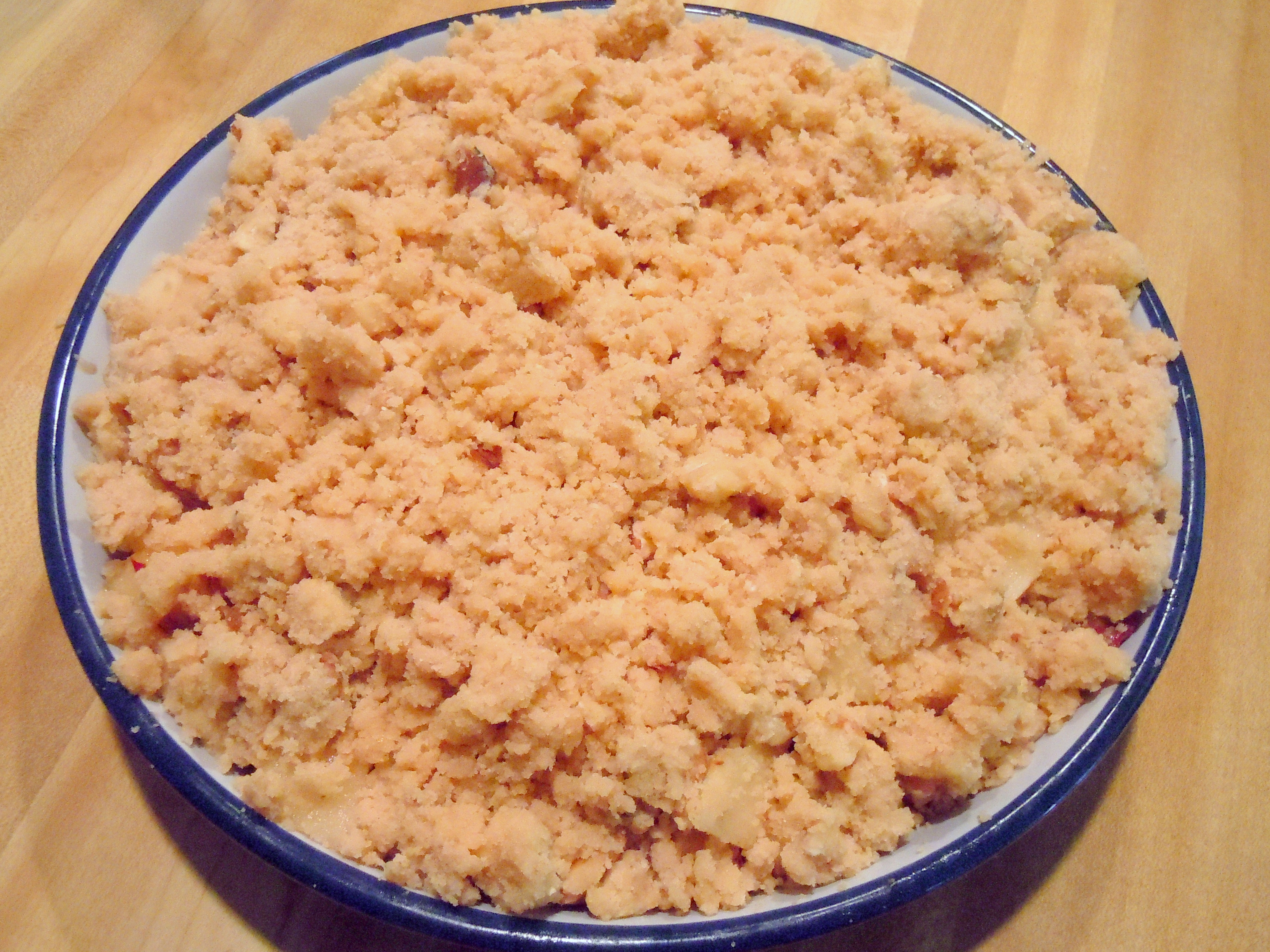
Pear-Apple Crisp ready for the oven

Pear-Apple Crisp
makes about 6 servings 

Topping:
1/2 cup (1 stick) butter, softened
1/2 cup brown sugar
1 cup flour
1/3 cup rolled oats
1/2 cup chopped pecans
Filling:
3 large apples
3 large pears
2 tbs. flour
2-3 tbs. brown sugar (depending on the sweetness of the fruit)
1/2 tsp. vindaloo (or Chinese five-spice, or cinnamon, or powdered ginger, or coriander)

Heat the oven to 350 degrees F. In a small bowl, make the topping: mash together the butter, brown sugar, and flour. Stir in the oats and pecans. Set aside.

Make the filling: Peel and core the apples and pears. Cut them into bite-sized chunks and add to a large bowl. Toss with the 2 tbs. flour  and then brown sugar to taste. Add vindaloo (or your choice of spices).

Pour apples into a 10-inch pie pan. Sprinkle the topping over the apples. Bake for about 45 minutes, until the top is golden and the fruit is tender. Serve at any temperature, but it’s best warm.

Posted in baked goods, sweet stuff | Tagged , , , , | 2 Comments

Carrots, sweet and spicy


Even when I was the pickiest of picky eaters, I loved carrots. The crunch, the sweetness, the vibrant color: all good. Tom and Luke feel the same way.

We love our carrots raw or cooked, and especially when they’re roasted with a whole chicken. But if a whole chicken isn’t available, this version is a close second.

We all know the basic glazed carrots, simmered or steamed until tender, then tossed with butter and sugar — one of the few vegetables I was willing to eat in my childhood years. Oh how things have changed.

This version is both lighter and more flavorful. Honey fills in for the sugar for a floral note, and minced red chile adds both heat and another layer of sweetness. There’s just enough butter to glaze the carrots. Feel free to be as decadent as you wish with the butter/honey/carrot ratio, however.

Red chiles are preferable, since they’re sweeter, but if all you have is green, go with it. I used a Fresno chile (big surprise there), and it was milder than I would have liked. Go figure. If your family is not fond of heat, use a mild chile or leave it out altogether.

I apologize for the photograph below. (In full disclosure, the photo at the top is chile-free.) Daylight and dinnertime no longer coincide at our house. I’m either going to have to cook dinner at noon every day, or get creative with lighting.

Carrots with Honey and Chiles
serves 4

1 lb. carrots
1/2 tsp. sugar
salt and pepper
2 tbs. butter
1 small red chile, minced
2 tsp. honey (or more to taste)
parsley for garnish, optional

Peel the carrots and slice about 1/2 inch thick. Put into a medium saucepan and add water just to cover. Stir in the 1/2 tsp. sugar and a hefty pinch of salt. Cover the pot and bring to a boil over medium-high heat. Reduce the heat to medium and cook for about 15 minutes until the carrots are tender.

While the carrots cook, melt the butter in a skillet over medium heat. Add the minced chile and sauté for about 5 minutes until the chile is tender and browned in spots. Take the skillet off the heat and stir in the honey until it’s all melted and lovely. (You don’t have to pour it into a bowl like I did below.)

When the carrots are tender, drain them and return to the pot. It’s not a bad idea to leave a teaspoon or two of water in the pan. Scrape the chile-butter-honey mixture over the carrots and add a few grinds of black pepper. Stir gently and heat over low for 5 minutes, stirring occasionally, until the carrots are nicely glazed. Sprinkle on some chopped parsley, if you wish, and serve hot.

Posted in sides, veggies | Tagged , , | 4 Comments