Salmon salad two ways

I wanted to post a recipe for a favorite dish of ours, a robust stew of ground turkey, salsa, and beans topped with a cheesy crust. Unfortunately, it looks like … mush. It’s completely beyond my current skills to get a photo that makes this dish even look edible, never mind appetizing. We’ll continue making it, and I’ll pull out the camera each time. Hopefully, I’ll get a good shot.

Meanwhile, let’s talk salmon. Leftover salmon, to be specific.

When we have salmon for dinner, I make extra. The firm texture and fattiness (healthy fat, remember!) of salmon mean that it holds up well in cold dishes. Arctic char (a salmon relative) and fresh tuna can also be used in these salads.


Cook the salmon like this, or use your favorite method. Chill the salmon well. Flake it and gently fold in the other salad ingredients. Bind the salad with wasabi cream, if that fits with the flavors you’re using. Or use straight mayo, a mayo-sour cream combination, or homemade low-fat ranch dressing.

The first salad adds creamy avocado and bright cherry tomatoes to the salmon. It’s held together with the ranch dressing and accented with fresh herbs and a sprinkling of grated parm.

There are plenty of great chefs who shudder at the thought of cheese with fish. If you agree with them, leave it out. Here in Cheesehead Land, anything goes (with cheese, that is).

The second version combines fresh spinach and salmon with the wasabi cream. Wasabi’s sinus-clearing heat is tempered by the sour cream and rich salmon. Deep green spinach contrasts nicely with the rosy salmon, and brings some serious nutrients to the party.

Both of these salads are easily doubled. Serve them as is, or on a bed of greens, or as a sandwich filling.
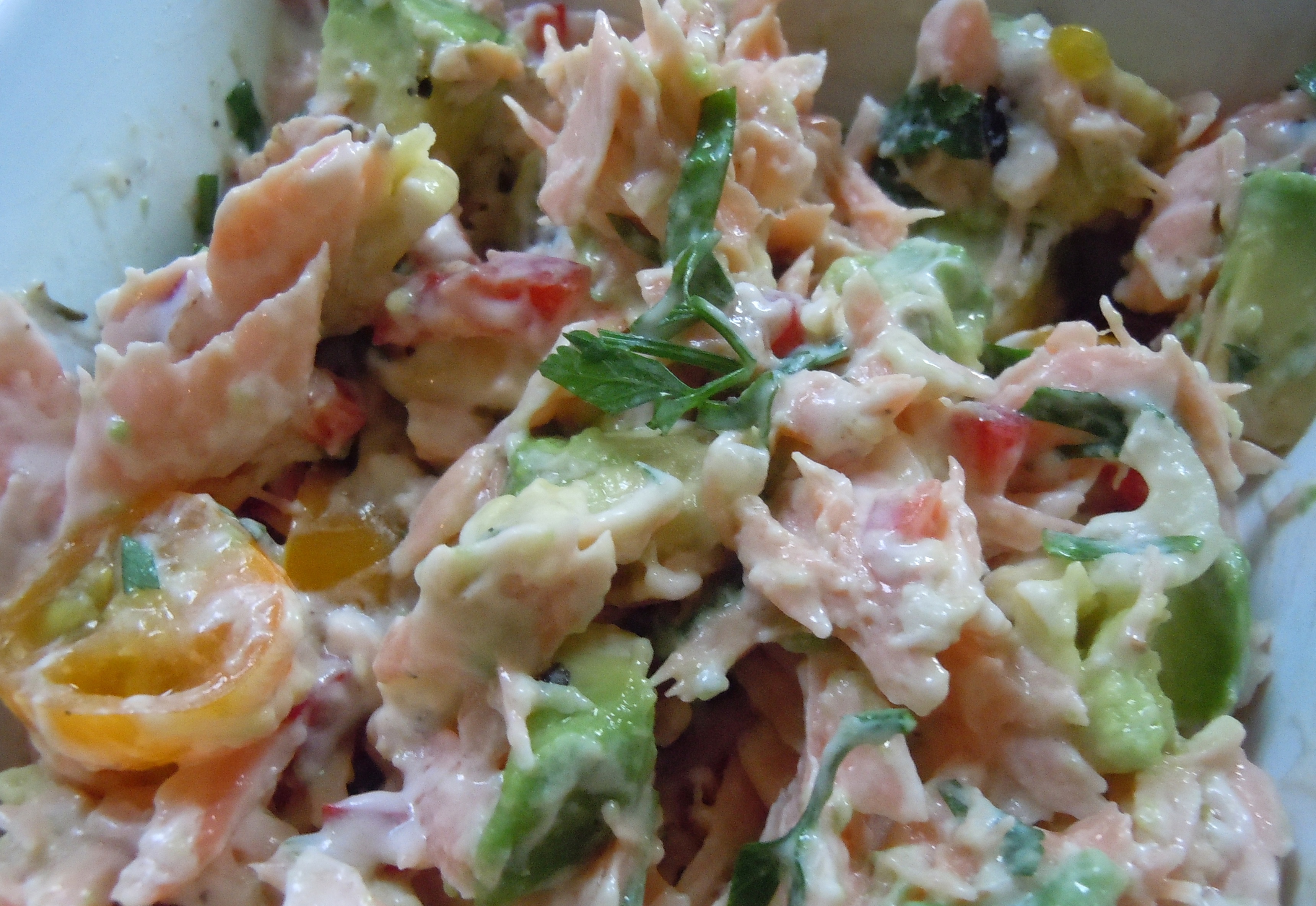
Salmon-Avocado Salad with Tomatoes
serves 2

6-8 ounces cooked salmon
1/2 of an avocado
1 cup cherry tomatoes
2 scallions, thinly sliced
1/4 cup ranch dressing (homemade or store-bought)
1/4 cup grated parmesan (optional)
salt and pepper to taste
2 tbs. chopped parsley

With your fingers, gently break the salmon into bite-sized pieces, discarding any skin and gray-brown bits. Peel and cube the avocado; halve the cherry tomatoes. Add the scallions, dressing and parmesan (if using) and fold together. Taste and add salt and pepper if you feel the salad needs it. Garnish with parsley and serve.
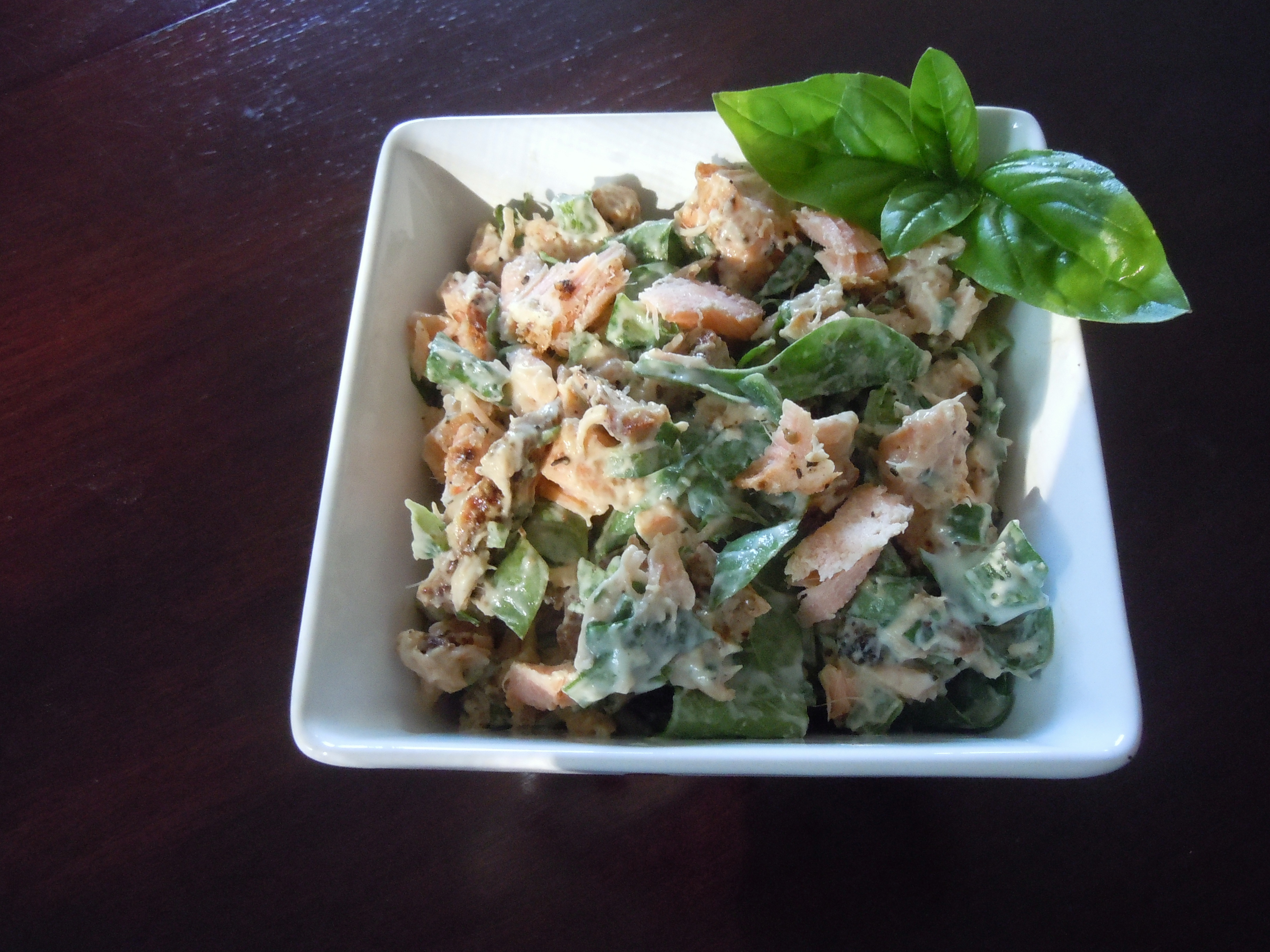
Salmon-Spinach Salad with Wasabi
serves 2

6-8 ounces cooked salmon
2 cups fresh baby spinach leaves
2 scallions, thinly sliced
2 tbs. chopped fresh basil and/or parsley
1/4 cup wasabi cream
salt and pepper to taste

With your fingers, gently break the salmon into bite-sized pieces, discarding any skin and gray-brown bits. Give the spinach a rough chop (or use the whole leaves) and add to the salmon with the scallions and herbs. Gently fold in the wasabi cream. Taste, add salt and pepper if you wish, and serve.

Posted in main courses, meat, poultry,and fish | Tagged , , , , , , , , | Leave a comment

Tom’s best-ever lasagna

I was in the Twin Cities this weekend, having a lovely visit with Tom’s twin brother, his wife and girls. On Saturday I drove into St. Paul for a picnic sponsored by the Minnesota Historical Society Press (one of my clients). I got to have lunch with Brett Laidlaw and his wife Mary. Brett’s a fellow food blogger (Trout Caviar). I had the distinct pleasure of proofreading his cookbook of the same name earlier this summer. The MHS Press staff brought him an advance copy of his book to the picnic, so I got a sneak peek.

Tom took advantage of having the kitchen to himself (Luke was at a soccer tournament) and made a double batch of lasagna. I don’t like to brag (lie!) but my husband makes the best lasagna ever. The Best Lasagna EVER.

Tom’s been making lasagna since before I met him, and that was twenty years ago. He started with his mom’s recipe, and it would have been fantastic if he’d stopped there, since Mary’s recipes are reliably delicious.

But Tom did what most good cooks do: he didn’t leave well enough alone. He tweaked and fiddled, added a bit here and there, until he got to the plate o’ heaven that is the current version.

For a big, meaty dish, it’s surprising that the secret lies in the vegetables. He adds big chunks of zucchini and bell peppers (orange are always his favorite) along with the more expected onion and garlic to the tomato-meat base, and then cooks it until the sauce is very thick and the veggies have nearly — but not quite — melted into oblivion. When Luke was little and a picky eater, Tom would finely chop the veg so they would completely melt into the sauce; nowadays he likes to leave them in large chunks.

Secret #2 is a pinch of brown sugar. It balances the acidity of the tomatoes without adding too much sweetness. A hefty dose of oregano adds herbal complexity.

As with most lasagnas, his version is great the first day and even better on the second day. It also doubles and freezes just beautifully. Sometimes he makes extra tomato-meat sauce; we serve that over pasta with a salad and some parmesan-garlic toasts. That super-thick sauce means that his lasagna is never runny.

Lasagna
Serves 8

The Sauce:
1 tbs. olive oil
1 large onion, chopped
1 zucchini, chopped
1 large bell pepper, chopped (Tom prefers orange, but will settle for yellow or red) Tom’s
2 cloves garlic, minced
1 lb. lean ground beef
1 can (28 oz.) crushed tomatoes
2 cans (4 oz. each) tomato paste
salt and pepper
1 tsp. dried oregano (or to taste)
1 tsp. dried basil
2-3 tsp. brown sugar

The Lasagna:
1/2 lb. lasagna noodles
16 oz. ricotta (store-bought or homemade)
2 eggs, beaten
1 1/2 cups grated parmesan
16 oz. grated mozzarella
salt and pepper
1 batch Sauce, above

In a large stockpot, heat oil over medium-high heat. Cook onion, zucchini, bell pepper, and garlic until softened. Set aside in a bowl. Brown the ground beef in the same stockpot. Return the veggies to the pot; add the crushed tomatoes, tomato paste, salt and pepper to taste, herbs, and brown sugar. Stir well, cover, and turn the heat down to low. Simmer for about 45 minutes, stirring occasionally, until sauce is very thick.

Heat the oven to 350 degrees F. Bring a large pot of water to a boil; cook the lasagna noodles for about 5 minutes until they’re mostly cooked but would still need about 2 more minutes. Run them under cold water and drain them well.

While they’re cooling, stir together the ricotta and eggs in a large bowl until well mixed. Stir in 3/4 cup of the parmesan and all of the mozzarella; season with salt and pepper.

Spread about 3/4 cup of the sauce in the bottom of a 13 x 9-inch baking dish. Tuck a layer of cooled lasagna noodles on top, trimming to make them fit if necessary. Spread with another layer of tomato sauce; there should be a little less than half the sauce left after you’re done. Top with half the ricotta mixture. Add another layer of noodles, the rest of the tomato sauce, then the last of the ricotta mixture. Sprinkle with the last of the parmesan.

At this point, you can wrap it up really well and freeze it. Thaw it in the fridge before continuing as described below.

Cover with foil and bake for 30 minutes. Uncover and bake for 15-30 minutes longer until the lasagna is hot and bubbly and browned on top. You can pop it under the broiler for a few minutes for extra browning, if you wish.

You can reheat the whole thing, or reheat individual pieces, in a 350-degree oven for about 20 minutes.

Posted in main courses, pasta, rice, and grains | Tagged , , , , , , | 2 Comments

Skillet supper, v.2: sausages and peppers over cheesy polenta

This is a piece I wrote a few months ago and forgot to post. So ignore the obvious references to warm weather (snow is predicted tonight; lunches on the deck are now but a dream) and enjoy the food.

Company this weekend. Tom’s family came for lunch on the deck (sandwiches and Roasted Potato Soup).

Our pups were in heaven; not one but two dogs to play with! Steve’s goldendoodle River towers over our girls with her long, long legs, but plays very nicely; my mother-in-law Mary’s cairn terrier Barney holds his own with the crowd of large, rambunctious females.

I stopped by the farm market late in the afternoon, to find inspiration for dinner. There was a basket of small, cone-shaped red chiles that looked very much like my beloved Fresnos. I didn’t know that we could grow them in Wisconsin, so I asked for an identification. “Hey, what kind of peppers are those little red ones?” the woman behind the counter shouted to someone in the back. “Chiles!” came the answer. “Not too hot.” Well, that narrowed things down.

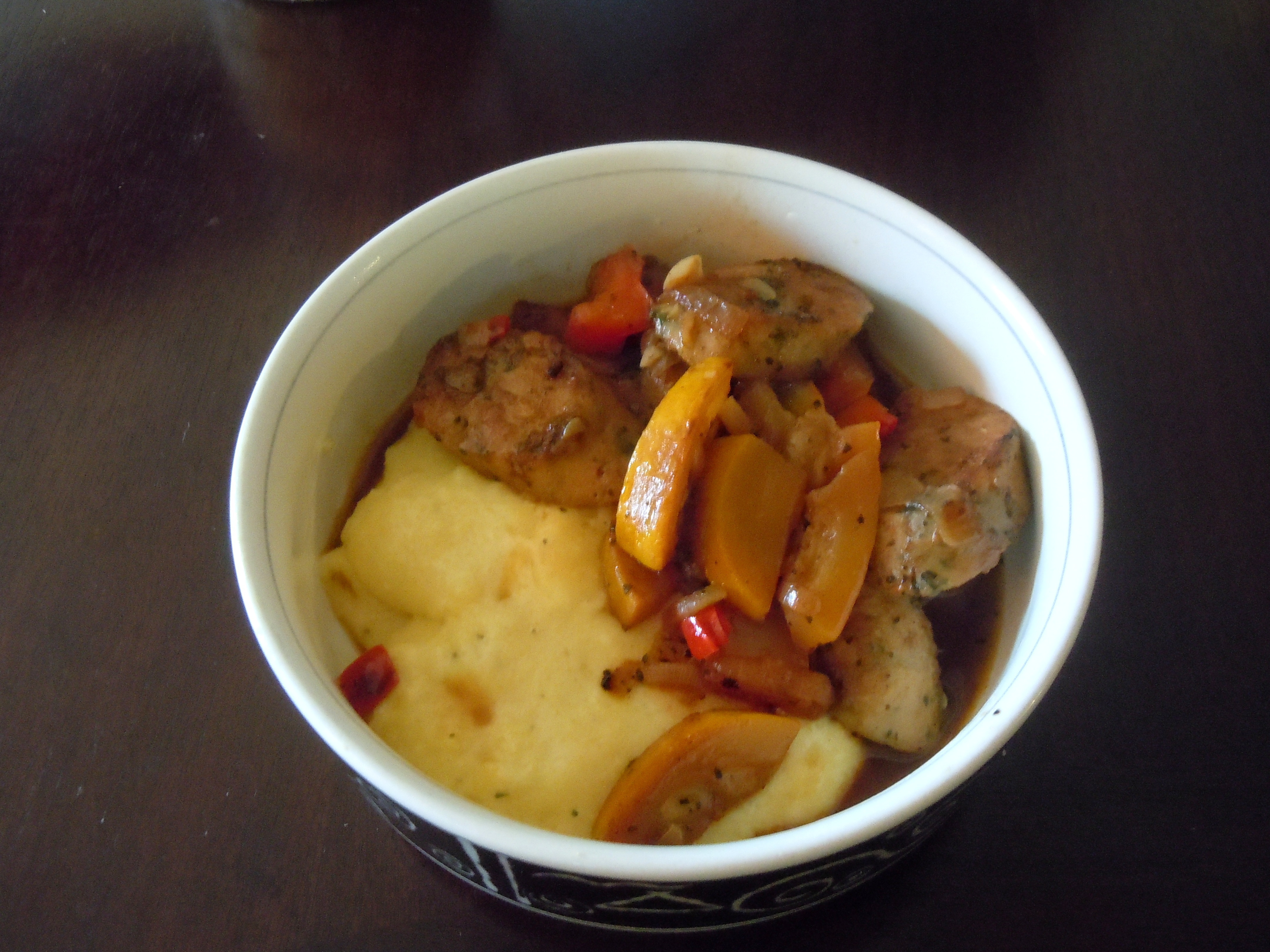
I came home with an orange bell pepper, a handful of those unnamed chiles, and some deep yellow summer squash. With the chicken sausage I had in the fridge, they’d make a nice stew to serve over polenta.

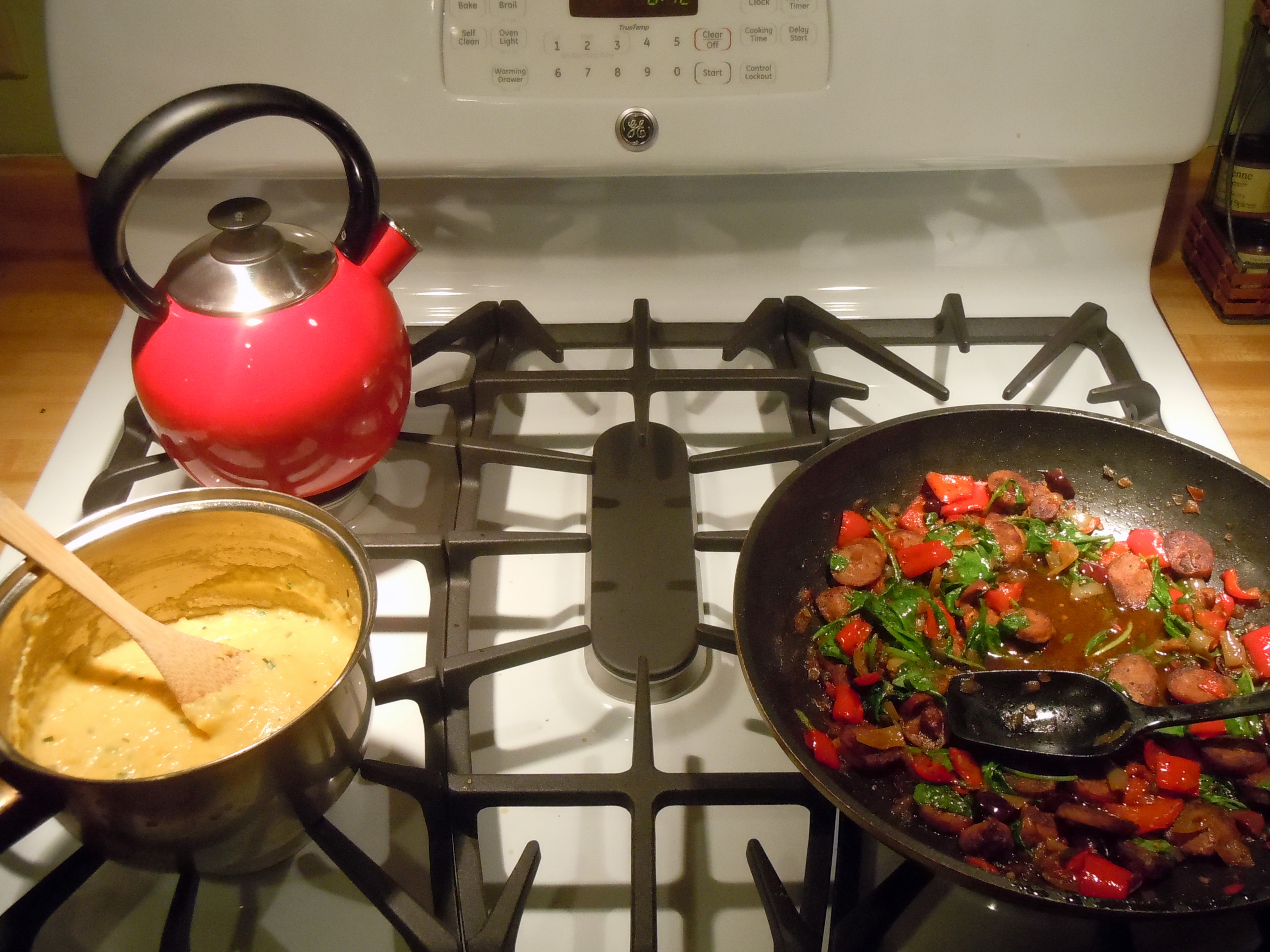
Luke and I had made a similar version of this dish recently, with spinach instead of the summer squash, and were pleased with the results. (Note the glorious new stove. Five burners! Have I said that already?)

Browning the spicy sausage first creates a fond, the fancy French name for those brown, intense flavor bits that stick to the pan. Tip the toasty sausage into a bowl, put that messy pan back on the heat, and add the veg. The natural liquid in the onions and squash will help to loosen the cooked-on bits.

The result is a deeply flavored, colorful stew that tastes rich but isn’t heavy. Soft polenta is sophisticated comfort food, and is the perfect mellow base for the stew.

If your fridge or freezer yields andouille or chorizo or kielbasa because that’s what you prefer, use that. We use chicken sausage because it’s healthy and truly delicious, so we can dine guilt-free. (Well, except for the cheese.)

Speaking of healthy dinner, you can make the polenta with just water, or water plus chicken stock, for a nearly fat-free dish. We like the creamy texture of the polenta made with milk.

Polenta sets up very quickly once it’s cooked, so make sure the stew is ready before the polenta is. If you have a good kitchen helper in your house, the helper can cook the polenta while you make the stew; they take about the same amount of time.

Sausage-Pepper Stew with Cheesy Polenta
Makes 4 servings

1 cup water
1 cup whole milk
3 cups chicken stock, divided
1 tbs. olive oil, or a bit more if needed
4 spicy chicken sausage links, sliced
1 small onion, chopped
1 clove garlic, minced
1 chile, minced (use whichever one you choose)
1 red bell pepper, seeded and chopped
2 small or 1 large summer squash, cubed (or use zucchini)
Salt and pepper
1 tbs. minced fresh thyme (or 1 tsp. dried)
1 cup polenta (cornmeal)
1/2 cup grated sharp cheddar, plus more to pass

Pour the water, milk, and 2 CUPS OF the stock in a medium saucepan over medium heat and slowly bring to a boil.

While that gets hot, put the oil in a large skillet over medium-high heat. When the pan’s hot but not smoking, add the sausage. Cook for a few minutes until it’s well browned. Pour the sausage into a bowl and set aside.

Add the onion and garlic to the pan; cook for 1 minute until the onion is softened. Stir well to loosen all those flavor bits on the bottom of the pan. Add the chile, bell pepper and squash and continue cooking for about 5 minutes until the veg are softened and browned in spots. Add a tiny bit more olive oil if the veg are sticking too much.

Add the remaining 1 cup stock to the pan along with the thyme. Give a good stir, then taste. Add salt and pepper. Turn the heat to medium-low and let it simmer while you make the polenta.

Your polenta liquid in the saucepan should be gently boiling by now. (If not, boost the heat until it is.) Arm yourself with a whisk, and have a wooden spoon close by. Add the polenta in a thin stream as you whisk constantly; this is how you avoid lumps.

Once all the polenta is whisked in and the mixture is starting to thicken, stir in about 1/2 tsp. salt and lower the heat to medium-low. Cook for 15 to 20 minutes, stirring every few minutes, until the polenta tastes smooth and no longer gritty. If the polenta is thicker than you’d like, stir in a few more tablespoons of milk.

Stir in the 1/2 cup cheddar until melted. Immediately spoon the polenta into bowls, top with the stew, and serve. We like a sprinkling of chives or parsley on top. We set out a bowl of grated cheddar just in case the polenta isn’t cheesy enough.

Posted in main courses, meat, poultry,and fish, pasta, rice, and grains | Tagged , , , , , , , | 2 Comments

Big flavor, minimal effort: roasted potato soup

When you live without power for eleven-plus hours, especially on a summer day, it tends to have a negative effect on the food in your refrigerator. When you have no power for eleven-plus hours and you have a well, it means you’re living in a water-free house for the duration.

Every time this happens — and it happens at least once a year — we repeat our out-of-power mantra: 1. we really need to get ourselves a generator, and 2. we’re never living in a house with a well again. We’ve been in this house for over 14 years, and 1. still don’t have a generator; 2. have no plans to move. Have I mentioned the view here? Kinda makes it worthwhile:

Once we regained power, we had less than a day to clean the house, replace the contents of the fridge, and prepare an early lunch for visiting family. We opted for sandwiches and chips, but I couldn’t go without making anything. The day was quite cool, so I opted for roasted potato soup: not the prettiest of soups, but easy, fast, and full-flavored.

I roasted some potatoes (skins and all), a large onion, cut into chunks, and six unpeeled cloves of garlic in a hot oven for about 20 minutes. After a quick stir to maximize browning, they went back in for another 20 minutes.

See how easy this is so far? Out of the 40 minutes of cooking time, only about 5 are hands-on. I had plenty of time for fun, exciting activities such as sweeping up dog hair and washing every single item of clothing we own (it’s amazing how fast laundry accumulates in just one day without a functioning washer).

Once the potatoes and onions were golden and tender, it all went into a stockpot with some chicken stock. A quick whirl with the immersion blender, and we have liftoff, folks.

This is not a dish that relies on exact measurements. If you have baby red potatoes, or Yukon golds, use them instead. If you’re lucky enough to have an excess of shallots or cippolini onions, all the better. The roasted garlic in my version adds sweetness, but if you’re currently out of fresh garlic, sprinkle the potatoes with some chopped garlic from a jar. I won’t tell.

All that caramelization lends deep, hearty flavor to what is secretly a healthy soup. Make it vegetarian just by using vegetable stock instead of the chicken stock; a splash of a dry white wine benefits either version. I love the earthy flavor of thyme with potatoes, but you could use rosemary or dill instead.

We love to top it with a dollop of sour cream and some minced chives, but it’s delectable all on its own. You can also stir in some grated cheddar, crumbled, cooked bacon, and/or chopped scallions.

Roasted Potato Soup
makes 8 cup-size servings, or 4 bowl-size servings

4 medium russet potatoes, scrubbed and cut into cubes (or use any type of potato)
1 large onion, peeled and cut into wedges
6 cloves garlic, unpeeled
2 tbs. olive oil
1 tsp. salt
1 tsp. black pepper
1 tbs. fresh thyme, or 1 tsp. dried
1/2 cup dry white wine, optional
4-6 cups chicken or vegetable stock
sour cream and chives, for garnish

Heat the oven to 450 degrees F. Spread the potatoes, onion, and garlic cloves on a large cookie sheet and toss with the oil to coat. Spread them in one layer and sprinkle with salt, pepper, and thyme. Roast for 20 minutes. I have a gas oven, so I put them on the bottom rack for maximum browning. Put them on whichever rack in your oven that will ensure a good, golden crust.

Once the potatoes are well browned on one side,  Carefully flip each piece so that you’ll get even browning and put them back in for another 20 minutes. Or, if you’re not crazily obsessed like I am, just give them a stir and roast until done. (Yes, I really do turn each piece. It’s my personal brand of OCD behavior.)

When you have achieved golden goodness, set aside the garlic cloves and scrape the rest into a stockpot. Add chicken stock (or veggie stock) to cover and set the pot over medium heat. I like to pour some of the stock on the cookie sheet to loosen some of those great browned bits, then add that liquid to the pot. Squeeze the roasted garlic out of the skins, mash it up a bit, and add it to the pot.

Bring the soup to a boil, lower the heat and simmer for 10 minutes or so to blend the flavors. (At this point, you could turn the heat to low and let it sit on the stove until you’re ready for it.) For a slightly chunky soup, purée it with a stick (immersion) blender; for a smoother version, give it a whirl in a food processor or blender.

Taste and adjust the seasonings if necessary. Add more stock if the soup is too thick. Serve hot with a dollop of sour cream and a sprinkle of chives.

Posted in sides, soups | Tagged , , , , , , , | 3 Comments

Skillet supper on the new stove

NOTE: I was ready to post this, I really was. Then a brief storm rolled through and knocked out our power for a whole day. Eighty-mile-an-hour winds will do that to you. So here’s what should have been posted a few days ago:

The new stove is here! First order of business: grilled cheese sandwiches on that center griddle. We each made our own; mine was sharp cheddar and sliced cherry tomatoes with opal basil leaves. The heavy cast iron griddle (15 lbs.!) made for one crunchy crust, let me tell you.

The griddle has inspired me to use my cast iron skillet more often. As you know, the more you use cast iron, the better it gets. My skillet — a flea market find — is in the no-man’s-land between its original state (a rusted mess) and the perfectly seasoned hunk of nirvana it’s destined to be one day. But we carry on nonetheless, and my skillet is slowly gaining a glossy patina.

Dinnertime tonight. Here’s what I had for protein: two tiny filets of beef — we’re talking maybe three ounces each — to feed my husband, my teen athlete son, and maybe me as well. I also had a bag of lovely red potatoes from Turner’s farm market and gorgeous deep yellow summer squash from King Berry farm market. Skillet supper, here we come.

I simmered the taters for a few minutes in salted water to jumpstart the process. While they were simmering, I cut the steaks into chunks and browned them in the hot cast iron skillet, just long enough to get some color on the beef. The pan now had some nice browned bits, and the steak was still quite rare in the center. The plan was to pop the steak back in the pan at the end to finish up.

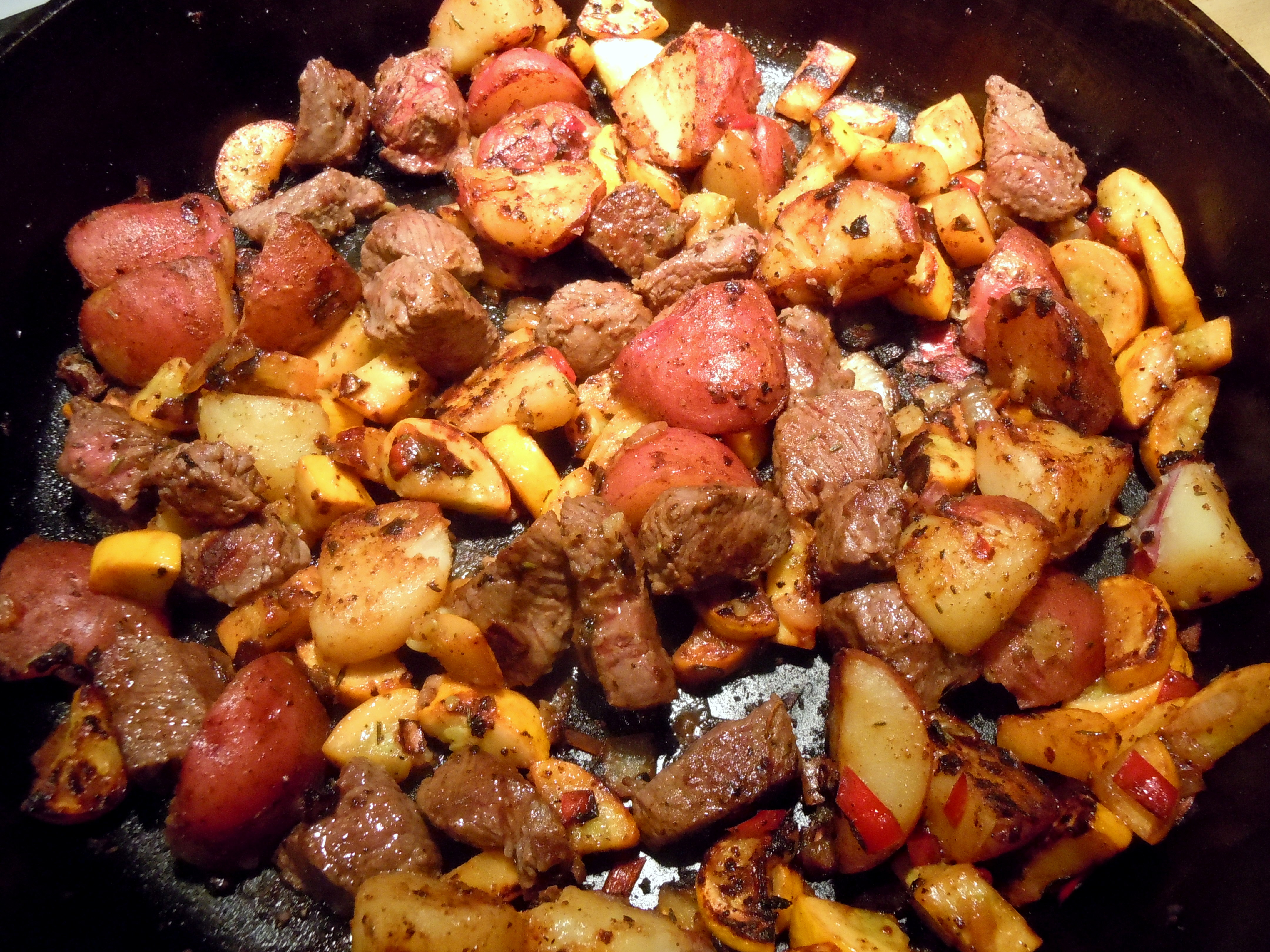
Those golden squash went into the hot skillet with some onion and garlic, to soften and soak up those lovely meaty bits. Once the potatoes were nearly tender, they went into the skillet as well. Cajun seasoning added extra flavor. When the veggies were beautifully caramelized, the steak went back in for a few minutes to finish cooking.

Steak and Potato Skillet with Summer Squash

8-10 egg-sized red or new potatoes, quartered (about 4 cups)
2 tbs. olive oil
9-12 oz. tender, lean beef, cut in 2-inch chunks
1 medium onion, chopped
2 cloves garlic, minced
2 small summer squash (or zucchini), cut in chunks
salt and pepper
1 tsp. Cajun seasoning (I used Penzey’s)
1 tbs. butter

Put the potatoes in a small saucepan, cover with water, and add a generous amount of salt. Bring to a boil over high heat, reduce heat to medium, and simmer for about 8 minutes until potatoes are beginning to be tender but aren’t done cooking.

While the potatoes cook, heat a skillet (preferably cast iron) over high heat. While it warms, season the beef with salt and pepper. Add 1 tbs. of the oil and the beef to the hot pan; turn the heat down to medium-high. Cook for 1 minute without touching. Flip the beef and brown a second side for 1 minute longer. Remove beef to a plate.

Add the remaining tbs. oil, then the onion, garlic, squash, and Cajun seasoning. Cook, stirring occasionally, until the veg are softened and beginning to brown.

The potatoes should be ready by now. Drain them well. Add the butter to the pan and add the potatoes. Cook for another 10 minutes or so, stirring now and then, until everything is nicely caramelized. Add the beef back in and cook for 1-2 minutes longer, until the beef is heated through and cooked to your liking.

Serve hot with a sprinkling of fresh parsley or chives, or grated parmesan, or a dollop of sour cream, or sour cream plus horseradish ….

Posted in main courses, meat, poultry,and fish | Tagged , , , , , | Leave a comment

Stuffed zucchini in the OLD oven

Yes, you read that right: we’re getting a new stove! The old one had an extra-hot (15,000 BTU) burner and a simmer burner, along with two regular burners. (I don’t need to explain that this is a gas stove, do I?) The oven left a lot to be desired. It now runs at least 25 degrees below what it’s telling me (that little liar!), and it simply refuses to brown anything at all. I actually use my creme brulée torch to brown foods.

The stove was wonderful 15 years ago, when we first got it. Now we have to light each burner with a match. The pale grey enamel on the grates is stained beyond salvation — the parts that haven’t chipped off, that is. Did I mention that the new stove has much more sensible cast-iron grates?

The new stove has a super hot burner (17,000 BTU–yes, that’s right, 2,000 more BTUs), a simmer burner, two regular burners, and — wait for it — a center oval grill burner. Tom can’t wait for that extra burner. It comes with a griddle, a grill, and a plain grille. I’m hoping for an improvement in the oven. I may have to backtrack and change all my oven times and temps in the previously posted recipes.

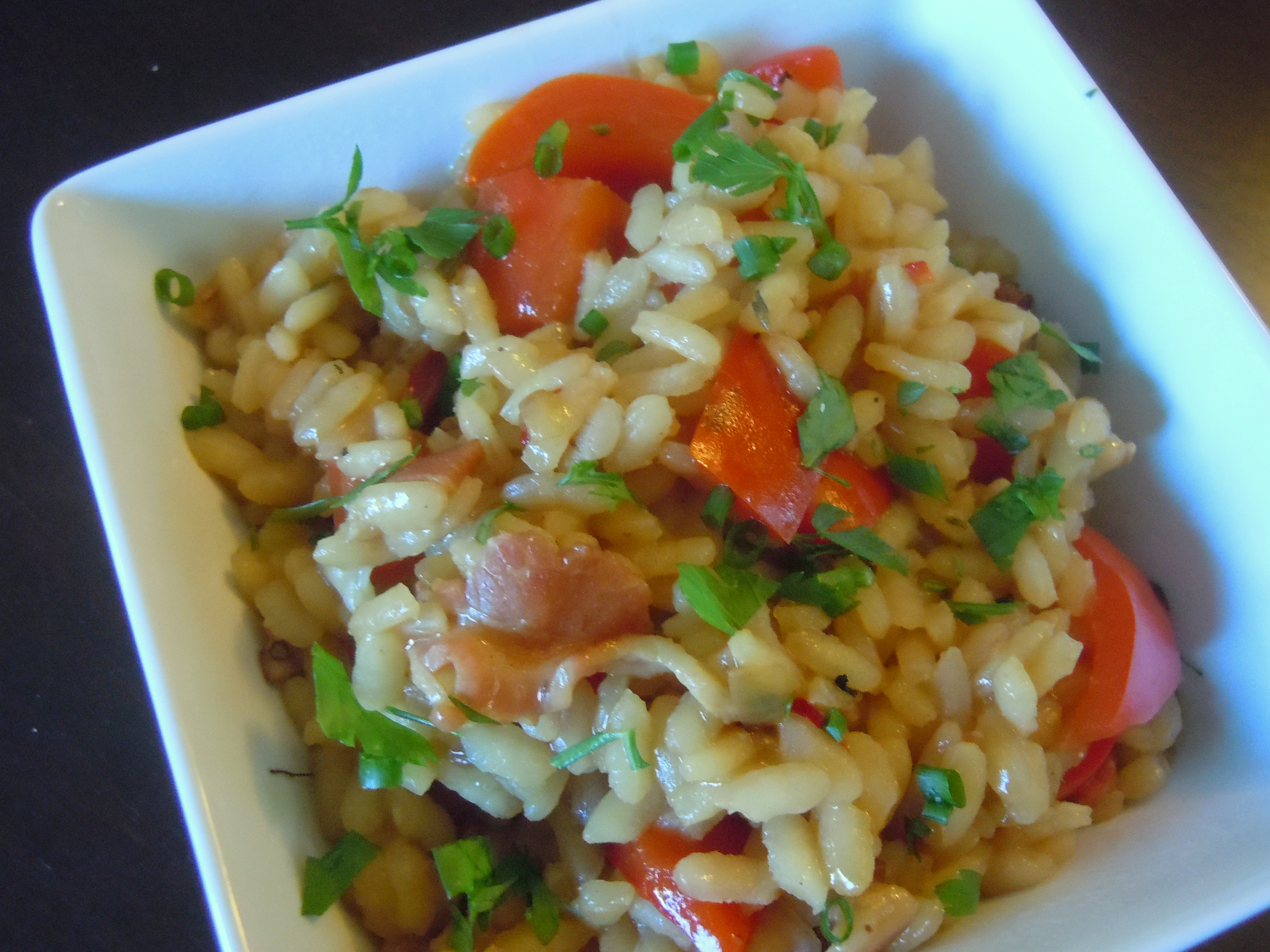
This may well be my last post using the sad old stove. This recipe came about as so many of my dishes do, by using up what was in the house. A few days ago, I made a huge batch of red pepper-pancetta risotto. It seems like Luke has soccer every night these days, and Tom and I had meetings, so I needed a go-to dish we could reheat.

This is your chance to throw my own words back at me, so go ahead: “Diners wait for risotto; risotto does not wait for diners.” But let’s take a moment to remember the bliss that is the risotto cake, and how terrific risotto is as a stuffing.

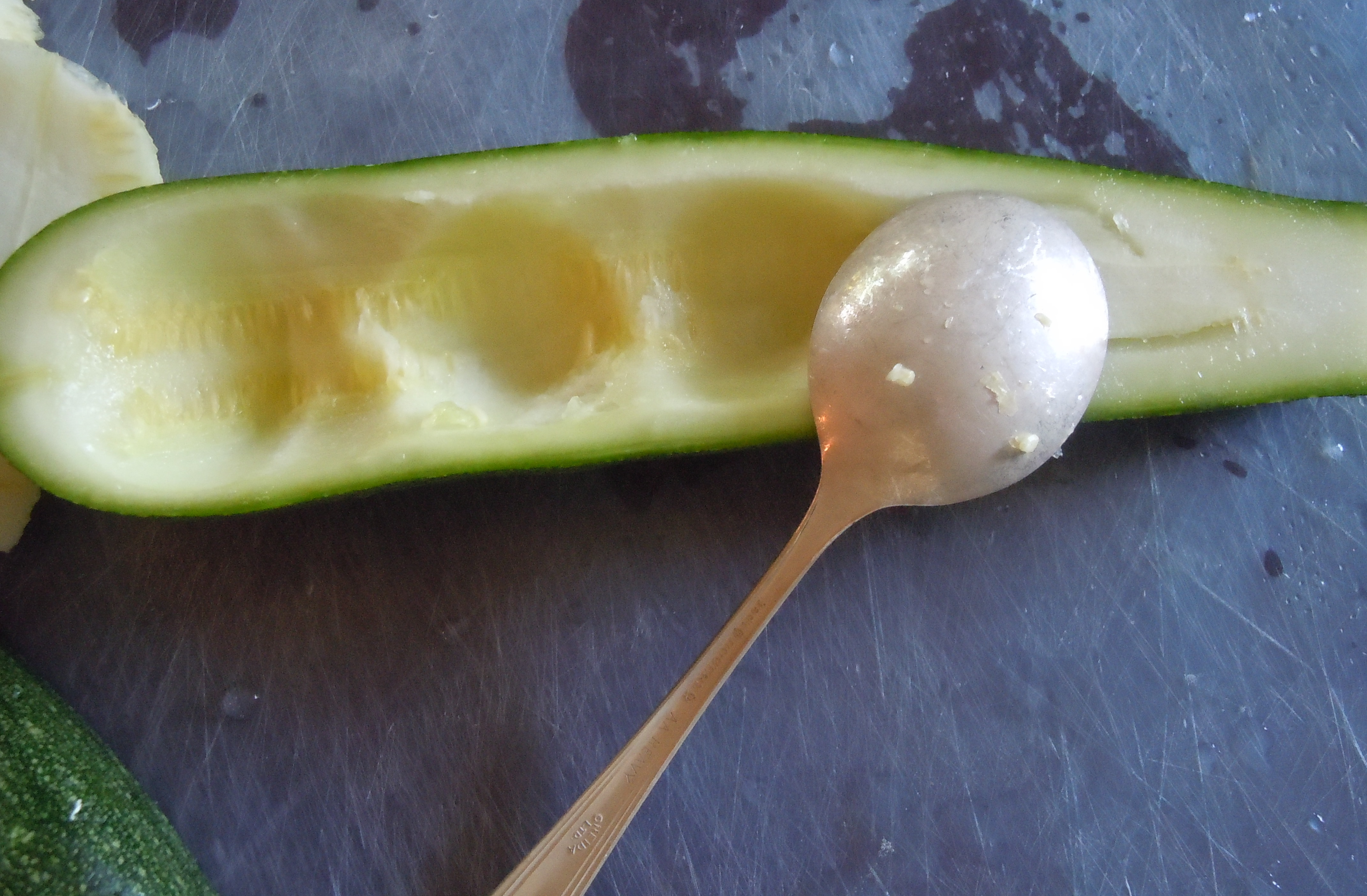
We had some lovely zucchini in the fridge, and a giant bowl of the aforementioned risotto. I learned how to stuff and bake eggplant back when I lived in Boston; why not use the same technique for zucchini? I halved and scooped out the zucchini, and popped the halves into the oven to soften.

Meanwhile, I sautéed the extra zucchini bits to add to the rice. A handful of cubed cheese helped to bind the filling.

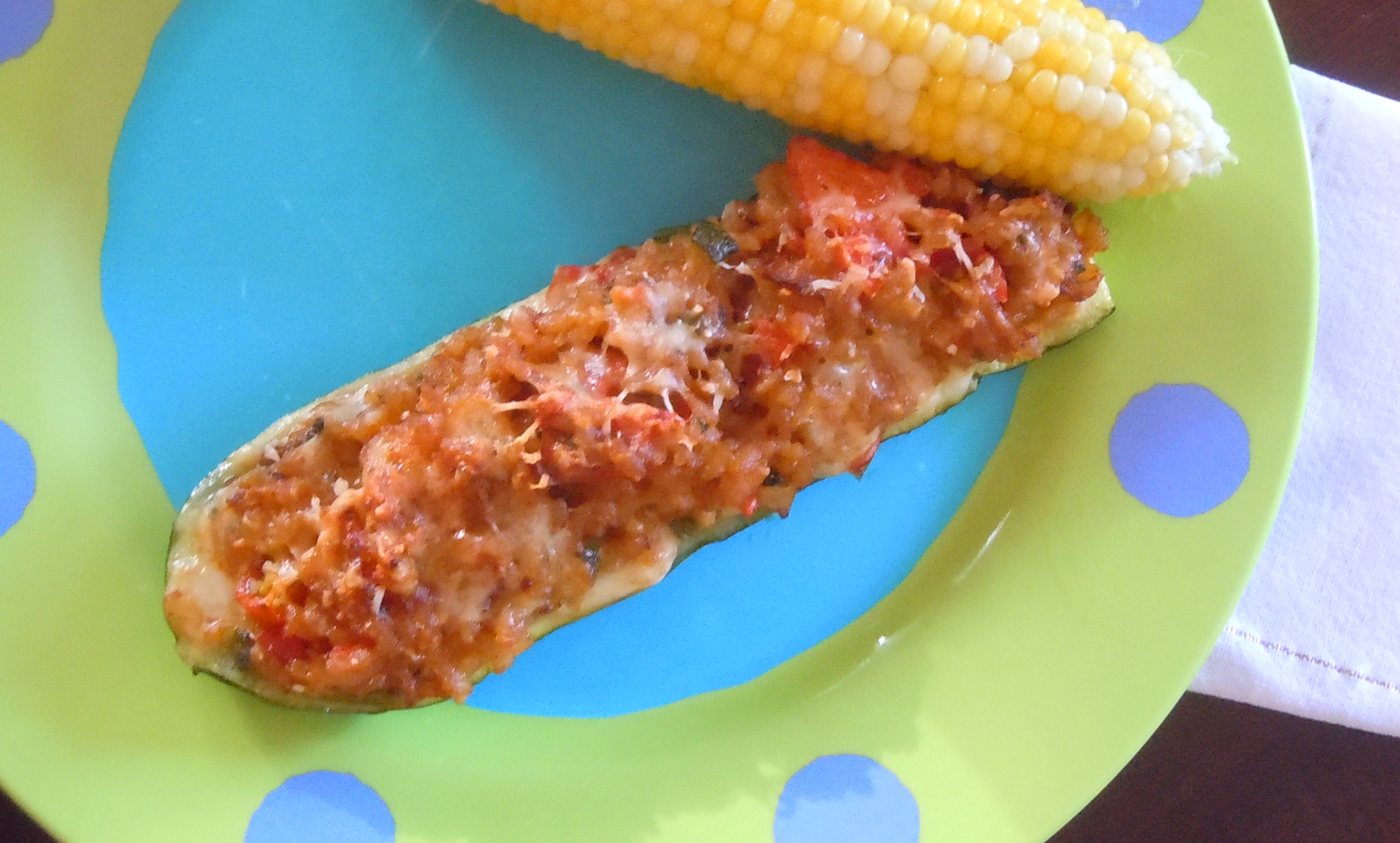
When the zucchini boats were mostly tender, I stuffed them, sprinkled them with some parm and popped them back in the oven for another 20 minutes. The zucchini boats hold their shape but become sweet and impossibly tender. The rice develops a crunchy golden crust (even in my old oven!) but is soft inside, held together with that gooey cheese. With a minimum of alterations, this makes a fabulous vegetarian entrée or side dish.
We made a super-simple pantry version of this last week: the stuffing was composed of cooked orzo, jarred pizza sauce, diced pepperoni, and mozzarella. Fast and easy, and a really delicious way to get reluctant eaters to chow down on the veg.

Risotto-Stuffed Zucchini
serves 4 as a side dish; 2 as a main dish

2 medium zucchini
2 tbs. olive oil, divided
1 jalapeño pepper, minced, optional
1/2 cup chopped fresh tomatoes
2 cups cooked risotto*
3 oz. (about) cheese, shredded or cut into tiny cubes (I used pepper-jack here)
1/4 cup grated parmesan

Heat the oven to 375 degrees F. Spread 1 tbs. of the olive oil in the bottom of a baking dish just large enough to hold all 4 zucchini halves.

Cut the stems off of the zucchini and discard. Cut the zucchini in half lengthwise. Using a spoon or a paring knife, scoop out the insides of the zucchini, creating a boat about 1/4-inch thick. Save and chop the inside pieces you scooped out. Lay the zucchini boats cut sides down in the prepared baking dish. Cover with foil and bake for 15 minutes, until they are tender but not cooked through completely.

Meanwhile, saute the chopped bits of zucchini insides along with the jalapeño (if using) in the last tbs. olive oil until tender. Stir in the tomatoes, risotto and the cheese until evenly combined.

When the zucchini boats are ready, take them out of the oven and pack in the filling. I like to really mound the filling generously. Sprinkle the tops with the parm and bake, uncovered, for another 20-30 minutes until the filling is browned and bubbly. (The timing’s not crucial here, as everything is cooked already. If you’re in a rush, 10 minutes in the oven will be enough to heat everything through.)

*Risotto: any flavor will work, as long as it doesn’t contain large chunks of veg or meat. For the red pepper-pancetta risotto, I sautéed 3 oz. chopped pancetta with 1 minced onion and 1 clove minced garlic until the veg were tender and the pancetta was nicely browned. I then proceeded with the standard risotto recipe. While the risotto cooked, I chopped up a large red bell pepper and sautéed it in a bit of olive oil until tender, then stirred it into the risotto. Add 1/2 tsp. hot red pepper flakes or Aleppo pepper for some heat, if that suits you.

Posted in main courses, pasta, rice, and grains, sides, veggies | Tagged , , , , , , , | Leave a comment

Summer bash: peach-prosciutto crostini

Every summer, usually in July, we have an all-day party with friends from Tom’s high school years. I make the appetizers and the main course, and everyone else brings salads, dessert, and drinks. We refer to this as our Summer Bash (as opposed to the Winter Bowl Party, which we’ll save for another day).

We spend the day on the deck, in the hot tub, and if it’s seriously hot, in the river. At one memorable, particularly steamy Bash, we ended the party sitting in the river at the rapids, passing a bowl of chocolate-covered strawberries (our friend Marge’s essential contribution), and shouting helpful advice to passing canoeists. Heaven. We only wished we’d thought to bring a bottle of champagne into the water.

I’m slowly edging the menu toward heavy appetizers, rather than a few munchies and a main course. The whole party is really geared toward all-day grazing instead of a main meal.

This year we had our lightest entrée ever: grilled skewers of chicken and beef that guests could either eat atop a giant salad (courtesy of Jennifer) or eat in small rolls as mini sandwiches; grilled chicken or beef sliders, as it were. I made an assortment of sauces to accompany the skewers: teriyaki, ranch, wasabi cream, pesto, salsa, and guacamole.

For appetizers, I made parmesan-pistachio shortbreads, caramelized onion palmiers (a future post), an assortment of crostini (recipes follow), a big bowl of watermelon chunks, and bowls of olives. Nick provided spiced nuts and a lovely Beaujolais. Our friend Traci made a gorgeous plate of bocatini (tiny balls of fresh mozzarella) with tomatoes, bell peppers and basil from their garden.

We ended the day, as always, with Marge’s chocolate-covered strawberries. She promises to send me the recipe so I can post it.

Meanwhile, here are the recipes for the crostini. The key to both of them is homemade ricotta. It provides a creamy, smooth base for the other flavors. I’d made it a few days before the party, along with a nice batch of pesto (the basil’s growing as fast as the weeds in my garden).

I also toasted slices of prosciutto in the oven. The result is a sort of hammy bacon: crisp, meaty, and salty morsels of deliciousness. You can certainly use the prosciutto in its original form, but toasting intensifies the saltiness —a nice balance to the sweet peaches — and adds crunch.

The Lucas-approved version of crostini were toasted slices of baguette with ricotta, pesto, and prosciutto bits — full-flavored and, with the creamy ricotta, deep green pesto and rosy prosciutto, very pretty.

The experimental version proved to be the event favorite, however: a toasted baguette slice topped with a generous dollop of ricotta, shards of prosciutto, and a sliver of fresh peach. Man oh man! Sweet, salty, tangy, creamy, crunchy, buttery-smooth, all in one bite. The pleasure is enhanced by its limited availability: these crostini can only be made with fresh, in-season peaches. (Okay, in-season nectarines will also work. Or maybe really ripe pears? Hmm….)

I want to eat these every single day until peach season is over. I’m willing to search for good baguettes, and drive the 45 minutes necessary to get real prosciutto; they’re that good.

Peach, Prosciutto, and Ricotta Crostini
makes about a dozen
4-5 slices prosciutto
1/2 of a long, thin baguette
2 tbs. olive oil, for brushing crostini
1/2 cup ricotta (homemade if at all possible; it’s much better)
1 fresh, firm, ripe peach

Heat the oven to 400 degrees F.  Spread the prosciutto on a parchment-lined cookie sheet and toast for about 10 minutes, until the prosciutto is crisp and slightly browned. (If you’re making the pesto crostini as well, toast double the amount of prosciutto.) Remove to paper towels to cool. When they’re room temperature, break them into roughly 1-inch shards.

Meanwhile, slice the baguette 1/2-inch thick. Brush lightly with olive oil and toast until golden. (I did this in my toaster oven; you could also just leave the oven at 400 degrees and toast the crostini on the same cookie sheet that you used for the prosciutto.)  Cool to room temperature. Thinly slice the peach; no need to peel it.

Spread each toasted baguette slice thickly with ricotta. Add a few shards of prosciutto, and top with a slice of peach. Serve at room temperature within a few hours of making them.

Ricotta, Prosciutto, and Pesto Crostini
makes about a dozen
4-5 slices prosciutto
1/2 of a long, thin baguette
2 tbs. olive oil, for brushing crostini
1/2 cup ricotta (homemade if at all possible; it’s much better)
1/4 cup pesto (again, homemade if possible)

Heat the oven to 400 degrees F.  Spread the prosciutto on a parchment-lined cookie sheet and toast for about 10 minutes, until the prosciutto is crisp and slightly browned. (If you’re making the peach crostini as well, toast double the amount of prosciutto.) Remove to paper towels to cool. When they’re room temperature, break them into roughly 1-inch shards.

Meanwhile, slice the baguette 1/2-inch thick. Brush lightly with olive oil and toast until golden. (I did this in my toaster oven; you could also just leave the oven at 400 degrees and toast the crostini on the same cookie sheet that you used for the prosciutto.)  Cool to room temperature.

Spread each toasted baguette slice thickly with ricotta. Add a thin layer of pesto, and top with a few shards of prosciutto. Serve at room temperature, within a few hours of preparing. (The individual elements can be prepared a few days in advance. Keep the ricotta, pesto, and prosciutto well wrapped in the fridge, and the toasted baguette slices at room temp in an airtight container.)

Posted in appetizers | Tagged , , , , , , , | 7 Comments

Summer’s finest: corn-tomato salsa omelet

Let’s begin with a cliché today: every cloud has a silver lining. This summer has been unusually hot and sticky. Although we’ve had a lot of fun, we have had bouts of crankiness. We place the blame squarely on the weather (and our lack of air conditioning). That’s the cloud part of the cliche.

Now for the silver lining: All that heat and humidity (and rain) are like steroids for our garden. I’ve made three batches of pesto already, and the basil’s still nearly knee-high again. The pepper plants are groaning with fruit, which are actually turning red this year. I can’t keep up with the tomatoes, although Libby helps; she loves to pluck still-green cherry tomatoes and roll them around the deck.

Farmer’s market corn is just simply fabulous this year. We’ve been stopping by Turner’s Fresh Market as often as we can, to stock up. We buy a dozen ears, cook it all, and eat what we want the same day. The rest we cut off the cobs and freeze, since it holds up well that way.

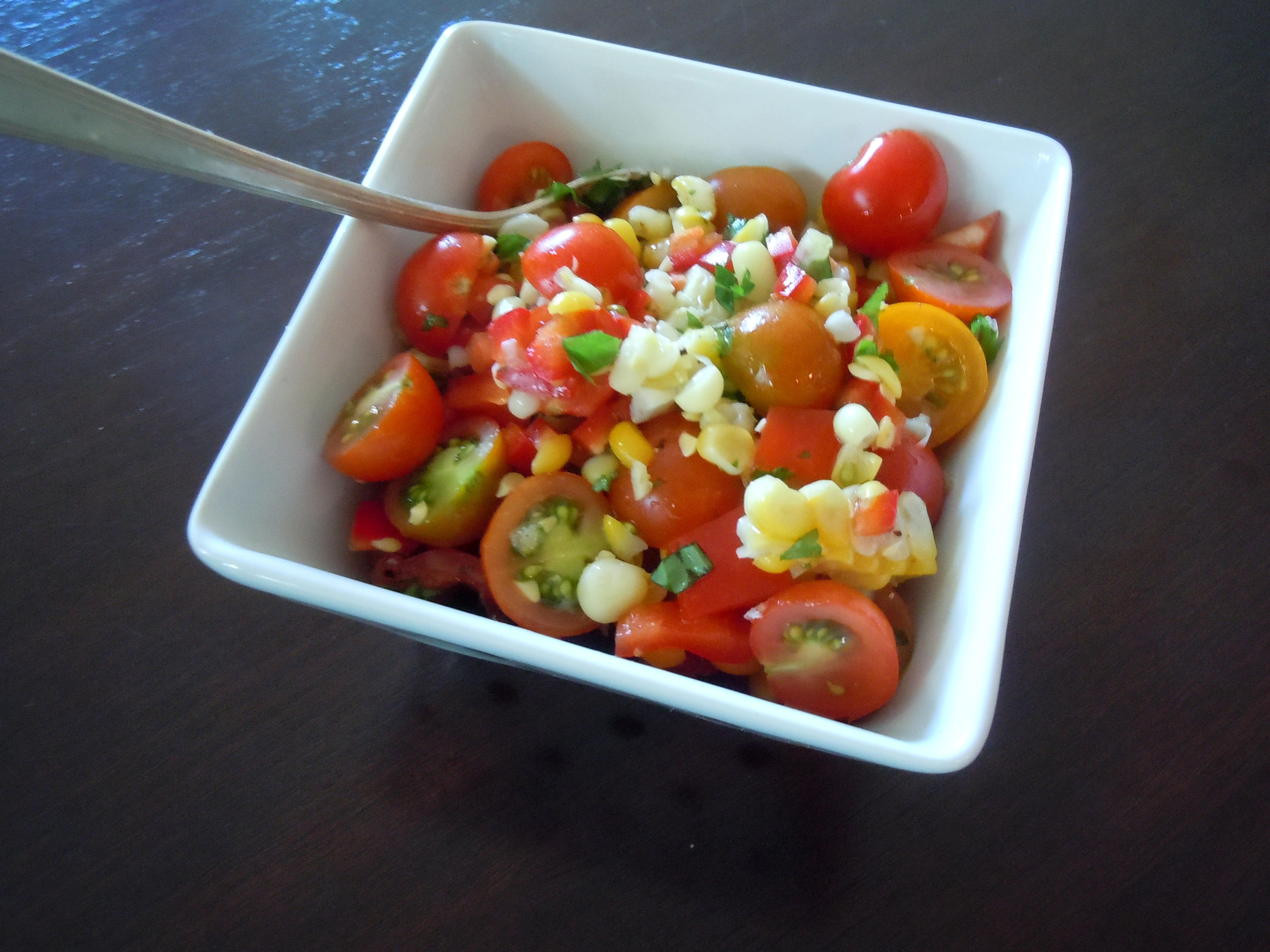
Even though Libby’s absconded with her share of cherry tomatoes, I still had an ever-expanding pile of them this weekend. They seem to be more acidic than usual this year, so I mixed them with corn kernels and diced bell pepper (homegrown!) for some natural sweetness. A splash of olive oil, a some of that overgrown basil, a pinch of salt, and we’re done. You could use cilantro instead of basil, but — please don’t hate me — none of us likes cilantro.

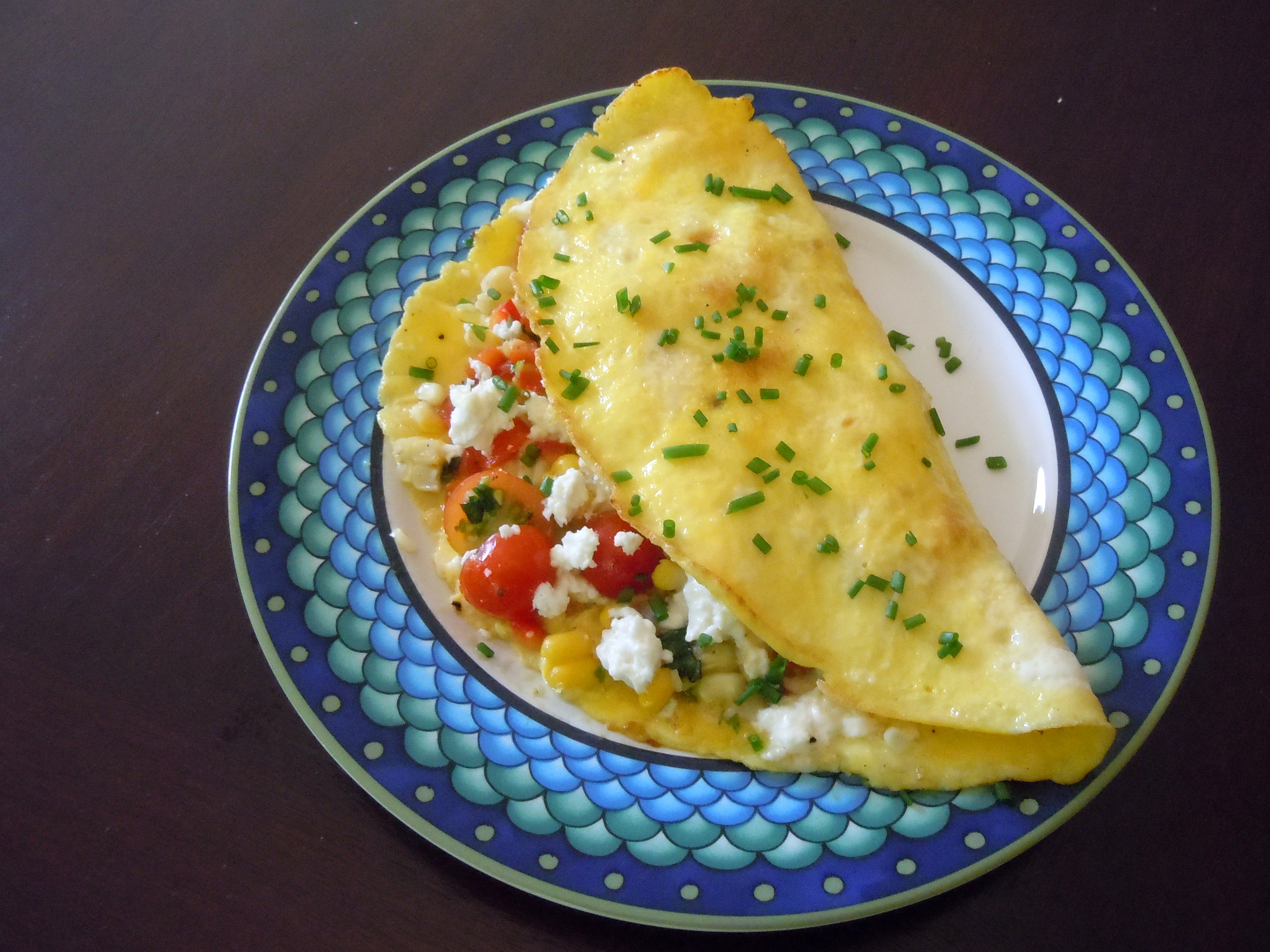
With the golden corn, ruby-red tomatoes and emerald basil, this salsa could win a prize for looks alone, but that beauty also translates into bright, fresh flavor. We served it alongside grilled chicken last night. The leftovers went into an omelet with some feta. (Queso fresco or a sharp white cheddar would also be fantastic.) Healthy, pretty, and very satisfying.

Corn-Tomato Salsa
makes about 2 cups
1 ear fresh corn (or 1/2 cup corn kernels)
1 cup halved cherry tomatoes (or any garden-fresh tomatoes, chopped)
1 small red bell pepper, chopped
1 small fresh chile, minced, optional
2 tbs.  minced shallot or onion or green onion
2 tbs. chopped fresh basil (or cilantro)
1 tbs. olive oil
salt and pepper to taste
a squeeze of lemon or lime juice if your tomatoes aren’t very acidic

Steam or grill the ear of corn until barely cooked. Let it cool a bit so you don’t burn your fingers, then cut off the kernels. Combine all the ingredients, stir gently to mix, and give it a taste. Adjust the flavor with salt, pepper, or lime or lemon juice to taste. It’s yummy right away, and better if you let it sit for a few hours.

Adjust the proportions of corn and tomato to your liking. Leave the chile out if you don’t want heat; add garlic if you wish.

Omelet with Corn-Tomato Salsa and Feta
serves 1 
1 tbs. butter
2 eggs
1/3 cup Corn-Tomato Salsa (see above)
2 tbs. crumbled feta (or more; I won’t tell)

Melt the butter over medium heat in a large skillet. Whisk the eggs together in a small bowl. Pour them into the hot skillet. After a minute, when the bottom is cooked but still runny, spread the salsa and feta on one half of the eggs.  Season with salt and pepper and fold the plain half of the omelet over the filling. Cook for 1 minute longer, just to finish cooking the eggs and melt the cheese a bit. Carefully transfer to a plate and serve immediately.

Posted in main courses, veggies | Tagged , , , , , | Leave a comment

Salmon with wasabi cream

Tom and I lived in the Washington DC area for over a decade, so you think we’d be used to hot, humid summers. It’s only 83 degrees, normally an ideal summer temperature, but the air is saturated and there’s not a breath of wind — mosquito nirvana. I’ve taken two showers already today, and will need a third before I can drag my sodden self into bed.

Dinner is still a necessity, especially with a teenaged eating machine athlete in the house. I had a nice piece of salmon and a half-dozen ears of freshly picked corn. For the corn, I resorted to the method recommended by our farmer’s market: Shuck the ears, wrap two or three of them in a soaking-wet dish towel, and microwave for 2-3 minutes per ear. Unconventional, perhaps, but it does result in tender kernels — and doesn’t heat up the kitchen.

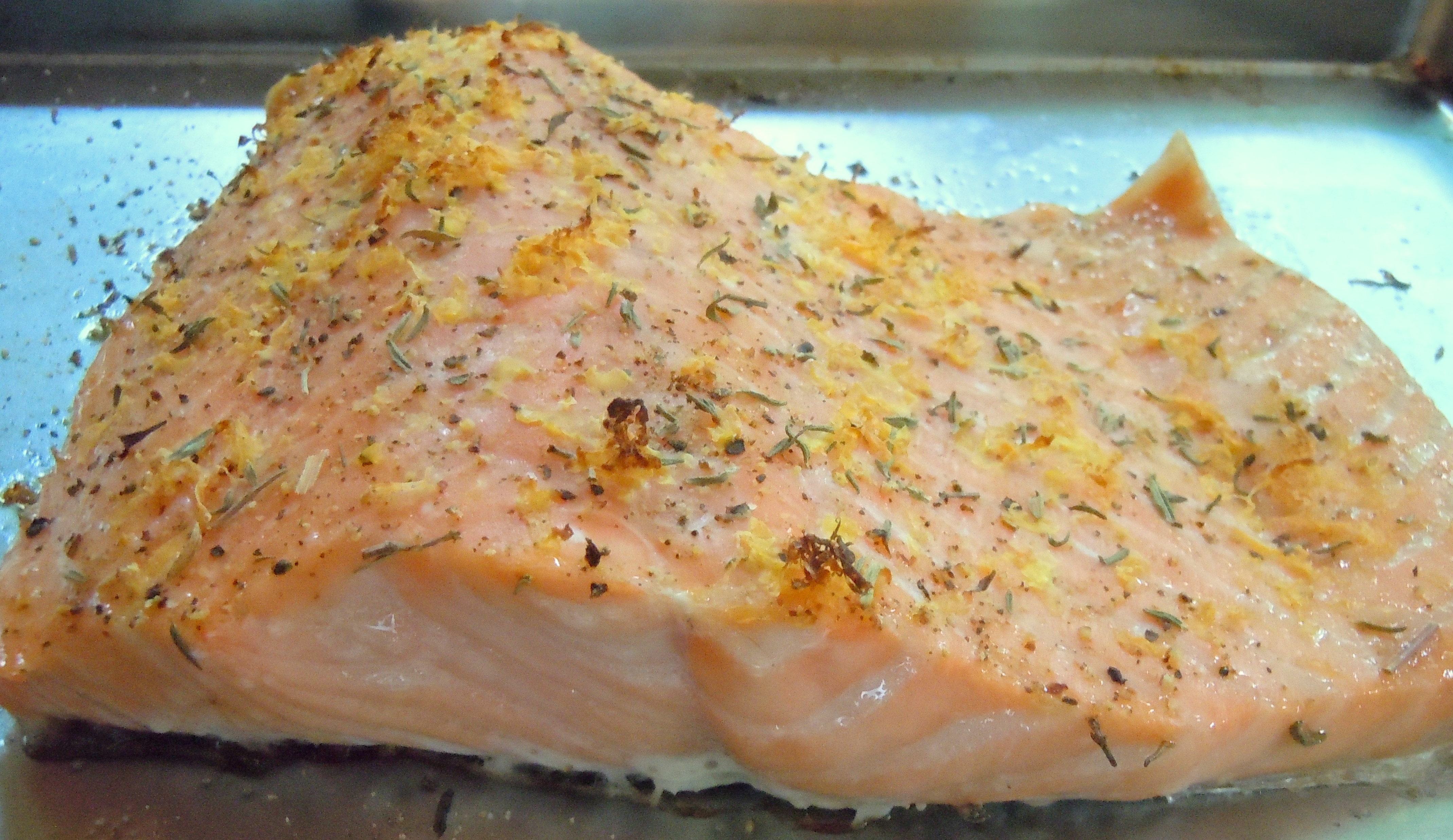
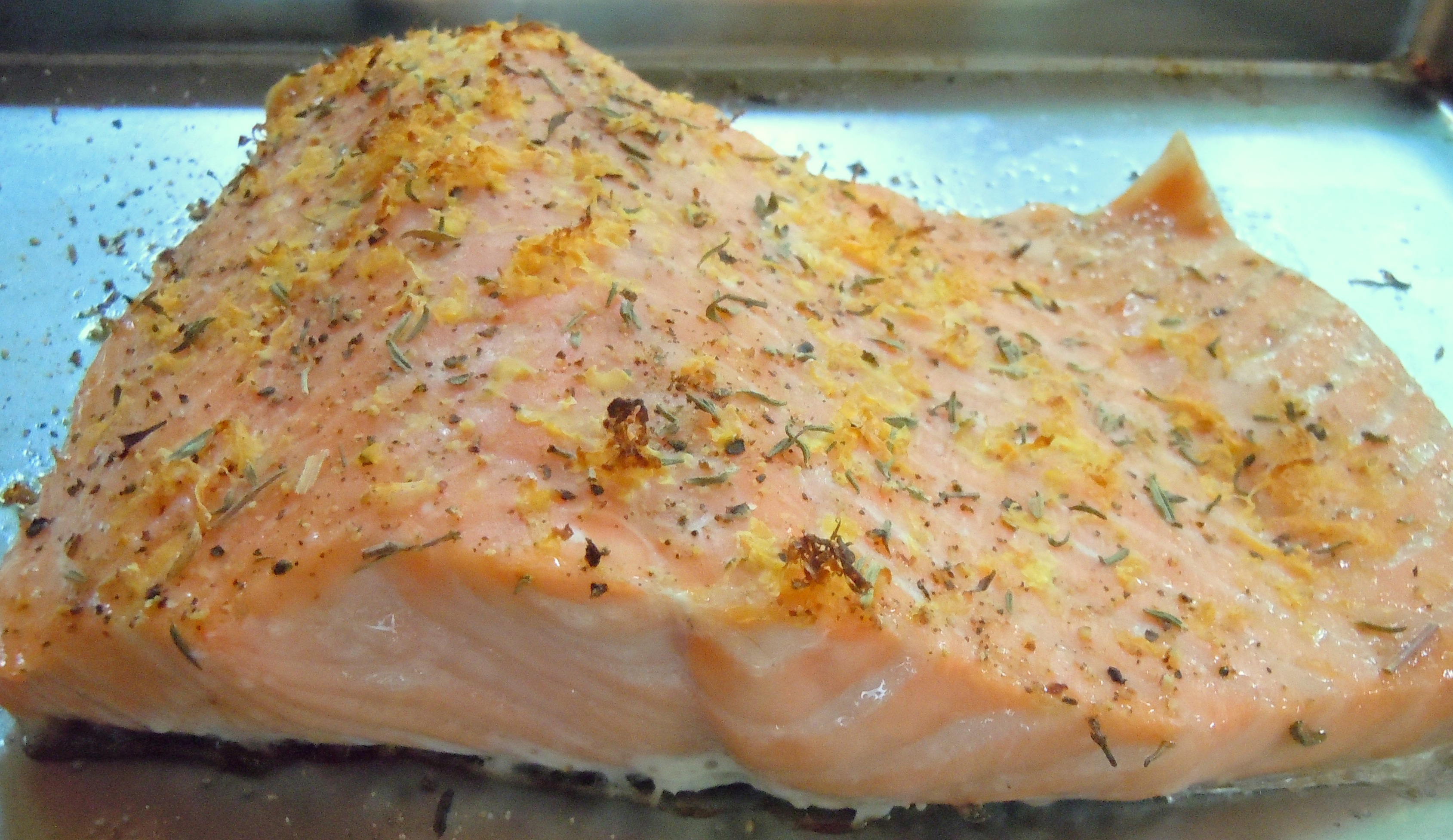
For the salmon, I opted for quick roasting in a hot oven, with minimal seasoning. On the side was my favorite accompaniment to heartier fish (tuna, salmon, trout): wasabi*cream. That hit of the wasabi’s sinus-clearing heat is nicely balanced by the cool sour cream. This sauce is also wonderful with roasted potatoes, steak, grilled chicken… you get the idea.

*There are numerous sources for wasabi powder. I get mine at Penzey’s. I find you can control that fierce heat better with the powder than with the pre-mixed wasabi in a tube.

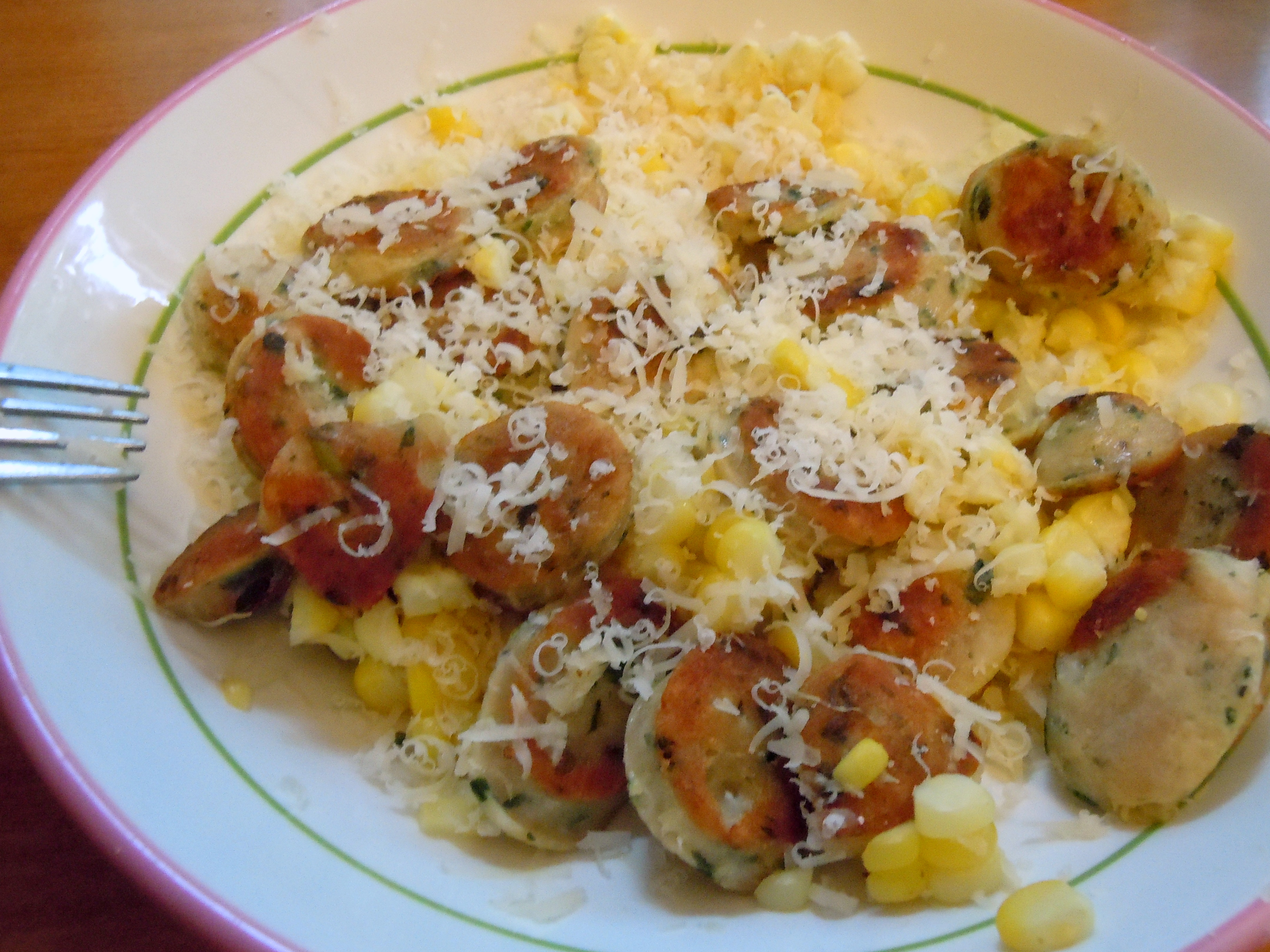
Luke is an adventurous eater (and cook), but is not fond of salmon. In fact, the only seafood he’ll eat is calamari. Go figure. Since the house was currently devoid of squid, I browned some chicken-spinach sausages for him. He cut the kernels off his corn, tossed them with the sliced sausage, and topped it with grated parmesan.

Roast Salmon with Wasabi Cream
serves 4
1 1/2 lbs. salmon fillet
salt and pepper
1 tbs. grated lemon zest
2 tsp. chopped fresh thyme
2-4 tsp. wasabi powder (to taste; this stuff’s strong)
1 tsp. water
1 tsp. soy sauce
1/2 cup sour cream
1 tbs. minced chives, optional

Heat the oven to 450 degrees F. Lightly oil a baking sheet and add the salmon skin side down. Sprinkle generously with salt, pepper, zest, and thyme. Roast for 12 to 15 minutes, or until barely cooked through. (Check the salmon after 10 minutes; the length of time will vary depending on the thickness of the fillet.)

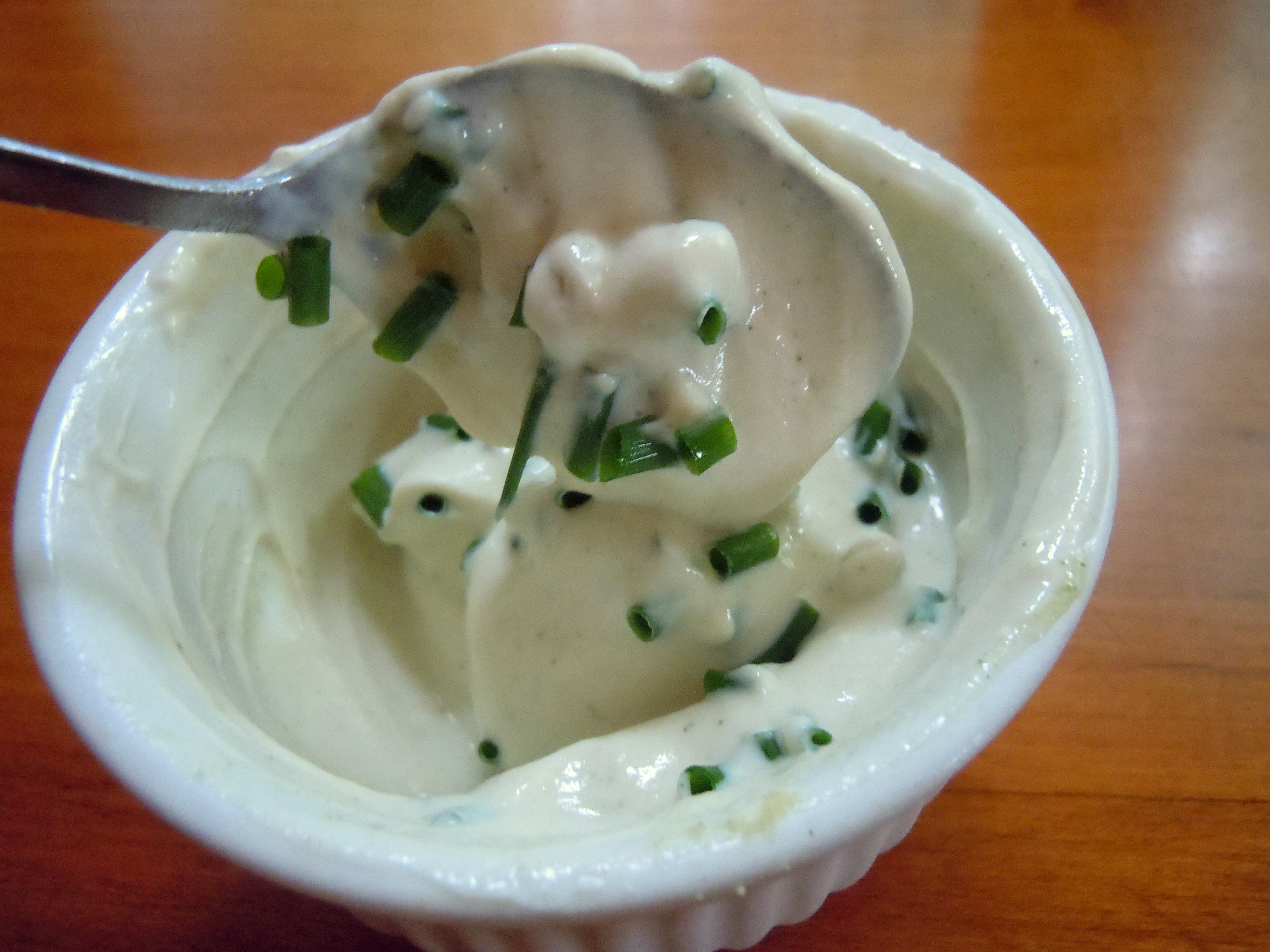
Meanwhile, put the wasabi powder in a small bowl and sprinkle with the water and soy sauce. Let it sit for a few minutes to give the powder time to rehydrate, then stir in the sour cream. Add the chives, if you’ve got them. Serve the sauce on the side of the salmon.

Posted in main courses, meat, poultry,and fish | Tagged , , , | 4 Comments

Post-vacation lunch: flatbread with pesto and ricotta

I meant to post last week, really I did. we were at my sister Jul’s in New Hampshire. It would have been lovely to cook with my family and post the results; we all love to cook, and our kids are creative in the kitchen. But it was so dang hot!

Still, we had great food. Jul made chicken-bacon mac and cheese; Mom brought lemon poppyseed bundt cake and Orange Julius cookies, which are destined for a future post. (White chocolate and orange zest combine to make one tasty cookie. Many of us never even got a taste, but that’s the risk you take with teenaged boys in the house.)

We spent a day on New Hampshire’s minuscule but gorgeous shore. First to Odiorne Point State Park, where we chased baby lobsters in the tidal pools.

Then it was on to Rye Beach for sand and surf. The water was truly that amazing shade of blue, and refreshingly cold, not the usual two degrees above ice that northern seas usually are.

The basil had grown a foot, I swear, in the week we’d been gone, so I gave it a trim and whipped up a batch of pesto. Homemade ricotta is becoming a staple in our house, now that I finally have it figured out. I’m including a recipe, but my version is nearly identical to Deb’s at Smitten Kitchen. I add just a bit more salt, a little less heavy cream, and some of my favorite Penzey’s spice blend for flavor.

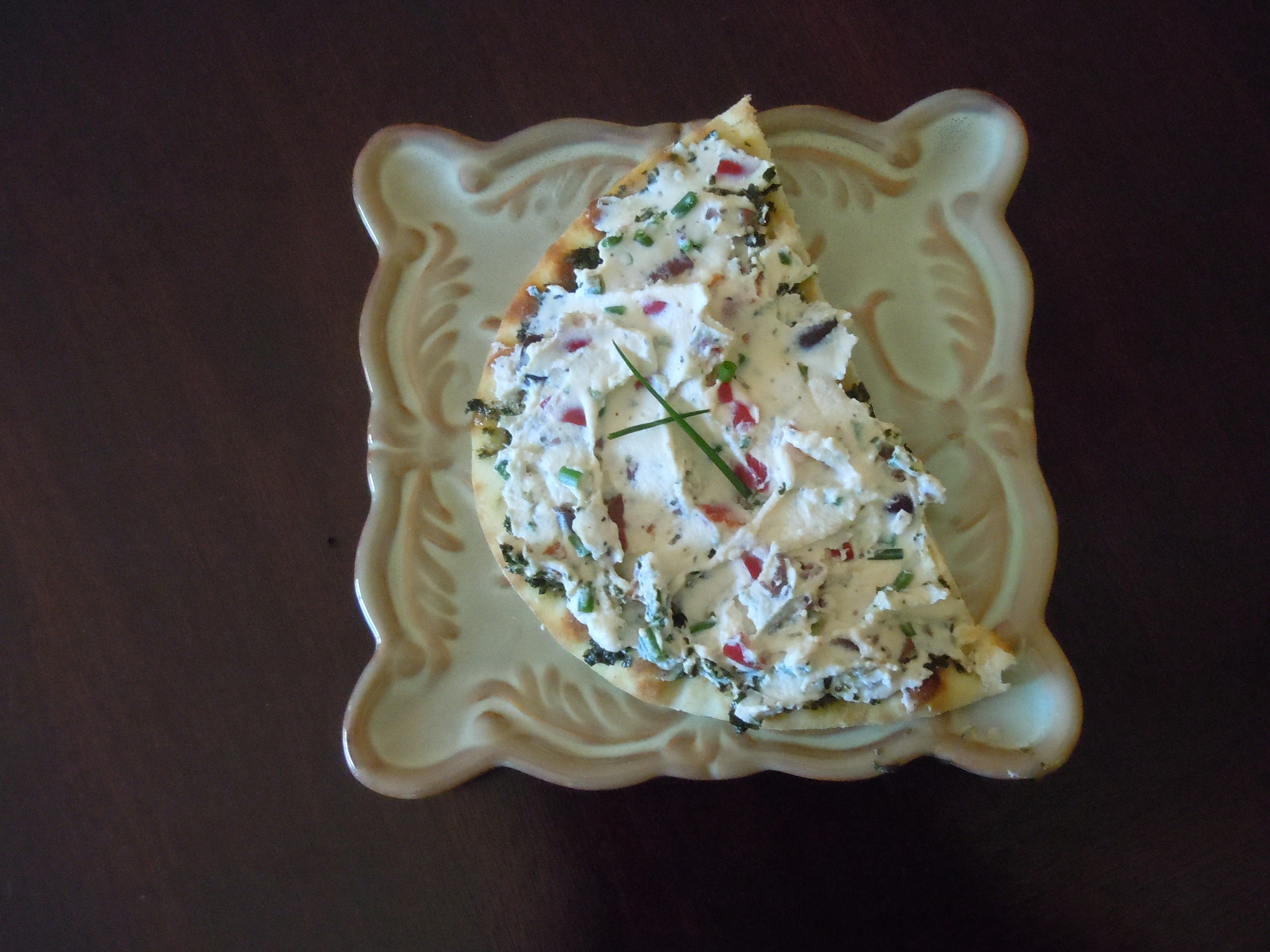
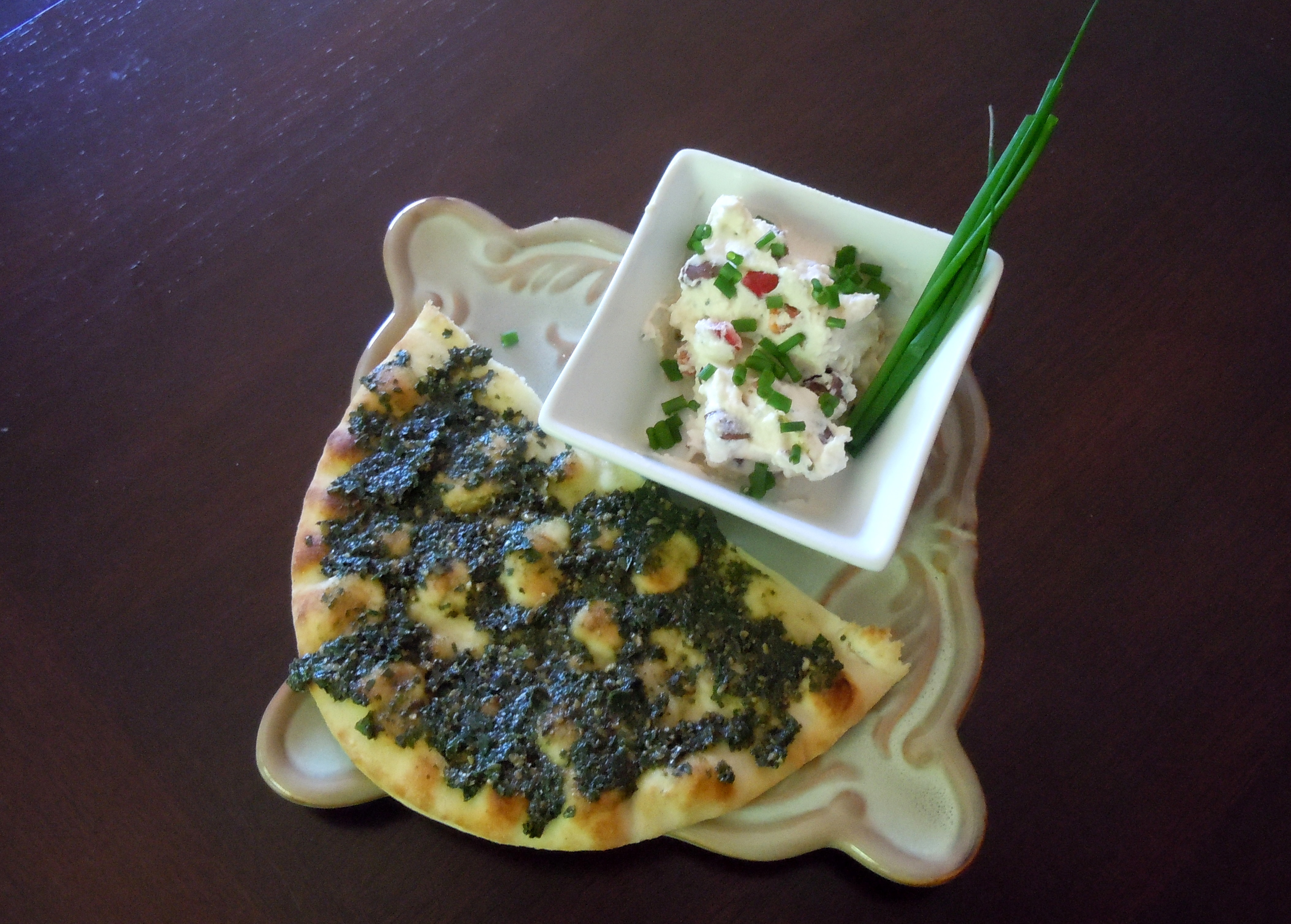
For some color and crunch, I added a bit of minced red pepper and chives to the ricotta; for salt, chopped calamata olives. I spread a thin layer of pesto on some naan (Indian flatbread), then topped it with the creamy ricotta. The herbs and garlic in the pesto added just the right complexity to the mild, creamy ricotta. This combo will also be yummy on crisp toasted slices of baguette, on bagels instead of cream cheese, or stuffed into cherry tomatoes.

Ricotta (adapted only slightly from Smitten Kitchen)
makes just over 1 cup 

3 1/2 cups whole milk
1/2 cup heavy cream
3/4 tsp. salt (use less if you want to use the ricotta for a sweet dish)
1/2 tsp. Penzey’s Tuscan Sunset, or other dried herb blend (leave this out for a sweeter ricotta)
3 tbs. fresh lemon juice (about the juice of 1 large lemon)

Pour the milk and cream into a small, deep saucepan. Stir in the salt and seasoning (not the lemon juice; save that for later). Clip in a candy/deep fryer thermometer if you have one; if not, use a meat thermometer and check the temperature periodically.  Put the pan on medium heat and warm the milk/cream slowly, stirring occasionally, until it reaches 190 degrees F. (It takes about 15 minutes on my stove).

Remove from the heat and add the lemon juice. Stir gently once or twice, and leave it alone, without touching, for 5 minutes. Meanwhile, line a colander with a few layers of cheesecloth. Place it over a bowl if you want to keep the whey; otherwise just put it in the sink.

After 5 minutes, pour the mixture into your colander. Let it drain, untouched, for at least an hour and up to two hours; it’ll get thicker as it drains, and it’ll be thicker once it cools. I tend to drain it for not much more than an hour. Eat it immediately, or put it in an airtight container and refrigerate for up to 4 or 5 days.

Naan with Pesto and Ricotta
per serving, for a light lunch or substantial snack

1/4 cup ricotta
2 tbs. minced red bell pepper
2 tsp. minced chives
3 or 4 calamata olives, pitted and chopped
2 tbs. pesto
1 piece naan, about 6″ x 6″ (or use a small pita bread)

In a small bowl, mash together the ricotta with the bell pepper, chives, and olives. Spread the pesto on the naan, then thickly spread on the ricotta mixture.

Posted in appetizers, sides | Tagged , , , , | 8 Comments