Asparagus, bacon, and ricotta tart

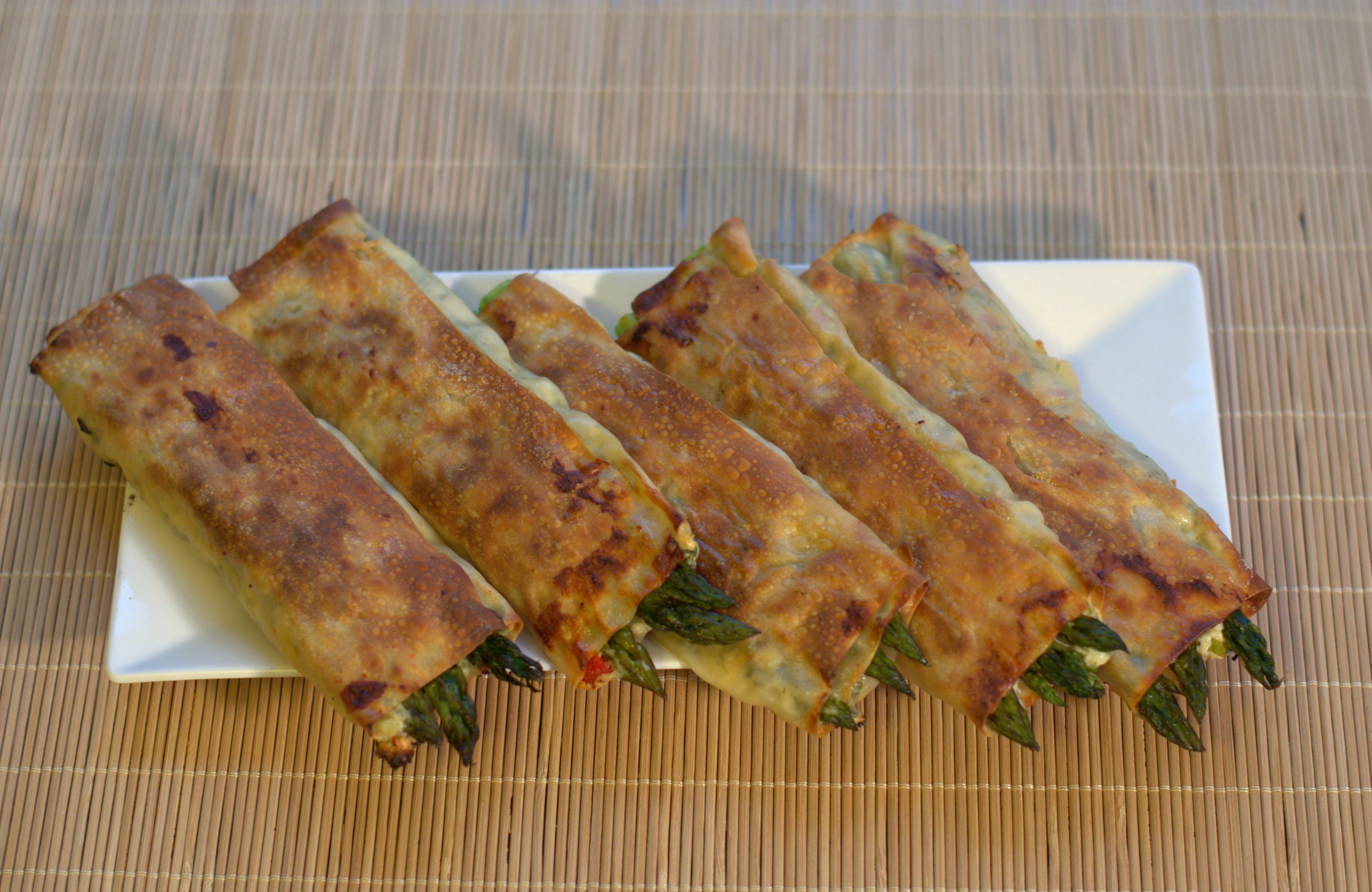
So often, our dinners are inspired simply by what’s in the house. At the moment, that’s asparagus, bacon, and a batch of homemade ricotta. Normally that would result in 1) pasta, or 2) risotto, or maybe 3) quiche, but I was hankering for something new.

Melissa at Shoots & Roots has a photo of a beautiful asparagus tart on her home page; I used her recipe as a jumping-off point. I met Melissa when I participated in the Great Food Blogger Cookie Swap (I highly recommend it for all food bloggers out there). I met some great women, and have followed their blogs ever since.

We used our organic, thick-cut bacon for this tart (only one pound left!), which is not nearly as salty as commercial bacon; go easy on the salt if you use grocery-store bacon. I blanched the asparagus first, but if you use very thin stalks, you could skip this step. Next time I’d cut my stalks all the same length for maximum beauty, but we were hungry.

We ate far more of this tart than was strictly advisable, considering that bacon + puff pastry does not make for a low-calorie dinner. But it was such a perfect combination of flavors and textures it was hard to resist. I’d serve it with a citrus salad next time. Because there will definitely be a next time. Oh yeah.

Asparagus, Bacon, and Ricotta Tart
inspired by Shoots and Roots’ Asparagus and Gruyere Tart
Serves 4 as a main course, or 8-10 as an appetizer 

1 lb. (2 sheets) frozen puff pastry
1/2 lb. asparagus
6 slices thick-cut bacon
1 cup ricotta (preferably homemade)
3 tbs. chopped chives
3 tbs. chopped parsley
1 tsp. grated lemon zest
salt and pepper
1 cup grated parmesan, divided

Heat the oven to 400 degrees F. Set the sheets of puff pastry out to thaw for an hour, or — better yet — thaw them several hours ahead of time in the fridge.

Trim tough ends off  the asparagus. If you like a perfectly symmetrical tart, you can line them up and cut them all the same length, but you don’t have to be that picky if you don’t want to. Steam the asparagus for about 4 minutes until crisp-tender. Place on a kitchen towel to drain.

Cook the bacon until crisp. Set on paper towels to drain.

In a small bowl, mix the ricotta with the chives, parsley, and lemon zest. Taste and add salt and pepper; remember you’ll be using both bacon and parmesan, so undersalt just a bit.

Roll the puff pastry out just a little with a rolling pin, mostly to smooth out the seams. Place the sheets on parchment on one large cookie sheet or two small ones. Score a line about 1 inch inside the edge on both sheets (don’t cut all the way through; just mark a line). Using a fork, prick inside the edges of both sheets about every 1/2 inch. Bake for 15 minutes. The pastry will still be pale and will puff up, but it’ll settle down as you add the toppings, and you’ll have a pretty, flaky border.

For each tart, spread about 1/2 cup of the ricotta mixture over the center of the area you pricked with a fork. Sprinkle about 1/4 cup parmesan over the ricotta. Crumble three slices of bacon over the cheese. Arrange half the asparagus on top; sprinkle 1/4 cup parmesan over the top. Bake for 2 minutes until golden. Serve hot, warm, or at room temperature.

Posted in appetizers, baked goods, main courses | Tagged , , , , , , | Leave a comment

blueberry banana muffins

Rules were broken while making these muffins.

I’m all about experimenting with savory dishes, but I’m strictly law-abiding when it comes to the sweet stuff. Baking is a science. When you upset the balance of wet vs. dry, of gluten and leavening and fat, you’d better know what you’re doing. I’m no baking expert, so I limit my changes to, say, using pears instead of apples, or playing with spices.

My mom is a much better baker than I am. Her banana bread (actually, her mother’s recipe) is perfection. It’s counterintuitive: no spices, no butter, no brown sugar; yet the absence of those ingredients intensifies the banana flavor.

I know this because, in my misguided youth, I altered that recipe in every way possible. Not one version was as good as the original, and some were just terrible. So Grandma’s banana bread recipe remains unmolested.

Until now. I don’t know what made me try combining a blueberry muffin recipe with the sacred banana bread, but boy, did it work, even though it meant adjusting the levels of flour and milk.

A few quick tips:
–The riper the bananas, the better the muffins. The skins should have some blackening, and the fruit should be tender and soft (n0t liquid).
–I’ve only made this recipe with fresh blueberries; if you use frozen ones you may need to reduce the amount of liquid.
–I sprinkle extra sugar on the tops before the muffins bake, because we love that subtle crunch. Feel free to skip this step if you want to use less sugar.
–I believe you can use buttermilk in place of the soured milk, but I haven’t tried it.

So for once, I’m asking you not to deviate from this recipe — unless, unlike me, you actually know what you’re doing in the realm of pastry. In that case, have at it, and let me know what you come up with.

Blueberry Banana Muffins
makes 16 muffins, or two 8×4-inch loaves, or 8 muffins and 1 loaf

2 cups flour
1 tsp. baking powder
1 tsp. baking soda
1 tsp. salt
1/4 cup shortening
1/4 cup butter, softened
3/4 cup sugar, plus more for sprinkling
1 cup mashed very ripe bananas (3 small)
2 eggs
1 tsp. vanilla
1 tsp. vinegar (rice wine or cider) to sour the milk
1/4 cup whole milk
1 cup fresh blueberries

Heat the oven to 350 degrees F.  Grease and flour the muffin tins, or pop in paper liners. (If you’re making loaves, grease and flour two 8×4-inch loaf pans.)

In a small bowl, stir together the flour, baking powder, baking soda, and salt. Set aside. Pour vinegar into milk (it’s supposed to curdle). In a large bowl, beat shortening and sugar until fluffy. Beat in eggs and vanilla until the batter is thick and the mixer leaves ribbony patterns, about 3 minutes.

Stir half the flour mixture into the batter just until barely blended. Stir in the bananas and soured milk, then the rest of the dry ingredients with just a few strokes. Stir in the blueberries just until blended. Spoon into the prepared pans and sprinkle the tops with extra sugar if you want it.

Bake muffins for about 20 minutes, loaves for 35-40 minutes, until a toothpick inserted in the center comes out with a few moist crumbs, but no gooey batter.

Posted in baked goods | Tagged , , , | Leave a comment

Zucchini with pepitas: Too much is just enough

When is a vegetable cooked properly? Should it retain some crunch, or  be cooked to melting tenderness? Tom and I are often at odds on this subject.

We both prefer our carrots to be steamed (or roasted, or braised) nearly to oblivion. “No such thing as an overcooked carrot!” we happily exclaim. (You are well within your rights to disagree; just remind us not to serve carrots when you’re over for dinner.)

Venture beyond root vegetables and harmony flies out the window. Tom generally prefers all his veg mushy soft. I like my asparagus, broccoli and green beans crisp-tender — and still bright green; no olive drab for me, thank you very much.

We come together once again on the matter of zucchini. We like our summer squashes, green or yellow, cooked over high heat until they acquire a deep brown finish. This can be achieved in a hot skillet or over a grill. Some may consider that the zucchini is burned, but they would be wrong. (If they’re reduced to crumbly bits of charcoal, you have gone too far, but you knew that.)

Y’all know about caramelization. That’s what happens here. Those chocolatey bits are sweet and slightly smoky, and the zucchini takes on a creamy texture.

You could slice or rough-chop the zucchini (and I do sometimes), but I like how the stiff squash batons soften and curl around each other. The lovely green pepitas* provide a crunchy contrast. As usual, I couldn’t resist adding a minced Fresno chile; the red flecks are so pretty against the green.

*Pepitas are sunflower seeds. Buy them without their shells; I find mine in the Mexican section of my local grocery store.

Pan-Roasted Zucchini with Pepitas
serves 4

3-4 zucchini to make about 4 cups once sliced
1 tsp. plus 1 tbs. olive oil, divided
1/2 cup pepitas
1 clove garlic, minced
1 shallot, minced
1 Fresno chile, minced, optional
salt and pepper

Trim the ends off the zucchini. Stand one zucchini on an end and slice vertically. You’re aiming for a long piece with all the skin and roughly an inch or less of flesh. Continue slicing around the zucchini until you have long, thin strips and there’s a seedy core left over. Discard the core and slice the rest into 1/2-inch thick sticks 3 to 4 inches long. (This is a great way to use those baseball-bat-sized zucchini.) Or you can just slice them into rounds, if the sticks are too fussy for you.

Warm 1 tsp. of the oil in a large skillet over medium heat. Add the pepitas and toast for a few minutes, until they are lightly toasted. Tip them into a bowl and set them aside for now.

Add the remaining tbs. oil to the pan along with the garlic, shallots, and chile (if using). Cook over medium heat for a few minutes to soften the shallots and mellow the garlic. Add the zucchini sticks, raise the heat to high (or medium-high, if you have a super-hot burner) and season with salt and pepper. Sauté, stirring now and then, for about 10 minutes, until the zukes are tender and show some serious browning. Add the toasted pepitas, cook 1 minute longer, and serve hot.

Posted in sides, veggies | Tagged , , , , , , , | Leave a comment

Spinach, prosciutto and olive pizza

We’re fairly openminded diners, the three of us, but each of us has a small list of foods we’re not overjoyed to eat. I’m not a big fan of ground beef or sweet-and-sour anything; Luke avoids onions, mayonnaise, and all seafood except for calamari; Tom has an aversion to mushrooms and olives.

When one of us is gone, the others use that opportunity to eat the foods the absent family member dislikes. So, with Tom spending the evening in Madison, Luke and I went for pizza with olives and spinach. Tom loves both pizza and spinach — but separately.

Confession time: I used pizza dough from a can. My right hand’s still out of commission, so kneading is out of the question for several more weeks. It turns out I tore the ligaments that attach the thumb to the base of the hand, so we’re looking at six to eight weeks of recovery. I am keenly aware of the lack of a stand mixer.

Ricotta swirled with pesto (I used chive-pistachio) is a creamy, herbalicious stand-in for tomato sauce. Calamata olives bring briny saltiness; spinach, a mellow earthiness and a boatload of nutrition. The strips of prosciutto on the top layer crisp up in the hot oven, and crackle when you take a bite.

The whole thing goes together quickly. You can certainly use frozen spinach in place of the fresh; thaw it and squeeze it dry. No prosciutto on-hand? Use a good-quality salty ham instead.

The cornmeal serves two purposes: it keeps the dough from sticking to the pan (or the parchment), and it makes the crust extra-crunchy. It’s not necessary, but do give it a try.

Spinach, Prosciutto, and Olive Pizza
serves 3-4

3 tbs. cornmeal, optional
1 lb. (about) pizza dough
1 shallot, minced (or 1 tbs. minced onion)
1 clove garlic, minced
1/2 tsp. aleppo pepper flakes, or 1/4 tsp. hot red pepper flakes
1 tbs. olive oil
10 oz. fresh spinach
salt and pepper to taste
1 cup ricotta (storebought or homemade)
1/4 cup pesto (basil or chive)
3/4 cup black olives, pitted and halved
3 oz. prosciutto
1 cup grated parmesan

Heat the oven to 475 degrees F. Line a cookie sheet with parchment and sprinkle with cornmeal. Spread the pizza dough on the pan.

Sauté the shallot, garlic, and aleppo pepper in olive oil until the shallot is tender and lightly browned. Rinse the spinach and add to the pan with the water still clinging to the leaves. Sauté for a few minutes, just until the spinach is wilted and any liquid has evaporated. Set aside to cool.

Mix the ricotta and pesto in a small bowl. Spread the ricotta mixture evenly over the dough. Distribute the spinach over the ricotta, then top with the olives. Sprinkle with parmesan. Pull the prosciutto into shreds and drape on the top. Bake for about 15 minutes, until the edges of the crust are golden and the prosciutto is crisp.

Posted in baked goods, main courses | Tagged , , , , , , | 5 Comments

Cracked potatoes: fun with food

Tom brought home some lovely little Yukon gold potatoes last week. They were the size of golf balls, about two bites each. I decided to bash the heck out of them.

When you whack a whole, skin-on potato with just the right amount of force, they crack but remain otherwise intact, enabling the cooking liquid to moisten the interiors without turning the potatoes to mush.

Then there’s the aggression-releasing rush that always comes with smashing things with virtuous intent. I use the flat side of my tenderizing mallet, but a rolling pin or the bottom of a heavy skillet will work quite well too.

As long as the potatoes are small, and roughly the same size, any type will do. Baby reds are terrific this way, as are fingerlings. It’s important to leave the skins on, or you’ll end up with mashed potatoes.

I cook them in olive oil and chicken stock; use vegetable stock for a vegetarian or vegan dish. The potato skins get brown and crispy, and the potato flesh becomes creamy and flavorful from the stock.

I made a double batch, and served them with some chive-pistachio pesto mixed with sour cream. They’re also a perfect accompaniment to roast chicken with pan sauce, but can also stand on their own.

The next night, I cut the leftover potatoes in half horizontally and browned them, cut sides down, in a little olive oil in a hot pan. The salty, crispy bites were just the thing with our turkey burgers.

Cracked Potatoes
serves 4

1 1/4 pounds small whole potatoes
1 tbs. olive oil
salt and pepper
1-2 cups chicken or vegetable stock

Scrub the potatoes, but don’t peel them. Dry them well. Place a potato on the cutting board and give it a good whack with a mallet. The goal is to initiate a crack or two, not to mash the potato into oblivion. Repeat with the remaining potatoes.

Drizzle the oil in the bottom of a large skillet (preferably nonstick) and add the potatoes. It’s important that the potatoes fit in one layer; they won’t brown if they don’t have contact with the bottom of the pan. Season well with salt and pepper.

Pour enough chicken stock to come up halfway up the potatoes. Cover the pan, turn the heat to medium-high, and cook for about 30 minutes until the taters are tender and the liquid is mostly evaporated. (Check after 20 minutes of cooking; if the liquid evaporates before the potatoes are tender, add 1/2 cup or so more.)

Remove the lid and cook over medium-high heat until the potatoes are nicely browned on the bottom. You can serve them right a way, or flip the potatoes to brown on the second side.

To cook any leftovers, split the potatoes in half horizontally. Warm a little olive oil in a skillet over medium-high heat. Add the potatoes, cut sides down, and cook until well browned, about 6 to 8 minutes.

Posted in sides | Tagged , , | 3 Comments

Chive-pistachio pesto

My chives are loving the weather lately. They are both lanky and bushy. When they’re flourishing, I top everything short of dessert with minced chives.

I’m thinking pesto would be a bright note with the simple pan-seared chicken breasts I was planning for dinner. I had a bouquet of parsley* sitting on the counter, next to a bowl of pistachios. Methinks ’tis time for chive pesto.

*(Y’all know that you can keep a bunch of parsley on your counter, right? Just trim the stems, plunk them in a vase or glass, and they’ll last for a week. And they look darned pretty.)

This pesto is intensely green, with a grassy note from the parsley and mild onion flavor from the chives and scallions. A squeeze of lemon is just enough to bring the herbs into focus.

My Tom hates basil with a devout passion, so it took some work to convince him to try this pesto. He was a convert. I knew he would be; he loves all things onion. Now, Luke loves basil pesto, but has disliked onions his whole life. He too approved of this version.

What we made next with it: potato-prosciutto pizza. Beyond fantastic.

I’m already thinking of all sorts of uses: A spoonful coating some steamed baby red potatoes, a dollop mixed with sour cream or Greek yogurt for a dip, a dab swirled into a bowl of roasted potato soup.

Pistachio-Chive Pesto
makes a generous cup

1/2 cup shelled unsalted pistachios
1 small clove garlic, roughly chopped
1/2 cup roughly chopped chives
1/4 cup roughly chopped scallions (green part only)
1 1/2 cups roughly chopped parsley, packed
1/3 cup olive oil (about)
juice of half a lemon (about 1 tbs.)
salt  to taste
1/4 cup grated parmesan

Put the pistachios and garlic in the bowl of a food processor and pulse until finely chopped. Add the chives, scallions, and parsley. Drizzle with half the oil. Pulse several times until finely chopped. Add more oil and pulse until the pesto is smooth and a consistency that makes you happy. Season with salt. Stir in the parmesan.

It’ll keep for several days tightly covered in the fridge, or for months in the freezer.

Posted in appetizers | Tagged , , , , , , | 5 Comments

Feta & greens omelet: one-handed lunch

I’ve been swamped with editing work lately, so the girls haven’t gotten much play time. On Sunday, I took them to the dog park for some much-needed energy release.

When we got to the park, it was occupied. Normally that’s a good thing; the girls love nothing better than a romp with doggie friends. On Sunday, the occupants were: one elderly dog, one woman, and three very young, energetic children. The park rules (posted on the entrance gate) clearly state that no children under the age of 12 are allowed. This rule is in place to protect the children. And it is, after all, a dog park.

Cleo is scared of kids. If I let her in, she’d sneak past them and run to the far end of the park. Libby on the other hand, loves kids. I didn’t want her to jump on the children to give them kisses. I asked the woman to have her kids sit quietly at the picnic table. The plan was to keep Libby on her leash so I could control her greeting.

The minute the gate was open, Libby took off. I’m not quite sure what happened next, but somehow my end of the leash (attached to my hand) didn’t make it through the gate.

So this is my fashion statement for the next four to six weeks. Unless I need surgery, that is. The ER doctor says I sprained and partially dislocated my right thumb. The orthopedic surgeon will review the x-rays next week.

Luckily, I’m left-handed, but it is still remarkable just how much we do with our non-dominant hands. So I’m taking suggestions for dishes that can be made with one hand.

Today’s lunch was an omelet stuffed with sautéed onions and greens, with some crumbled feta. Chopping is difficult right now, but I found I could slice an onion and toss it into a skillet. Once they were golden, I tossed in a few handfuls of salad greens: baby spinach, arugula, radicchio, and leaf lettuce. (Yes, you can cook lettuce.) Feta cheese adds a salty tang. (It would also be fabulous with black olives  and homemade ricotta instead of the feta.) It was a perfect lunch: light, healthy, colorful, and satisfying.

Omelet with Wilted Greens, Sautéed Onions, and Feta
serves 1

2 eggs
1 tbs. butter
1/2 small onion, thinly sliced
1/2 tsp. Aleppo pepper flakes, optional
2-3 handfuls fresh mixed greens (spinach, arugula, watercress, lettuce, or any combination)
black pepper
1 oz. crumbled feta cheese
1 tsp. minced chives, optional

Beat the eggs with 1 tsp. water in a small bowl; set aside.

Melt half the butter in a small skillet over medium heat. Add the onion and Aleppo (if using), and cook until the onion is golden. Rinse the greens lightly and add them to the pan, with just the water clinging to the leaves. Add the black pepper. Cook, stirring, for 1 to 2 minutes  until just wilted. Scrape the filling out of the pan and set aside.

Return the pan to the heat and add the rest of the butter. When it’s melted, pour in the eggs. Let them cook undisturbed for a minute. Add the greens to one half of the omelet. Top with the feta. As soon as the eggs are fully cooked, flip  the plain side over the filling, top with chives, and serve. The whole egg-cooking process should only take a few minutes.

Posted in main courses, veggies | Tagged , , , , , , , , , , | Leave a comment