New name, same ole blog.

Playing in the Kitchen has now become Rivertree Kitchen. Same blog, same posts, same author (me); just the name has changed.

I’d been meaning to start a blog for over a year, since I started my editing website http://www.rivertreeedit.com. I finally decided that the time for procrastinating was past; I should just dive in and do it! I really love every aspect of blogging, including the name I’d chosen. Unfortunately, I’m not alone: LOTS of people are also quite fond of the name Playing in the Kitchen. I didn’t think to Google the name until I’d posted several times.

So I decided to connect with my freelance editing business; hence Rivertree Kitchen. I’ve always used a tree as a logo, and I’ve always lived near a river. Now we have a gorgeous river running right through our backyard, and we have no shortage of trees.

I will continue to write about food. I will continue to give you recipes and tell you how to make them your own.

Only the name has changed; the blog remains the same.

Posted in not food | Leave a comment

The circle of life, chicken style.

Roast chicken is in every omnivore cook’s repertoire, and there are as many ways to prepare it as there are cooks. My version has evolved over the years. There are elements that I tweak every time I make it, and other elements that are Never to Be Altered under pain of (my) death.

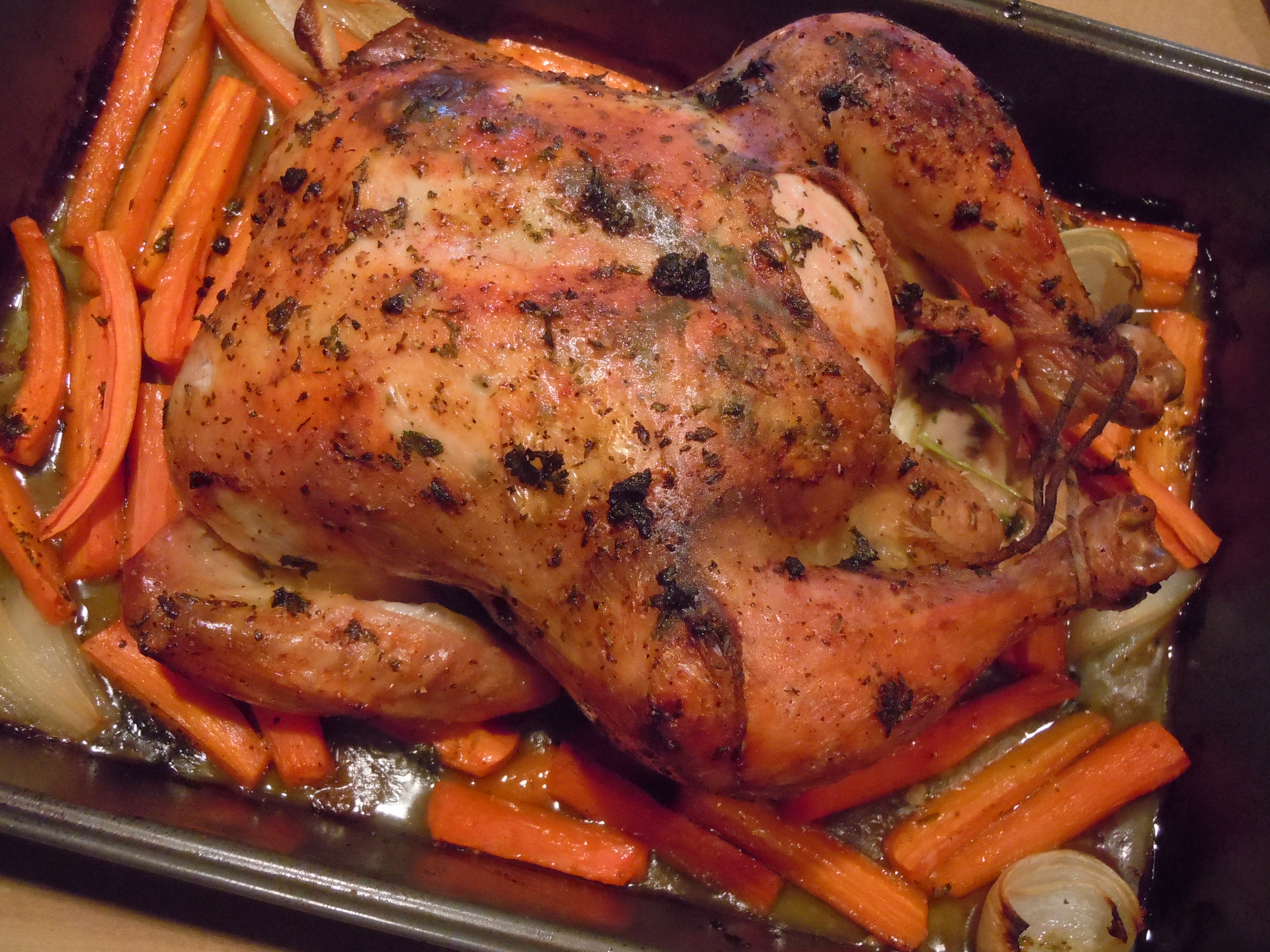
One of our NTBA (see above) aspects of this meal has nothing to do with poultry. I am required at all times to roast the chicken on a bed of carrots. I can add quartered potatoes and onions, but the carrots must be there, and there must be a boatload of them; I usually cook ten to twelve carrots for the three of us. Carrots roasted along with a chicken are unbelievably sweet yet still savory and earthy. As they shrink during roasting, the flavors concentrate. They have a lovely melty, slightly chewy texture; soft but never mushy.

The other NTBA element comes after the chicken is out of the oven, and that’s what we call the Drizzle. It’s more commonly referred to as a pan sauce, intensely flavored and more concentrated than gravy. It picks up the umami flavors of the chicken, the grassy notes from the herbs, and a hint of sweetness from the carrots. Leftover drizzle (if there is any) is a great base for pasta the next day, with the leftover chicken (there are never leftover carrots).

To give the drizzle a running head start, I pour just enough chicken stock and/or white wine to barely cover the bottom of the pan the chicken will reside in for the duration of the roasting process. I do this at the last minute, just before the pan goes in the oven. The liquid keeps the chicken moist and the carrots from completely drying out. It does, however, prevent the skin on the bottom of the chicken from browning, so if maximum quantity of crispy golden skin is your goal, skip the liquid. You may need to take the carrots out early, though.

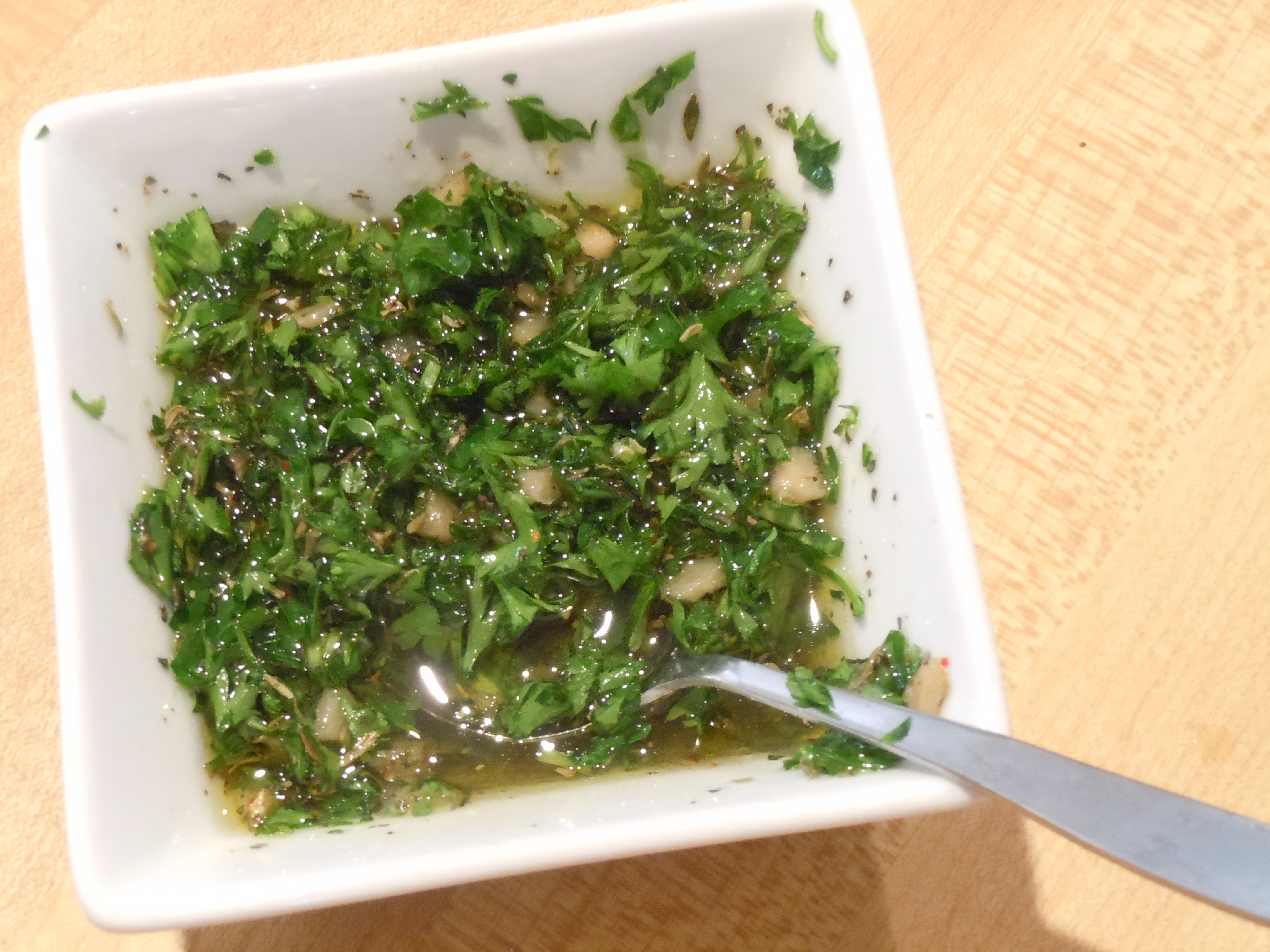
Elements that I’m allowed to play with include the herb rub. I like to mix minced garlic with some olive oil, add herbs, salt and pepper, and rub it all over everything in the pan. When they’re available, I use fresh herbs; if the cold months are upon us, I use dried. I like a mix of herbs (basil, thyme, marjoram, chives, parsley), but you can certainly make one herb the focus. Sometimes I add a minced shallot to the mix, or a splash of lemon juice, or a pinch of Aleppo pepper. I rub the oil-garlic-herb paste under the skin of the chicken, on the outside of the bird, and any leftover oil I massage into the carrots. The skin comes out crackling with herby, garlicky goodness.

The chicken currently sunning itself inside my hot oven has half a lemon, a quarter of an onion, and a small handful of parsley stems nestled in its cavity. Sometimes I leave the cavity empty; other times I stuff it full of herbs, or herb stems. I happened to have half a lemon hanging out in my fridge, a remnant of the lemon-almond biscotti I made yesterday. (Future post, I promise.)

When the chicken goes in the oven, I drop a knob of butter in a small dish on the counter. By the time the chicken is out and resting, the butter is soft and ready to be mashed into submission with some flour to create a beurre manié, an uncooked butter-flour paste that’s great for thickening sauces.

The leftover chicken meat can morph into an endless range of dishes. Everything else goes into a stockpot at the end of the meal, for some lovely, deeply flavored roasted chicken stock, which you can then use for the next roast chicken. Ah, the circle of life.

Herb-Roasted Chicken with Carrots

12 medium carrots (really, use as many or as few as you wish)
1 medium onion, peeled and quartered
2 tbs. olive oil
2 cloves garlic, minced
¼ cup mixed chopped fresh herbs, or 1 tbs. dry
2 tbs. chopped parsley
about 1 tsp. salt
about ½ tsp. black pepper
1 chicken, 3 ½ to 4 ½ lbs.
½ lemon, optional
2 cups chicken stock and/or white wine, divided
1 tbs. butter, softened
1 ½ tbs. flour

Heat the oven to 425°. Peel the carrots, cut in half crosswise, and cut any really thick pieces in half lengthwise. Scatter the carrot pieces and onion quarters around the inside edges of a 9×13-inch metal baking pan or an ovenproof 12-inch skillet.

In a small bowl, mix the oil with the garlic, herbs, parsley, salt and pepper.

Rinse the chicken, discard the giblet packet if there is one and trim any excess fat. Pat very dry with paper towels. Slide a finger underneath the skin to loosen it as far as you can go, trying not to rip the skin. Scoop up a little of the oil/herb mixture and rub it on the meat under the skin. (Did I mention this is a messy dish to prepare?) Do this on both sides, getting the herb mixture in contact with as much meat as possible. Rub more of the herb oil over the entire outside of the chicken. Stuff the cavity with the lemon half, if using. If you have any leftover herb stems, put them in the cavity as well. Tie the legs together with kitchen twine.

Place the chicken breast side up in the pan; the veggies should be mostly around the sides of the chicken. Sprinkle the chicken with a bit more salt and pepper. Drizzle any extra herb oil over the carrots and onion, and massage it into them. Pour in just enough stock or wine to barely cover the bottom of the pan.

Roast the chicken until a meat thermometer reaches 170°F, or until the juices run clear when the chicken is pierced. Remove the chicken and veggies to a platter; cover with foil to keep warm. In a small bowl, mash the butter with the flour to make a paste.

Put the roasting pan on the stove over medium-high heat (this is why you had to use a metal pan). Skim off some of the fat and discard. Add most of the remaining stock (and/or wine) and quickly whisk in half of the beurre manié (butter-flour paste). Bring to a boil, stirring. Cook for a few minutes; taste and adjust seasoning if necessary. You want the sauce to be rich and flavorful, and a bit thinner than you want it—it’ll thicken up a little more when it’s off heat. Whisk in more beurre manié or stock as needed to reach a happy balance. Pour into a bowl or old-fashioned gravy boat and serve with the chicken. We like a loaf of ciabatta or a baguette to soak up the drizzle.

When dinner’s over, strip any leftover meat from the bones and pack it up for leftovers. Dump everything else—bones, skin, fat, extra onion, drizzle, or even a stray carrot—into a stockpot. Toss in a bay leaf, cover with cold water, and simmer for a few hours for some fantastic stock.

Posted in main courses, meat, poultry,and fish | Tagged , , , | 5 Comments

Everybody into the oven! (the green bean version)

I’m on a roasted vegetable kick lately. It started with kale chips. My sister Jul (kindergarten teacher and amazing cook) mentioned that a parent had brought these chips to her class in an effort to teach the students that veggies can be fun. The kids scarfed them down in record time.

I did a quick search and found that I was late to the party: every blog and food site had a recipe. I made a small batch of Smitten Kitchen’s version. They never even made it to the table. My teenager and I stood over the hot pan and ate every single one. Luke suggested the addition of Aleppo pepper or Penzey’s Tuscan Sunset herbal blend. We made more the next day (with some Tuscan Sunset) and Tom was hooked too.

We were already big fans of roasted broccoli (check future posts), roasted carrots, and roasted shallots. It was time for green beans.

What has worked before worked again: A quick toss with a drizzle of olive oil, a sprinkle of sea salt and black pepper, then 15 minutes in a very hot oven. The result: highly unattractive shriveled beans with blotchy browned patches that tasted fantastic. I’m a green bean fan anyway, but these babies were something else—chewy (in a good way), slightly salty, and sweet with a caramel edge. Tom requested a second showing as soon as possible.

I tossed the beans we didn’t eat straight off the cookie sheet with some cooled orzo, black olives, a little lemon zest and some leftover homemade ranch dressing.  I was planning to dress the salad with lemon juice and olive oil, but that ranch was calling to me, and the creaminess rounded the dish out nicely. I’m currently having a torrid affair with Fresno chiles; I can’t seem to go a day without them. Leave them out without guilt, if you prefer.

Orzo Salad with Roasted Green Beans and Olives

½ lb. green beans
2 cloves garlic, skins on
1 medium shallot, quartered
1 tbs. olive oil
salt and pepper
¾ cup orzo
¼ cup chopped kalamata olives
1 fresno chile, minced
1 tsp. lemon zest
1 cup ranch dressing

Heat the oven to 450°F. Wash, trim and dry the green beans. Toss the beans with the garlic, shallots and oil and spread in one layer on a parchment-covered cookie sheet. Sprinkle generously with salt and pepper. Roast for about 15 minutes until the shallots are soft and golden, and the green beans are shriveled with brown spots, and tender. Cool to room temperature. Try to save some for the salad.

Meanwhile, cook the orzo in boiling water until al dente. Rinse with cold water and drain well. Cut the roasted green beans in half and chop the shallots; add to the orzo. Stir in the olives and the Fresno chile.

Squeeze the garlic cloves out of their skins. Mash into the ranch dressing. Whisk in the lemon zest. Pour over the orzo and stir to combine. If you have them around, add some chopped fresh parsley and chives.

It’s delectable at room temperature and also great chilled. Makes 2 main dish or 4 side dish servings.

Posted in sides, veggies | Tagged , | 3 Comments

The wild side of soup

I love soup. Fond as I am of a good loaf of bread, I’ll take a bowl of soup over a sandwich any day. Soup is the perfect vehicle for those of us who cook without a net; it’s a great place to improvise. I make soups year-round and freeze them in individual portions. I work at home, so it’s great to be able to grab a jar out of the freezer at lunchtime.

This particular soup has been an evolution. My sister-in-law Julie gave me a recipe for ham and wild rice soup that was delicious, at least in part because it called for a lot of dairy, including quite a bit of cream. A few months later I had a similar creamy wild rice soup that contained the surprising crunch of slivered almonds. This one used half-and-half instead of heavy cream, but still had a stick of butter—too much for the guilt-o-meter.

I believe I’ve mentioned before that my personal rule is that I’ll eat all sorts of decadent, calorie-laden food at restaurants, but at home I try to healthify it up. So I adjusted, altered and tweaked until I came up with this version.

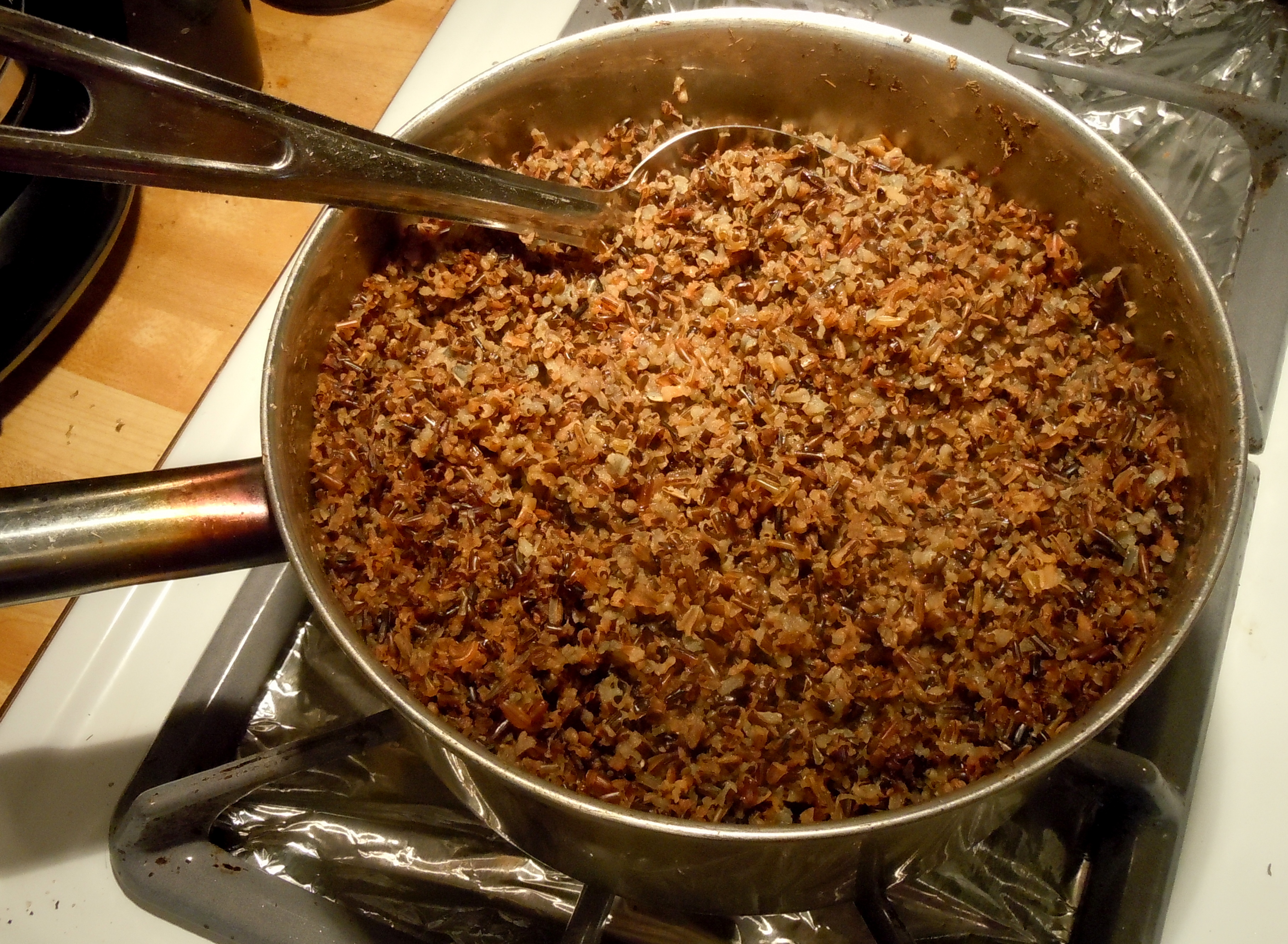
I liked the nuttiness of the wild rice in both recipes, especially with the creaminess of the soup base. Wild rice takes a long time to cook, so I usually make a double or triple batch and freeze the leftovers two cups at a time in freezer bags. (It’s a nutty addition to white or brown rice pilaf.)

Now to get rid of that evil cream*. Whole milk thickened by a flour-butter roux kept the velvety texture but lowered the fat content. Stock added flavor and greatly lowered the calories. In our house we’re not thrilled with a bowl of tasty liquid with a few tasty bits floating in it; we like our soup to have substance (which means nearly a stew). If you like a more traditional soup, add more liquid.

[*Disclaimer: I do use heavy cream sometimes, and am very aware of its seductive properties.]

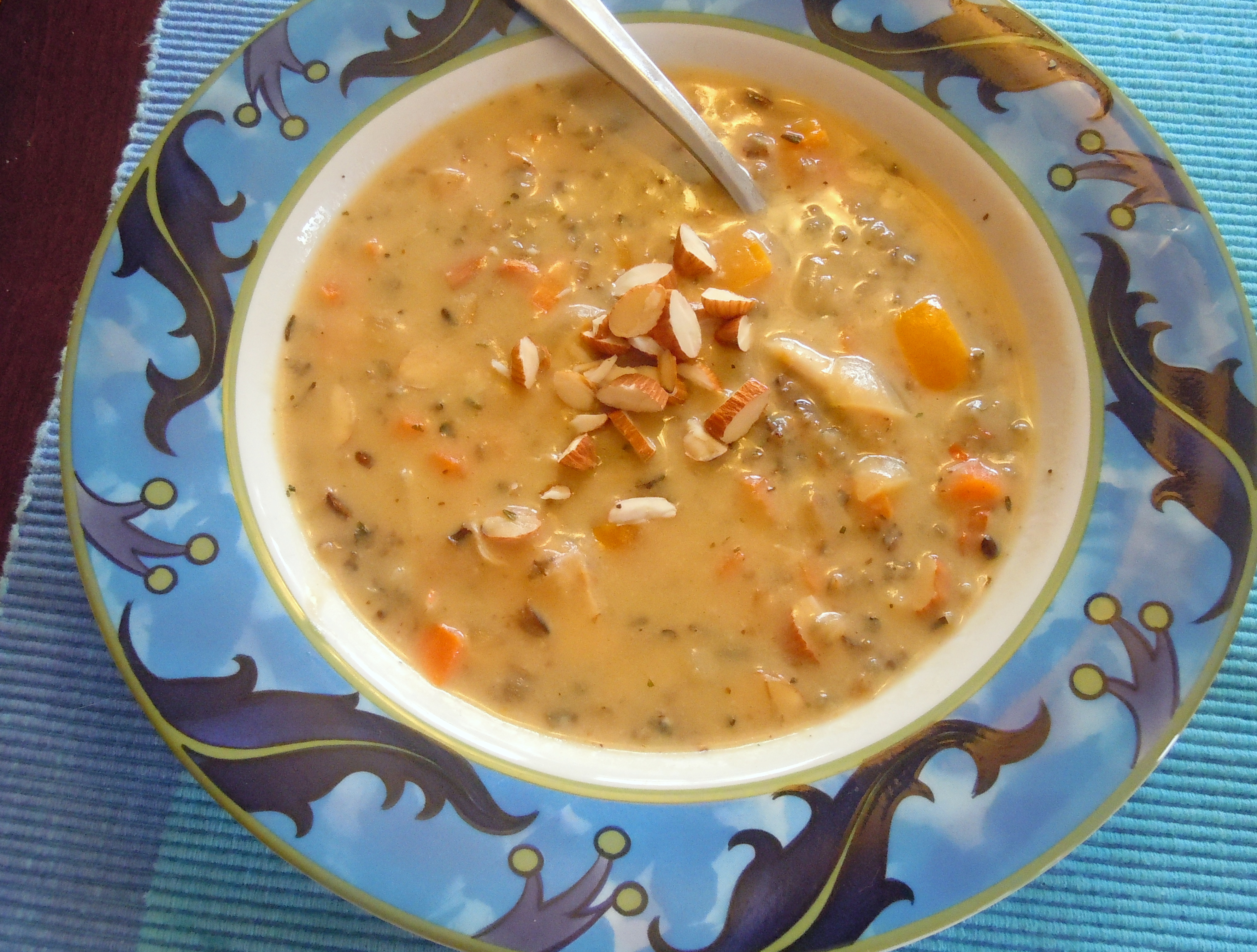
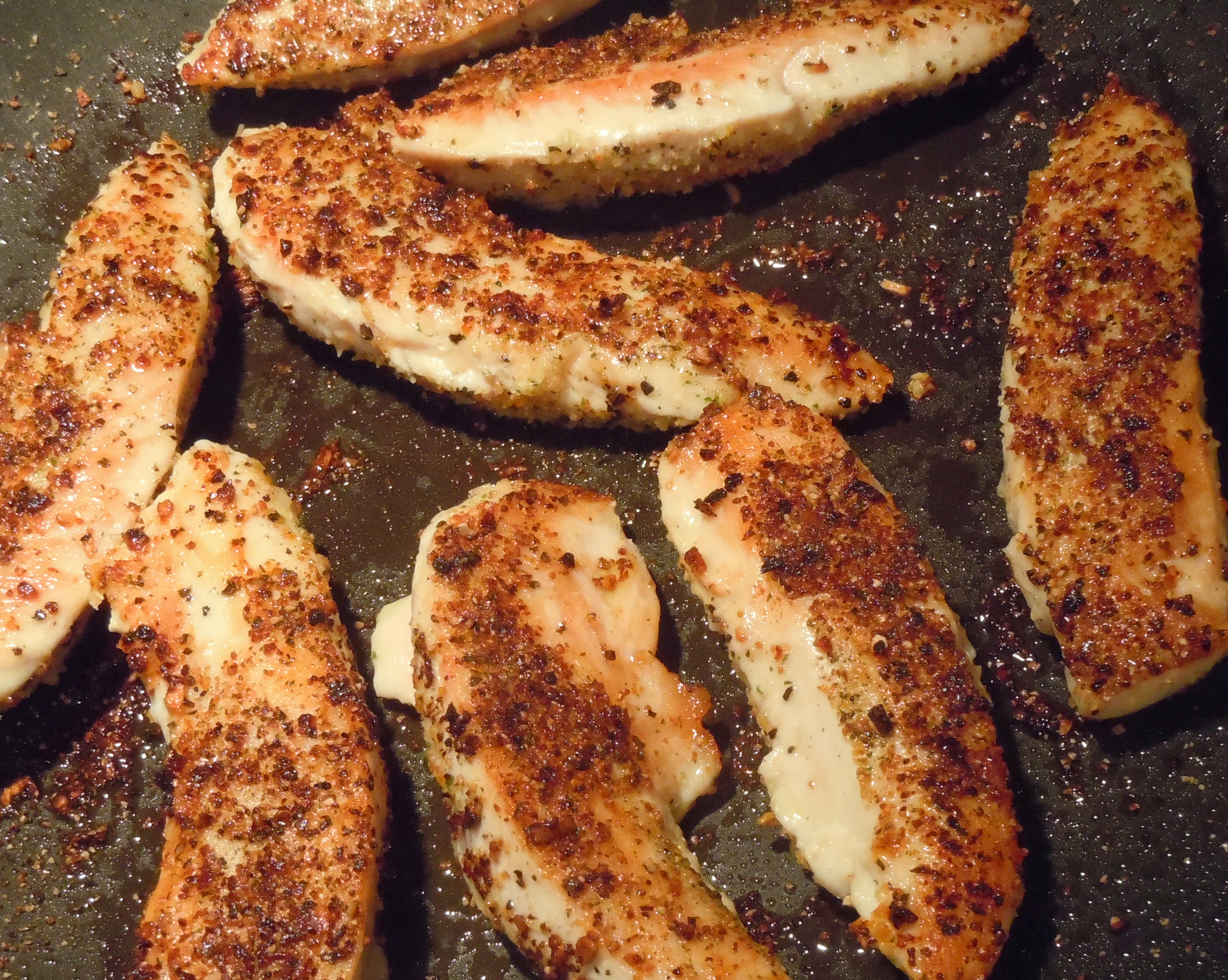
Both of the original soups had carrots, which we liked; adding bell pepper boosted the sweetness and the nutrition, and looked darn pretty to boot. As far as the protein was concerned, there’s nothing wrong with ham in this soup; I just liked the chicken better. Almonds are unexpected in soup. Blanched, slivered almonds look like shreds of chicken, so the almonds are even more of a surprise. You can use leftover cooked chicken, but sautéing the heavily seasoned tenders in the soup pot adds a lot of flavor.

Even my husband likes this new “healthy” soup. Not that Tom isn’t a nutritious eater, it’s just that he’d been very fond of the rich and decadent versions.

Wild Rice, Chicken and Almond Soup

1 lb. chicken breast, cut into large strips (or chicken tenders)
salt and pepper
2 tsp. poultry seasoning (such as Mrs. Dash)
2 tsp. olive oil
1 medium onion, chopped
4 small or 3 large carrots, chopped into ½-inch pieces
½ red bell pepper, chopped into ½-inch pieces
1 large clove garlic, minced
3 tbs. butter, divided
3 tbs. flour, divided
5-6 cups chicken stock
2 cups cooked wild rice
1 ½ cups whole milk
1 cup grated cheddar
½ cup slivered almonds

Season the chicken pieces well with salt, pepper and poultry seasoning. Sauté in a stockpot with the oil over medium-high heat until they’re well browned and cooked through, about 4 minutes per side. Remove the chicken and set aside. Add 2 tbs. of the butter to the pan. Add the onion, carrot, bell pepper, and garlic; sauté for 5 to 7 minutes until the veggies are softened. Add 2 tbs. of the flour and stir until incorporated; cook for 2 minutes. Stir in 5 cups of the stock. Add the wild rice and simmer for 15 minutes or so.

Meanwhile, melt the remaining 1 tbs. butter in a saucepan over medium heat. Stir in the remaining tbs. flour and cook for 2 minutes. While the flour cooks, heat the milk in the microwave until it’s warm, about 1 minute. Whisk the warm milk into the flour-butter roux and cook until it’s smooth and thickened. Whisk in the cheddar until it’s melted into the milk. Stir the cheesy sauce into the soup and heat through.

Shred the cooked chicken and add along with the almonds just before serving. Add extra stock if the soup is too thick.

Posted in main courses, pasta, rice, and grains, soups | Tagged , , , , , | 1 Comment

Risotto: day three; dogs: day five

Dogs first: The girls are settling in nicely. Cleo’s taken over the new bed and dish we bought for Libby; Libby’s appropriated all the rawhides. Both are fine with this arrangement. Libby has already learned that dogs are required to sit before they get to go outside, and Cleo’s showing no jealousy whatsoever. And despite the fact that they each have their own beds, they really prefer to play fort with the couch cushions.

Cleo

Libby

On to food. Let’s talk leftover risotto. I probably have just lost any readers who are purists with those two words; as I said in my original risotto post, risotto is a dish best eaten immediately, so to some cooks “leftover risotto” is an oxymoron. But as long as you’re making a new dish and not trying to recreate the original by reheating, leftover risotto can be a beautiful thing.

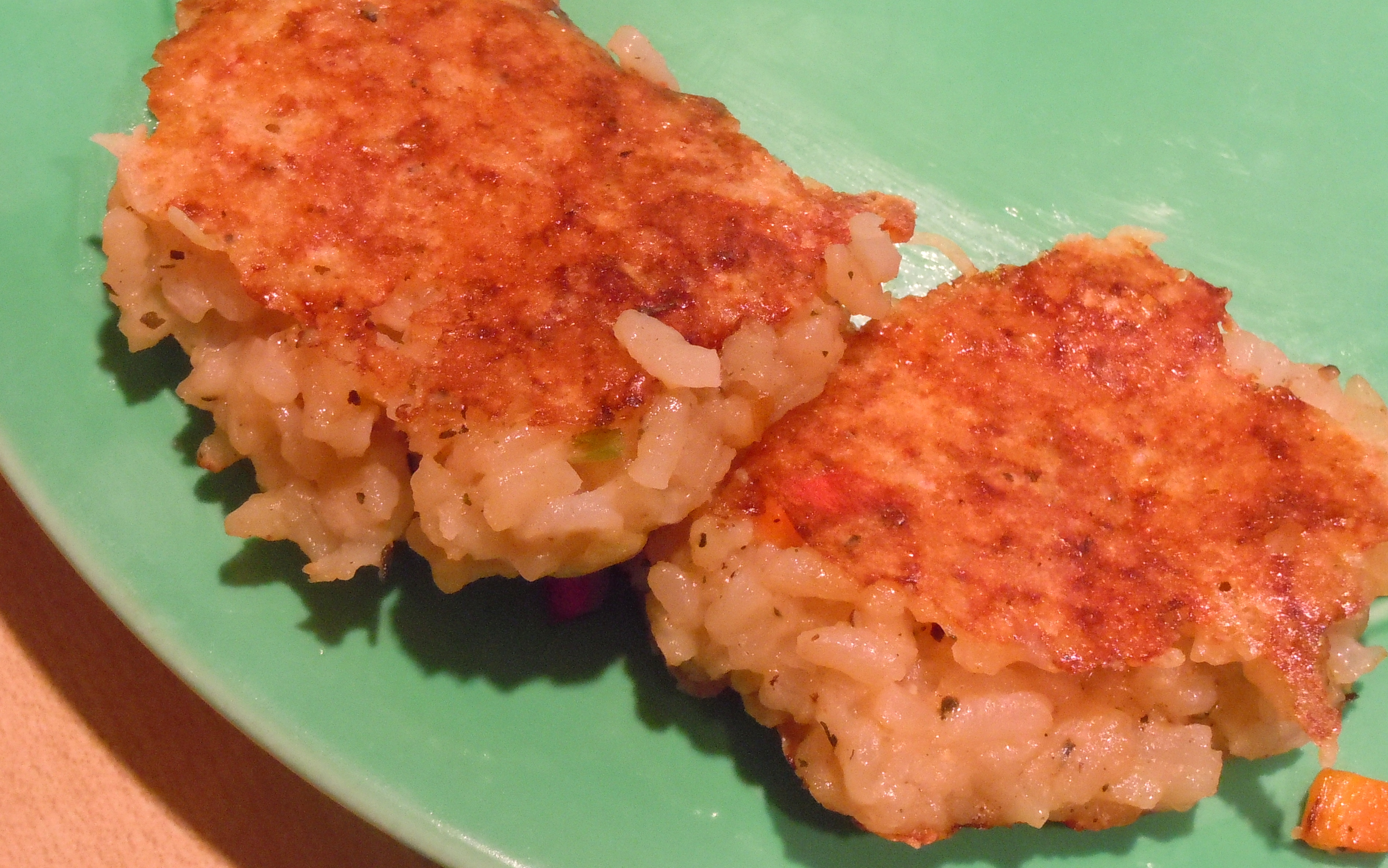
We’ve already stuffed risotto into peppers. Now we’re stripping it down to the basics—nothing but leftover risotto and a little bit of parm. Yes folks, we’re talking risotto cakes.

These little bites of love are golden and crisp on the outside and full of tender cheesy goodness on the inside, all in about 15 minutes.

This photo does not do this dish any justice, and I apologize for that. Since you’re making little patties from the leftover risotto, it’s best to skip the risotto-as-main-course with large pieces of meat and/or veggies. If your leftovers have any additions, they should be rice-sized so your patties don’t fall apart.

Risotto Cakes

2 cups leftover cooked risotto
1 cup grated parmesan

(Yep, that’s it. Two ingredients.)

Put a large skillet over medium heat to warm up. (No oil needed; there’s some fat in the risotto and plenty in the cheese.) Meanwhile, scoop about 1/4 cup cold leftover risotto in your hand and squeeze lightly to form a ball. Flatten it a bit to form a thick cake. Dip the bottom of the cake in the grated parmesan to coat lightly and place in the skillet. Repeat with the remaining risotto. Leave enough space between cakes to be able to get a spatula in for flipping. Sprinkle parmesan on the tops of the cakes while they’re in the skillet.

Here’s the hard part: Don’t touch. Not for at least 5 minutes. Resist the temptation to fiddle, rearrange, or flip. Your patience will be rewarded by a sturdy, golden, crisp crust that will not only taste fabulous but will keep your cakes from disintegrating. (If you do get a messy pile of cheese and risotto instead of perfect cakes, the pile will still be delicious, but it will not be pretty.)

When it’s been at least 5 minutes, carefully lift part of one cake and peek. Is it deep gold and firm underneath? Does the cake move easily in the pan? Then go ahead and flip. If it sticks, or is pale, leave it alone for another few minutes and check again.

Flip the cakes and cook—without touching—for at least 4 minutes. They’re done when the second side is as amber, crisp and beautiful as the first side is. Serve immediately and with great delight. Makes about a dozen small cakes.

Posted in main courses, pasta, rice, and grains, sides | Tagged , , , , , | 2 Comments

New puppy! Oh, and some awesome peppers.

Last May we adopted a five-month-old beagle mix and named her Cleo. She had been born in a shelter, and was labeled “special needs” for her debilitating shyness: she was frightened by everything except other dogs. Nearly a year later, she’s still a little cautious around new people (especially men) but all her other fears have vanished, except for one: she’s terrified of being left home alone, even for a few minutes.

After trying everything we could think of with no success whatsoever, we took the advice of experts and adopted a second dog. What we wanted was a dog who was Cleo’s size (38 lbs.) or a little smaller, and her age (16 months) or a little younger. What we got was Libby, a lab mix who’s older (at 2 years) and considerably larger (54 lbs.) than Cleo.

But Libby is perfect in every other way. She and Cleo play like long-lost sisters, and despite Libby’s advantage in age and size, she lets Cleo take the lead. Cleo has never met a dog she didn’t like; Libby loves all dogs AND all humans. Cleo’s better trained (so far), but Libby’s more eager to please. They’re both smart and very fast learners. Amazingly, we can leave them home alone without Cleo destroying the house or injuring herself. Best of all, Libby is very affectionate and easy to love.

We’ve never had two dogs at once. Libby was on loan to us this weekend from a foster family, so we had a few days to decide whether this was right. I was wide awake at 3 a.m., thinking of all the challenges to having two dogs: How do we fit them, us, and suitcases in the car if we go away for the weekend? How does little ole me (at 5’1″) take two strong, rambunctious dogs on a walk—or anywhere at all—on my own? (Yeah, I know, with massive training, but until then?) Can we fit over 90 lbs. worth of combined puppy energy in our house?

But then I woke up and saw those happy girls grinning and thumping their tails, and the worries faded in comparison to the bounty of canine love.

At this moment, the girls are romping around the living room. We just had our first road trip: a mixed success. We spent a small fortune on supplies we hadn’t realized we’d need. All in a day’s work.

Enough about canines, and back to food.

Our grocery store started carrying these miniature beauties about a year ago, and we’ve been having a field day with them. The peppers are very sweet, with little or no heat, and come in an assortment of red, orange, and yellow. They are shaped like elongated bell peppers but range in size from an inch to three inches long.

I suppose we could chop the peppers up and sauté them, but they’re so pretty it’s a shame not to use them whole. I like to stuff them with leftover rice or orzo, sprinkle on a little parmesan, and bake them for a half-hour or so, until the peppers are tender and the filling is bubbly and browned. (If you love heat, you could use the same technique with jalapeño or Fresno peppers.)

We often plan to make these delicious bites when we have some leftover risotto on hand, as the creamy texture holds together well when packed into the peppers. Sometimes I just make a small batch of pilaf or orzo, stir in some cream cheese or goat cheese and maybe a few tablespoons of pesto or a bit of chopped cooked spinach for color and flavor.

We like the texture that rice imparts, but the peppers are scrumptious with just a little creamy cheese mixed with some herbs. This makes for some darn pretty appetizers, by the way.

You can also mince the trimmings from the mini peppers, sauté them in a little olive oil with some shallots, and stir them into the filling. Why let all that sweetness go to waste? Of course, you can do what I usually do, and just eat the trimmings as you prepare the dish.

You can split the peppers in half lengthwise, but I find the filling tends to fall out, so I just lay each pepper on its side and cut a slice off. There aren’t many seeds and they’re all at the top just under the stem, so they’re easy to pop out with your fingers. I also leave the stems on, which helps to keep the veg from falling apart. The recipe will make enough for four side dishes.

Risotto-Stuffed Baby Peppers

1 dozen or so baby bell peppers
1 ½ cups cooked risotto (or rice pilaf or orzo)
2 tbs. cream cheese (or goat cheese, or creamy herb cheese)
¾ cup grated parmesan, divided
¼-1/2 cup chicken or vegetable stock

Preheat oven to 375°F. Trim a slice off of each pepper and scrape out the seeds. Gently pry the peppers open a little bit. Lay the peppers flat, openings facing up, in a baking dish just large enough to hold them in one layer.

In a small bowl mix together the rice, cheese, and ½ cup of the parmesan. Add a tablespoon or two of chicken stock if the rice mixture is too stiff. Taste and adjust seasoning.

Stuff each pepper with the rice, mounding a little extra rice on top. Pour about ¼ cup stock in the pan around the peppers—just enough to not quite cover the bottom of the pan. Sprinkle the remaining parmesan over the peppers. Bake for 20 to 30 minutes, until the peppers are tender and the filling is bubbly and browned.

Posted in appetizers, pasta, rice, and grains, sides, veggies | Tagged , , , , , , , , , , , | 5 Comments

Risotto: the basics

Ask my husband what his favorite food is, and he’ll undoubtedly say risotto. (Food that I make, that is; his favorite food of all time is crab cakes, which I rarely prepare, unfortunately.) Risotto is elegant and comforting at the same time: creamy, complex, and deceptively rich. And oh so versatile! Make it with chicken, beef, vegetable or mushroom stock; with roasted tomatoes, butternut squash, spinach or asparagus; or just plain and simple, with a pinch of saffron for color and smoky flavor.

I started experimenting with risotto years ago, when we still lived in the D.C. area, and I could only find Arborio rice at a specialty store. The packaging informed me, in English badly translated from the original Italian, that I would most likely fail the first several times I tried to make risotto. (I wish I’d saved that box; the tone was so forbidding it was actually quite funny.) Luckily, I had the arrogance of youth to bolster me, and ignored the dire warnings. I quickly learned that risotto is easy to make if you’re willing to follow a few simple rules.

• First, you must use a rice specifically meant for risotto. The grains are short to the point of almost being spheres, and contain considerably more starch than long-grain rice. Arborio is the most readily available; Carnaroli is another type. Never rinse all that lovely starchiness away—that’s the necessary ingredient in the alchemy that is risotto, the element that creates that amazing sauce.

• Second, your liquid kept at hot and added bit by bit, not all at once as with most steamed rice dishes. The slow addition of liquid coaxes out the starch from the rice, creating risotto’s signature creaminess. Keeping the stock at a simmer ensures that the rice continues to cook at the same temperature when you add liquid. Don’t boil it, though; the flavor will concentrate as the rice cooks, so you don’t need a reduced stock to start out. The ratio is about 4 cups liquid to 1 cup rice, but it helps to have extra warm liquid ready to go.

• Next, don’t leave the risotto for more than a minute at a time once you start cooking. This is where your mise en place becomes essential. Mise en place is the French term for having all your ingredients prepped and ready to go. Risotto requires nearly constant stirring, so you won’t have all that much time to chop, grate and measure once that rice is in the pan. Call on your inner boy scout and be prepared!

• Last, be ready to eat as soon as the risotto is done. As the saying goes, “The diners wait for risotto; the risotto does not wait for the diners.” (Unless you’re using leftover risotto for stuffed mini peppers or risotto cakes, but that’s another story.)

Risotto doesn’t take forever to make; a few minutes of chopping aromatics, grating parmesan and putting stock on to simmer in the beginning, then 20 to 25 minutes of actual cooking. That’s it.

Because it does demand the lion’s share of your attention (and two burners of your stove), I often make it as a one-bowl dinner. I’ll add some cooked chicken (or salmon or shrimp or sausage) and sautéed spinach (or steamed peas or roasted peppers) at the end for a main meal. Or I’ll make risotto as a side dish if my husband is manning the grill.

Plain rice, even Arborio, is bland on its own. Risotto always begins with some aromatics as a flavor base. I start with minced onion, carrot, and a little bit of garlic sautéed in olive oil. Add celery or diced bell pepper to the sauté if you have them. I add dried herbs at this point, to let the oil absorb the herbaceous flavor. If you have fresh herbs, add them at the end instead, or do both: a half-teaspoon or so of dried in the beginning, and a few tablespoons of fresh at the end. Then add the rice and sauté it for about two minutes. It will become a bit transparent as it absorbs the oil.

Before you dip your ladle in that simmering stock, add a splash of wine to the pan. It will absorb almost immediately, and provides that acidic kick that boosts the flavor of almost everything.

Start adding stock about a half-cup at a time. Add more as soon as most of the liquid has been absorbed. This goes really quickly in the beginning, and you’ll think that you’re gonna need a heck of a lot more than you’d planned for. Patience; the process will slow down in a few minutes.

After 20 minutes or so, the grains should be plump and tender but still with some chewiness (but no hard crunch). Stir in a handful of grated Parmesan and some chopped parsley. If you’re in a decadent mood, add a knob of butter. It’s not necessary, but hey—it’s butter! Do I really need to say more?

I topped a basic risotto with some sautéed chicken andouille and red bell peppers, and passed a bowl of grated parmesan. Ultimate end-of-winter comfort food.

I made enough for leftovers. Next post: how to use all that starchy leftover goodness!

Risotto

4 cups chicken stock, or more as needed
1 small onion, minced
1 small carrot, minced
1 clove garlic, minced
2 tbs. olive oil
1 cup arborio rice
salt and pepper
1/4 cup dry white wine
2 tbs. chopped fresh parsley
½ cup grated Parmesan cheese
1 tbs. butter

Heat the stock to a bare simmer in a saucepan over medium heat. Reduce heat to low. Have a ladle ready.

In a large skillet or wide saucepan over medium heat, sauté the onion, carrot, and garlic in oil until vegetables are tender, about 5 minutes. Add the rice and sauté for 2 to 3 minutes, or until rice is becoming translucent. Season lightly with salt and pepper. (Be cautious with the salt at first; the stock has salt too.) Add wine and cook, stirring, until wine is mostly absorbed. Add about ½ cup of the hot stock and cook, stirring, until the liquid is mostly absorbed. Continue adding stock about ½ cup at a time in this manner until the rice is tender but a bit chewy, and most of the liquid has been absorbed. The rice will absorb the liquid very quickly at first, and then less so as the dish finishes cooking. You want to keep the rice at a brisk simmer the whole time; cooking should take 20 to 25 minutes. Stir at least every minute or two so that the rice absorbs the stock evenly. When the rice is just about done, stir in the parsley, Parmesan and butter, taste, and adjust seasoning if necessary. Serve immediately. This will feed 4 people as a side dish.

Posted in main courses, pasta, rice, and grains, sides | Tagged , , , | 8 Comments

Eat-your-veggies pancakes

Years ago I edited the Best 50 Pancake Recipes (Bristol Press) by Rachel Wylde. I’m not a big breakfast pancake-with-maple syrup gal, but Rachel pushed the pancake envelope well beyond the expected. We tried several of her savory pancake recipes and loved them.

We’ve played around with versions of the classic potato latke for years. Golden pancakes fried in a lake of butter may tempt me in a restaurant, but I resist cooking with that much fat at home. So my first task was to find a way to make cakes crunchy while keeping the fat content below heart-attack range.

Getting rid of as much moisture as possible is key. Grate the potatoes, rinse them if you wish, and drain for a bit in a colander. Put those taters in a clean towel and squeeze until your muscles burn. Or if you’re lucky enough to have a teenaged athlete in the house, call it an upper-body workout and hand the towel over.

A little grated parm or asiago aids in browning as well, while adding flavor.

Grated sweet potatoes add gorgeous color and beaucoup nutrients, but don’t expect serious crunch. If you’ve ever had sweet potato fries, you know that they stay fairly soft. We solve the texture issue by using half sweet and half Yukon gold potatoes. The orange and yellow strands tangle together in crisp, sweet-salty discs of deliciousness.

But we’re not making those today. (Actually, you can substitute sweet potatoes for the zucchini in the recipe below, and there you have it.) The aforementioned Rachel Wylde made zucchini pancakes; this is my riff on her idea.

Our favorite version is made with half potatoes and half zucchini. The pancakes crisp up nicely, and the shards of deep green zucchini add visual contrast as well as flavor and vitamins. If you have veggie-phobic kids, it’s a good way to sneak in some healthy stuff. If the zucchini are large, I quarter them vertically and discard the seedy centers. If you’ve got firm, unblemished taters, leave the skins on.

If I’m making a lot of these babies, I break out the food processor for the grating. Otherwise, I just use the large holes on the box grater; fewer dishes to wash.

I prefer just enough egg and flour to barely bind the veggies. This way, you end up with crunchy, lacy discs. It’s like the chocolate chip cookie debate: do you want thin and crispy or plump and chewy? I like my cookies chewy and my pancakes crispy.

A double-burner griddle is your best friend right about now. I bought mine, which has a grill pan on the reverse side, about a decade ago for about $50; you can find them for a lot less these days. Mine is no longer lovely—or rather, it shows the signs of having been loved and used well. If you don’t have a griddle, use two large skillets.

If you’d actually like to eat dinner with your family and/or guests instead of sweating in the kitchen while everyone else scarfs up these beauties, you’ll need to keep the first batch(es) hot while you make the rest. A cooling rack set over a cookie sheet in a 250°F oven will keep the cakes from getting soggy.

Eat-your-Veggies Pancakes

2 large potatoes
1 medium or 2 small zucchini
1 small onion
salt
1 egg
¼ cup flour
1 small clove garlic, minced
pepper
1/3 cup grated Parmesan
2 tbs. olive oil (about)
2 tbs. butter (about)

Peel the potatoes, if you wish, and grate in a food processor or using the large holes on a box grater. Grate the zucchini and onion and add to potatoes. Put them in a colander, sprinkle with salt, and set them over the sink to drain. Meanwhile, in a large bowl, lightly beat the egg. Beat in the flour, garlic, pepper, and Parm until well mixed.

Place the veggies in a large kitchen towel and squeeze firmly to release as much liquid as possible. Use some serious muscle here! Dump the veggies into the egg mixture and stir well to combine.

Melt 1 tbs. of the oil with 1 tbs. of the butter over medium-high heat in a large skillet or on a griddle. Add the potato mixture a scant ¼ cup at a time to the pan. Press on them to spread to about 1/2-inch thick. Cook for about 5 minutes without moving until the bottoms are well browned. Flip and cook for 3-5 minutes on the second side. Add more oil and butter as needed for each batch. Keep finished cakes warm in the oven.

Makes 4 side servings.

Posted in appetizers, sides, veggies | Tagged , , , , , | 7 Comments

The moon and meat loaf

We spent last week in Florida visiting my wonderful mother-in-law. The weather was flawless: temperatures in the low eighties, clear skies, and delicate breezes every single day. The setting was perfect for Saturday’s perigee moon. We did the best we could with our point-and-shoot, balancing the camera on the sixth-floor balcony railing as a replacement for a nonexistent tripod.

Our days were spent like this:

Eventually, we had to come back to the Frozen North. Surprise! It was, in fact, frozen. We drove home from the airport in  a heavy rain that became freezing drizzle, and eventually hail. Since schools were closed pretty much statewide the next day (today), we had our son’s help in digging us out of the snow that had covered the thick layer of slush and ice. Hurray spring!

But back to Florida. Fascinating, isn’t it, how our eating habits change on vacation. I’m not a sandwich fan as a rule (my carbs of choice are pasta and rice), but I had one every day for lunch last week—meatloaf sandwiches.

I defy any but the most devoted vegetarian to resist my mother-in-law’s meat loaf. She makes it with one part pork, one part veal, and two parts beef, some milk-soaked bread, minced onion, and a little seasoning. The flavor is rich and complex, and the texture is smooth, more paté than ground meat. It is delectable served hot with mashed potatoes, but really shines as leftovers in cold meat loaf sandwiches.

I have the recipe.  Yet my meat loaf is nothing like hers. (The flavor is good, but the texture’s rougher, and the final result is always a bit greasy.) Part of the problem is that she’s been making this meat loaf for many years, and could do it in her sleep. It’s hard to break a task down into individual steps when it’s so familiar it’s almost a muscle memory. I need to be there when she’s mixing the raw ingredients, to see what I’ve been missing.

It is essential that I learn to prepare this dish her way. Family and friends beg her to make it, and spread the word when she does: “Mom made meat loaf! Sandwiches tomorrow!” It is a requirement for tailgating at football games.

But more than that, it’s a family legacy. This was our first visit to Florida since my smart, funny, generous father-in-law passed away. We felt his loss keenly, and it made me aware that I want to do what I can to preserve family traditions for my husband and son. My mother-in-law returns to the Frozen North soon to spend the summer. Next time she breaks out the ground meat, I’ll be by her side taking notes. Maybe, with a lot of practice, I can recreate her dish and preserve a part of our history.

Posted in not food | Leave a comment

Bring on the green!

The photo at the top is of my backyard. Well, it’s what my backyard looks like in June, when the landscape is lush and green and the river flows freely. At the moment, my backyard looks more like this:

Still beautiful, I know; we bought this house largely because of the location. But it’s March, and all that icy splendor is losing some of its charm right about now. I mean, the view hasn’t changed all that much in the last five months.

This is the time of the year when I crave green. I scan bare branches daily for signs of buds. Weeds are welcome, as long as they’re green. (My tolerance will wane as spring approaches, but right now, I’m desperate.) Even bare patches of brown grass can lift my spirit with the possibilities they suggest.

This springlike mood filters into the kitchen as well. Enough with the chilis and stews — it’s time to move on to lighter fare. My husband will be dragging the grill out to the deck as soon as the snow has melted enough to clear a path. Meanwhile, we’ll start with dinner salads.

We love the toasted chickpeas (below) all by themselves as a tasty snack. They’re slightly crunchy on the outside and creamy on the inside, nutty, salty and spicy. Total yum. Sprinkled on a salad, they add protein and substance. (Son makes amazing falafel that we serve with this salad instead of the chickpeas; watch future posts for that recipe.)

We all love the greens, carrots and chickpeas, but beyond that, we each want different toppings. Hubster likes cheddar, tomatoes and sautéed onions; Son likes black olives and shaved Parmesan; I prefer Gorgonzola or feta but otherwise will take all the fixin’s. Sometimes I add grilled veggies (or fish or chicken or steak), or blanched green beans, or avocado. Hubster and I will occasionally take a very old-fashioned scoop of cottage cheese on the side.

The dressing goes together really quickly. It also makes a perfect sauce for a cold pasta or potato salad. I use low-fat sour cream and mayo and skim milk to keep it relatively healthy.

Dinner Salad with Chickpeas and Gorgonzola

1 head Boston lettuce, rinsed and dried
1 bunch fresh spinach, rinsed, trimmed and dried
1 carrot, peeled
1 pint grape tomatoes
1/2 cup crumbled Gorgonzola
1 can ( 14 oz.) chickpeas, rinsed and drained
2 tbs. oil (olive or veg or canola)
1/2 tsp. Cajun seasoning (or Old Bay, or a pinch of cayenne)
1/2 tsp. salt

Tear the lettuce and spinach into bite-sized pieces and place in a large bowl. Use a peeler to cut the carrot into long, transparently thin strips and toss gently with the greens. Halve the tomatoes (or leave them whole) and add to the salad. Sprinkle the cheese on top.

Warm the oil in a big skillet over medium-high heat. Meanwhile, pour the well-drained chickpeas onto a kitchen towel and pat to dry as well as possible. When the oil is hot but not smoking, tip the chickpeas into the pan (gently, so you won’t get splattered). Sprinkle with the Cajun (or other) seasoning and stir. Cook for about 10 to 12 minutes, stirring every now and then, until they are browned and crispy. Sprinkle with the salt. Try to save some for topping the salads. Serve with some crusty bread or popovers, if you’re not carb-phobic.

Low-fat Ranch Dressing

This is even better with a mashed anchovy or a teaspoon of anchovy paste. You don’t taste fish, just a deep rich umami flavor. If you have fresh herbs on hand, by all means add some.

1 small clove garlic, minced
salt
½ cup mayonnaise
½ cup sour cream
1 tbs. Dijon mustard
¼ cup milk, or more if needed
black pepper
2 tbs. chopped parsley

Sprinkle the garlic with the salt and mash with the side of a knife until the garlic becomes a paste. (This ensures that the garlic is distributed evenly in the dressing; if you don’t mind an occasional bite into a piece of raw garlic, skip this step.)

Stir together the mayo, sour cream and mustard. Scrape the garlic up and stir into the dressing. Thin with milk until it’s a consistency you’re happy with. Season with black pepper and stir in the parsley.

I mix this right into a jar, so I can pop the leftover dressing in the fridge and have one less bowl to wash.

—–

We’re off to Florida for a week. I’m new to this whole blogging thing. so I may wait until we’re back in the Frozen North before posting again.

Posted in main courses, sides, veggies | Tagged , , , , , , , | 7 Comments